

NATO wants AI to speed up learning. The result must be a changed capability.
The Lisbon Lessons Learned Conference put AI and faster adaptation on the agenda. Our analysis follows the gap between finding a pattern and fixing the underlying problem.
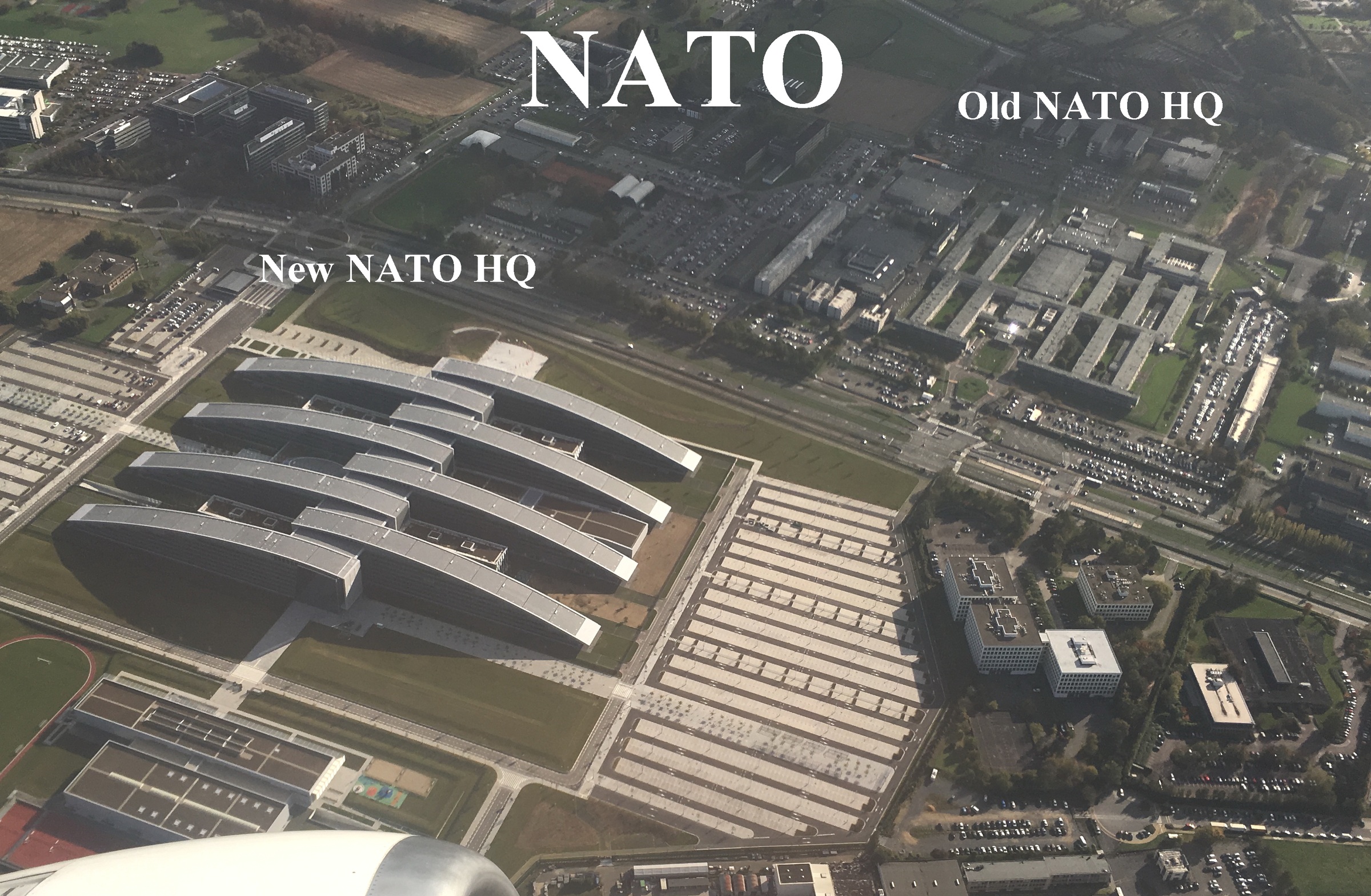
- NATO
- Artificial intelligence
Artificial intelligence can process an exercise report faster. The military value comes when somebody changes what happens in the next exercise. That distinction sits at the centre of NATO's latest discussion of institutional learning.
In a 14 October account of the Lessons Learned Conference in Lisbon, Allied Command Transformation highlighted AI, realistic training and interoperability. JALLC hosted the meeting on behalf of Supreme Allied Commander Transformation. ACT described AI as a way to handle information and identify patterns while retaining human judgement.
The important measure is the change produced by a lesson. Our analysis is that this creates a more demanding test for defence software than producing a fluent summary: the user needs to follow the evidence through to a decision and a subsequent check.
A pattern needs a cause
Repeated complaints in reports can reveal a real problem. They can also describe different causes with similar wording. A tool that groups them should preserve the route back to each observation, including its context and limits.
Consider a training report that says information arrived late. The relevant issue might be a technical interface, a procedure, or how the exercise was arranged. A summary alone cannot distinguish those explanations. An analyst needs enough evidence to investigate and select the appropriate change.
This matters to companies offering dual-use AI for document analysis. The useful product is a reviewable link between what was observed and what the organisation decides to do.
Four steps make the result visible
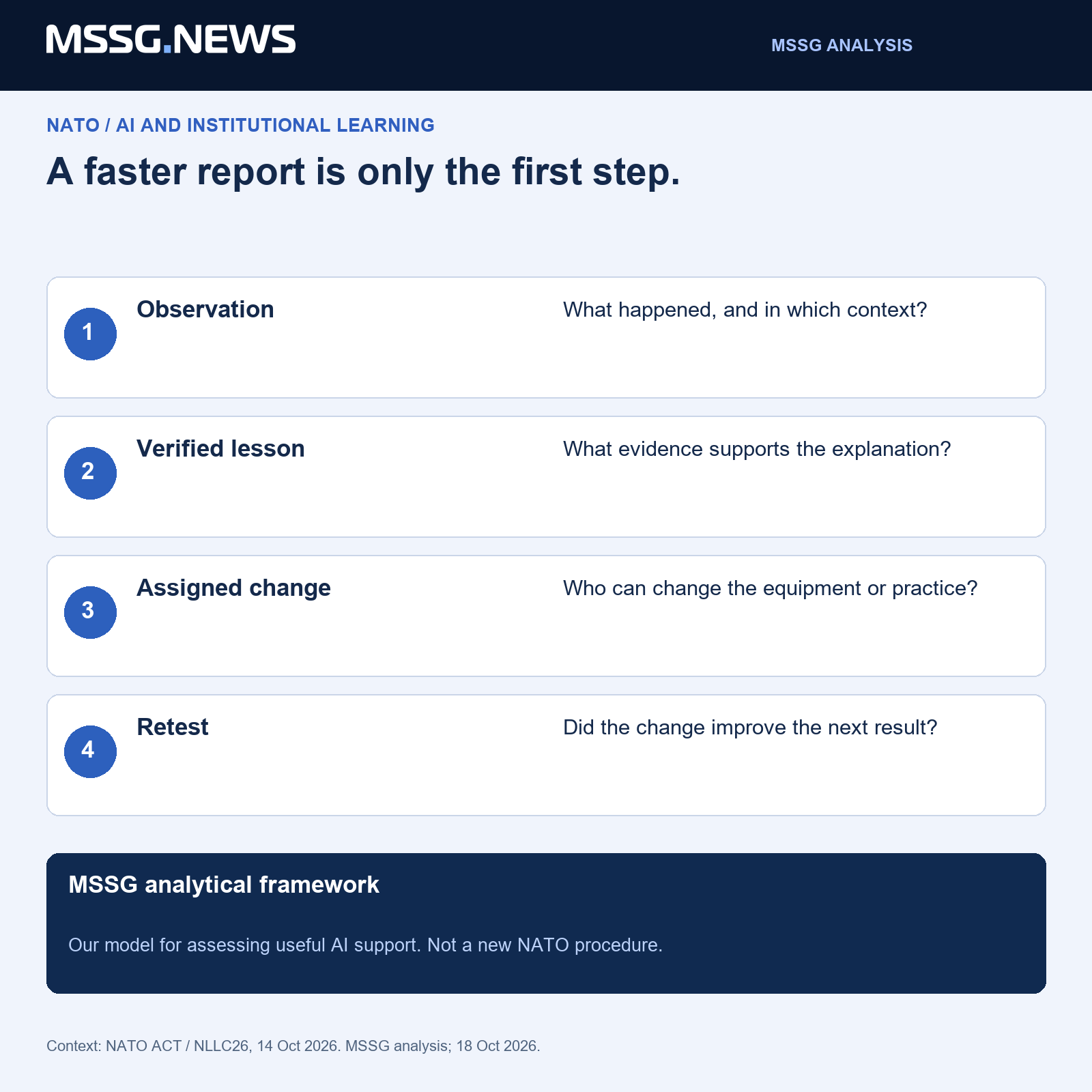
We use a four-stage framework: observation, verified lesson, assigned change and retest. This is an MSSG analytical model, not a procedure announced at the conference. Its purpose is to make the output of learning visible to a buyer or commander.
Each stage has a different question. What happened? What evidence supports the explanation? Who can change the relevant equipment or practice? What later test will establish whether that change helped? AI can assist with organising evidence; an accountable person still owns the decision.
A system that tracks only the number of lessons captured misses that last step. More records can mean better reporting without any improvement in performance.
Interoperability also applies to learning
ACT's conference account connects NATO and national learning efforts. A lesson useful in one organisation must retain its meaning when another organisation receives it.
Crucible 4-26 illustrates why that matters. NATO is testing counter-drone components across suppliers and national systems. A finding about their interaction needs to reach the people who can alter the interface, requirement or training, then be checked again.
For Europe's defence technology sector, the opportunity is to help close that loop. Faster analysis is valuable when it shortens the route to a verified improvement. That is a stronger definition of military AI value than the speed at which a report appears.
Sources & context
Published by Mitchell Strategic Solutions Group. See our editorial standards and corrections policy. Read more →
Related reporting
NATO scales up its counter-drone network. Ukraine helps shape the test.

Satellite 5G crosses a useful boundary: different vendors, one connected system