
ESA’s Low-LEO programme tests services before they can join IRIS²
ESA describes an approximately three-year development cycle for potential government connectivity services. The studies already under contract inform which services may be demonstrated and validated in orbit.
- ESA
- IRIS²
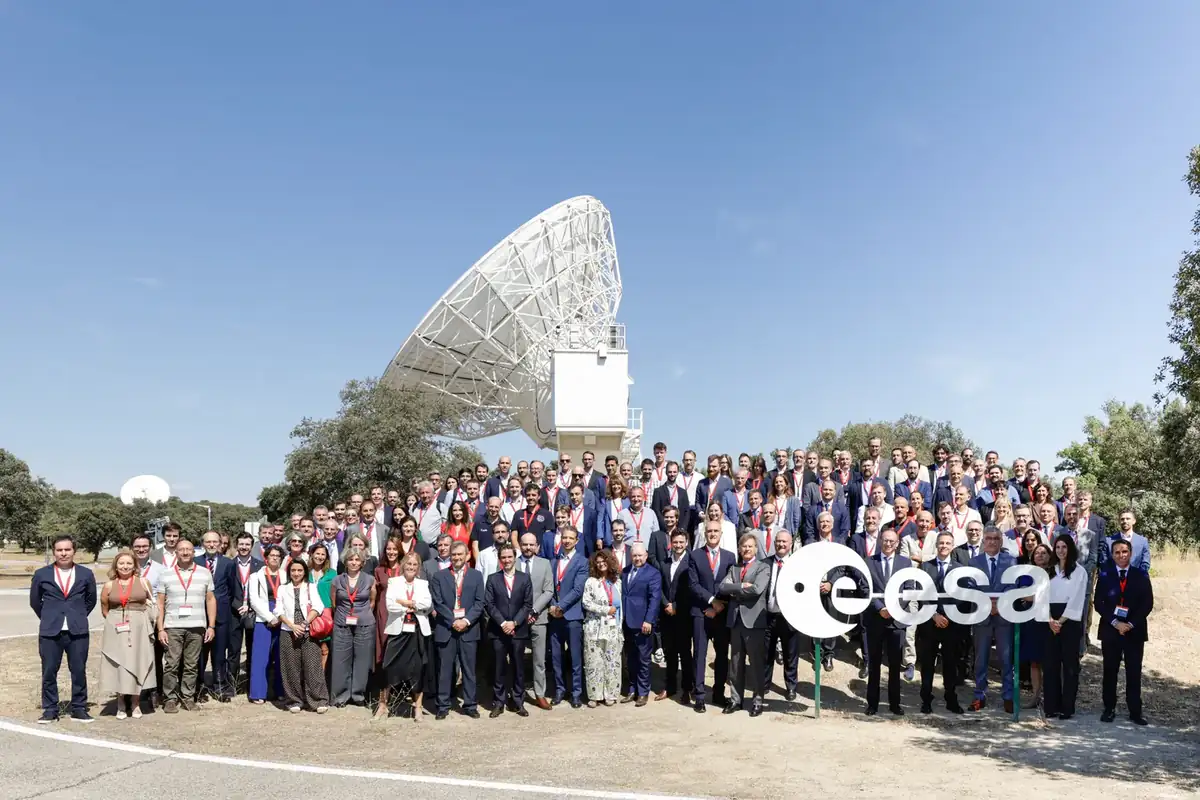
ESA’s Low-LEO programme is designed to test prospective secure-connectivity services in orbit before they are considered for operational IRIS². In its 6 November explainer, the agency described a repeatable cycle that starts from public-sector service needs and carries selected concepts towards demonstration or pre-operational validation.
That gives European suppliers two different kinds of work to follow. Under the EU concession, the European Commission’s component concerns strategic government services in the operational Low-LEO environment below about 750 km. ESA’s component under Element 3 develops and tests complementary services and the systems that make them possible.
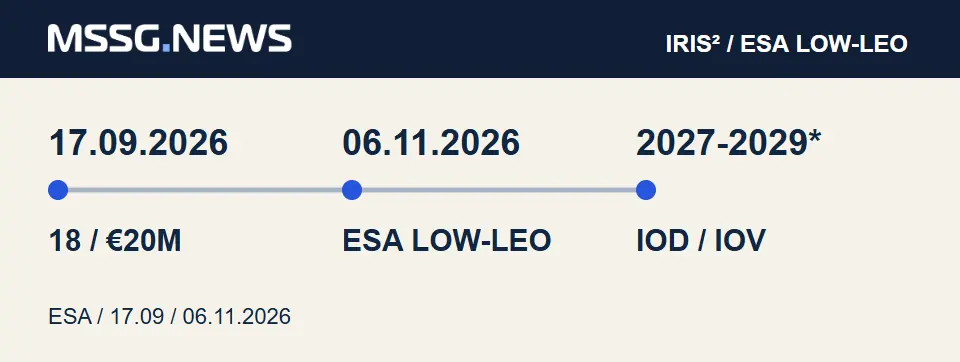
In September ESA signed 18 consolidation contracts worth €20 million in total, involving nearly 80 European industrial partners. The amount covers the reported study contracts. Selection for a subsequent mission, and any eventual operational adoption, depend on later decisions.
The service determines what goes to orbit
The consolidation phase explores government needs, mission concepts, maturity and whether a service can interoperate with IRIS². ESA says the studies span secure broadband, maritime operations and safety, aviation and airspace, and data relay and tasking.
The next step would use enough infrastructure to test a targeted service. For a company, that makes an interface, terminal or ground-system function relevant if it helps validate a defined use case. The value of a component depends on what evidence the whole service can produce.
Demonstration and pre-operational validation ask different questions
ESA describes de-risking activities as a way to demonstrate earlier-stage concepts in orbit. The pre-operational part tests mature concepts and associated infrastructure end to end. A component working in an experiment answers a narrower question than a service operating across space and ground systems.
ESA plans the implementation phase for 2027-2029 under the current cycle, subject to study results and programme priorities. This is the planned period for implementation work on validation missions, with operational adoption to be decided separately.
An opening for suppliers who can show interoperability
ESA says the component is intended to bring in SMEs, midcaps and organisations outside the existing IRIS² supply chain. It identifies common components, infrastructure, launch and spectrum access as areas where coordination may help the EU and ESA programmes.
Suppliers can use the studies to identify a concrete service problem and define what they would need to prove at the next stage. Procurement and eligibility will be set by the actual calls. The September awards and November explanation are evidence of programme work, with different implications from a live tender.
Sources & context
- ESA: Low-LEO approach, 6 November 2026 ↗
- ESA: Low-LEO layer and the two components ↗
- ESA: 18 consolidation contracts, 17 September 2026 ↗
- ESA: Element 3 and the distinction between demonstration and pre-operational validation ↗
Published by Mitchell Strategic Solutions Group. See our editorial standards and corrections policy. Read more →
Related reporting
ESA offers up to €75,000 to test a space-based service. The next batch closes 30 October.

Europe’s space scale-up problem needs more than another equity round