Europe’s space scale-up problem needs more than another equity round
ESA’s Space Debt Catalogue makes lender requirements visible. It helps separate finance for a company, a physical asset and a contracted project before the funding conversation begins.

- ESA
- Space
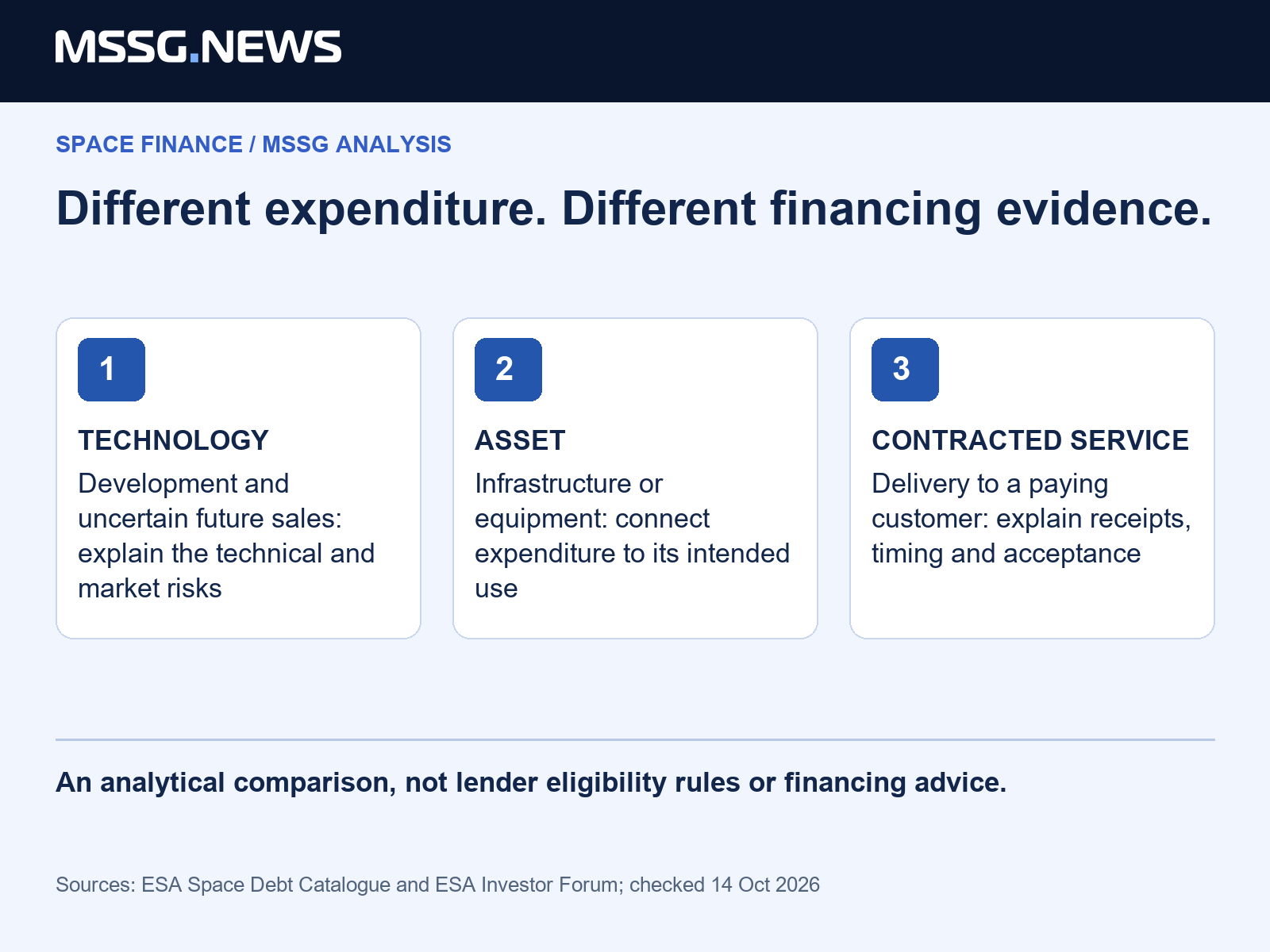
Europe’s space companies need funding for very different things: developing technology, building infrastructure and delivering contracted services.
ESA’s Space Debt Catalogue brings debt providers and their criteria into the same view.
Its value is that it exposes differences between financing instruments before a company treats every capital need as the same fundraising problem.
Finance the thing being built
The catalogue displays lender coverage, company stages, instruments, security requirements and indicative conditions. ESA explicitly says the entries remain subject to lender due diligence and the circumstances of each transaction. The agency’s financing work also covers equity and project finance; this tool broadens the information available alongside those routes.
MSSG’s analysis starts with a distinction that is easy to lose in the space sector. Funding experiments with uncertain future sales is different from paying for an asset intended to serve a contracted customer. In the first case, the central evidence concerns technical and market risk. In the second, the timing and reliability of the future receipts become especially important. Putting both needs in one undifferentiated request can make a financing discussion less useful.
Repayment changes the industrial conversation
The catalogue makes the variation visible: Intesa Sanpaolo’s entry lists tickets of EUR 500,000-40 million and excludes pure defence companies, while the EIB entry lists EUR 10 million-1 billion and excludes weapons and ammunition. These indicative entries describe different financing constraints. A dual-use label therefore cannot replace a check of the borrower, activity and actual instrument.
An equity investor and a lender ask different questions about the same company. Ownership capital participates in the company’s future value; debt creates a repayment obligation. The catalogue helps make those differences concrete by showing that documentation, collateral and borrower-stage expectations vary across providers. It is a source of indicative criteria, rather than a recommendation of a particular lender.
Our reading is that a space company’s industrial story should therefore include the connection between expenditure and receipts. A purchase contract, recurring service revenue and an untested market forecast are different forms of evidence. A realistic account of integration costs, delivery timing and customer acceptance explains where a cash-flow gap arises. It also makes clear which risks remain with the company after finance has been arranged.
Public demand can improve the financing evidence
At its September Investor Forum, ESA linked the scale-up discussion to public demand and private capital. That connection matters because a technical success alone does not show when customers will pay. For industrial growth, customer commitments and the ability to deliver against them belong in the same discussion as the technology itself.
The useful conclusion is not that every space startup should borrow. It is that Europe’s financing conversation is becoming more specific about what must be funded and how it will generate receipts. The catalogue offers a practical way to compare those requirements. Companies and readers should keep the categories separate: available information, lender assessment, agreed financing and actual industrial delivery are successive decisions, not interchangeable measures of progress.
Sources & context
- ESA Space Debt Catalogue, checked 14 October 2026 ↗
- ESA catalogue announcement ↗
- ESA Investor Forum, September 2026 ↗
Published by Mitchell Strategic Solutions Group. See our editorial standards and corrections policy. Read more →