Your receiver has a position. Who checks whether you can trust it?
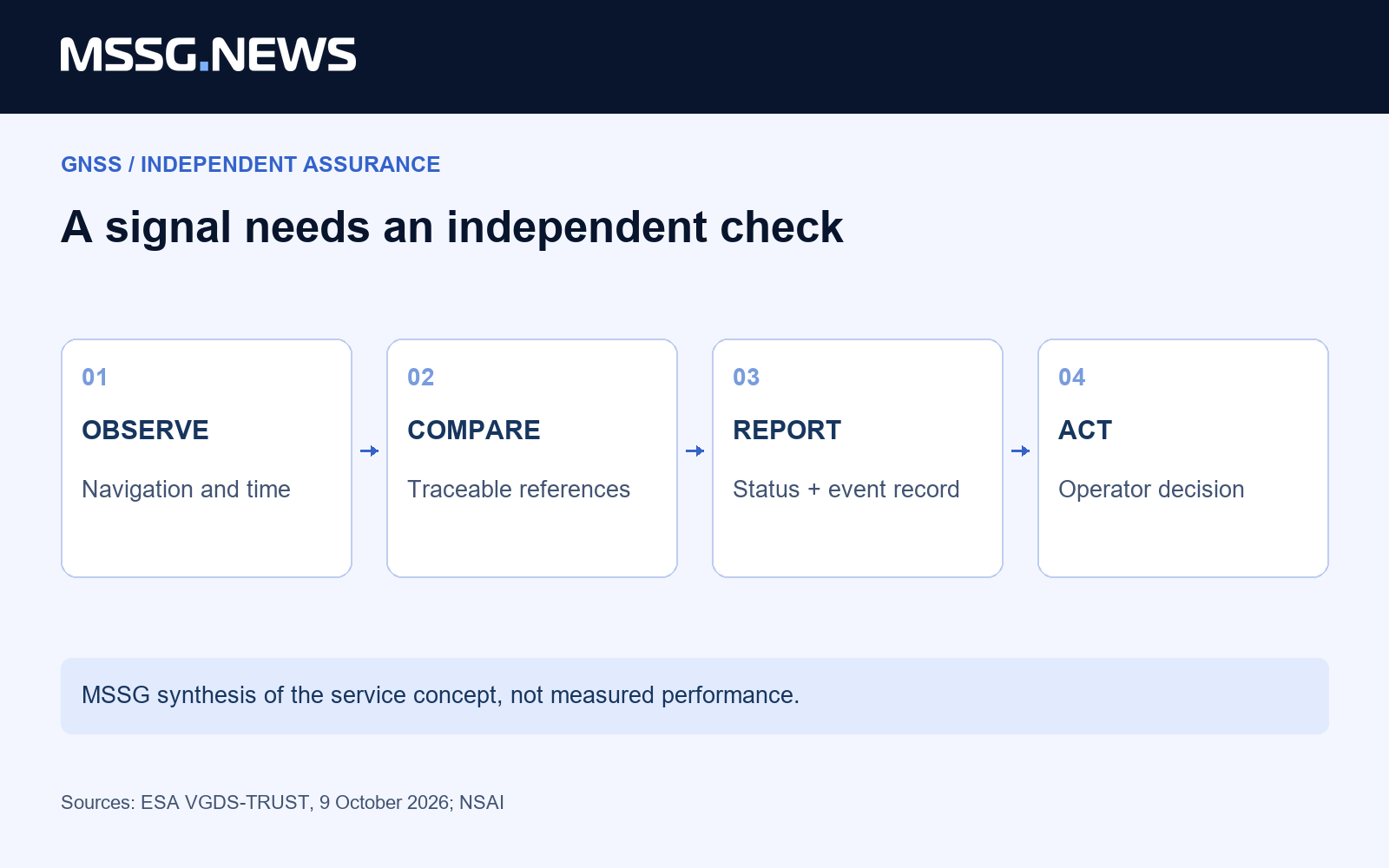
ESA’s updated VGDS-TRUST project profile describes an independent verification layer for satellite navigation and timing. Its commercial significance lies in the evidence delivered above the receiver: trust status, alerts and incident records.
- GNSS
- Critical infrastructure
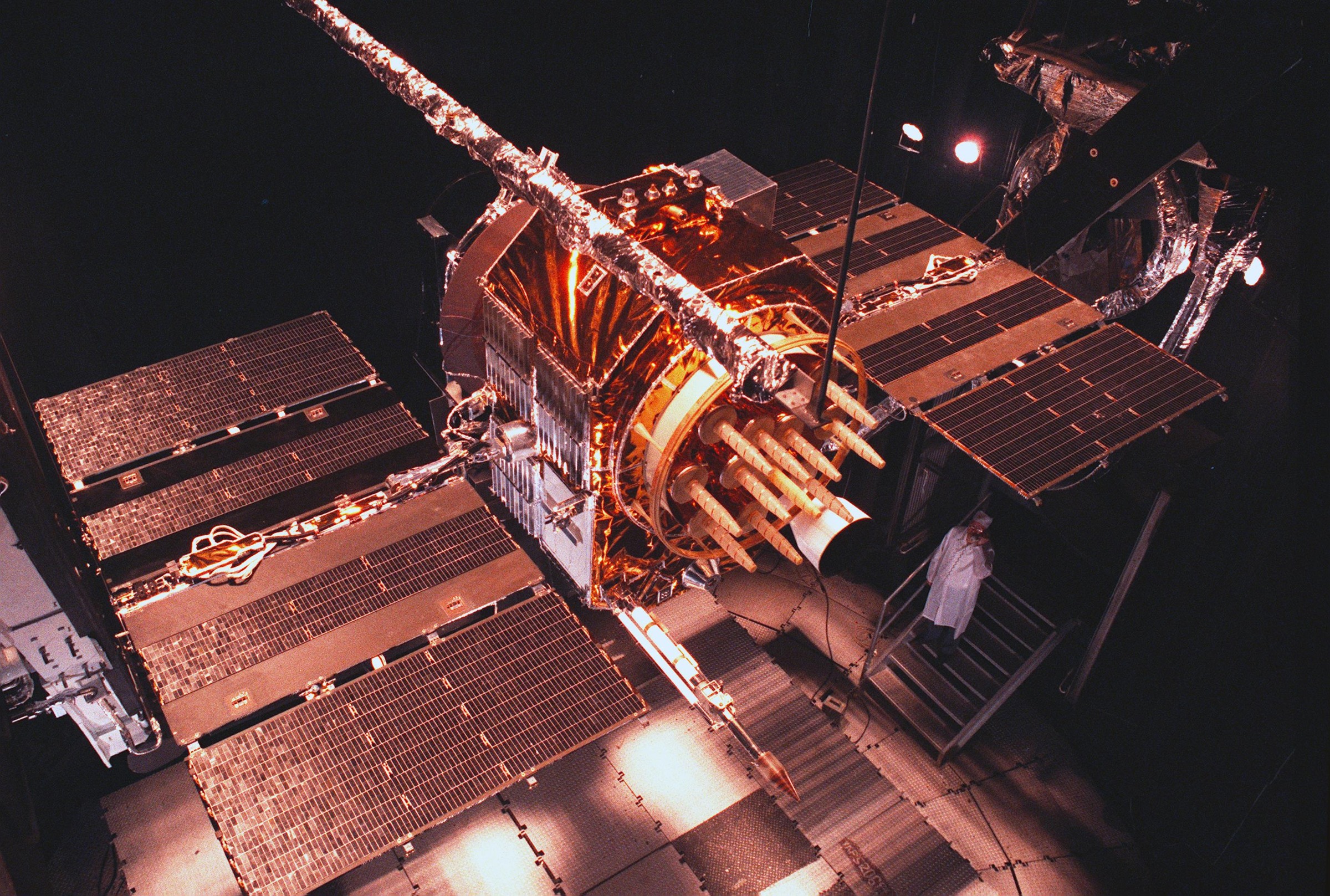
A receiver reporting a position or a time does not, by itself, settle whether that information should be trusted. VGDS-TRUST addresses that gap with independent checks against distributed reference sites and traceable timing. ESA Space Solutions updated the project profile on 9 October. The update documents a service concept and development progress, not a newly launched constellation.
The practical proposition is to add assurance above equipment already in use. Operators can receive a monitoring service or integrate a verified data feed into their own systems. The prime contractor is Ireland’s Timing Solutions. ESA describes demonstrations and identifies partner integration, maritime trials and initial deployments as the next development steps.
That distinction matters to buyers. A useful service must explain the condition of the information reaching an operational system, then preserve evidence of what happened. Buying another receiver and buying independent assurance solve different problems. The second question becomes more pressing when several sites depend on the same external navigation and timing signals.
Time is infrastructure, not just a navigation feature
Ireland’s national metrology authority NSAI established its National Timing Grid in 2023 with Data Edge and Timing Solutions. Its announcement links accurate time to communications, energy, transport, financial services and cloud infrastructure. Traceability to a recognised national time reference gives these users an external point of comparison. This is background infrastructure, not a claim that the 2026 project created the grid.
Timing Solutions’ product descriptions distinguish GNSS monitoring from timing-distribution monitoring. Our reading is that this separation should remain visible in a purchase specification: checking incoming observations, checking a clock and maintaining a service are related tasks, but the evidence for one does not automatically prove the others.
For European resilience, this is a civilian technology problem with security consequences. The useful industrial contribution sits in measurement, comparison and system integration. A firm supplying those functions should be able to say which information it verifies, which reference it uses and how its customer receives an alert.
Buy the decision chain, not a green light
Our proposed buying test starts with the operator’s decision. When the service changes the status of a data source, who sees that change, what existing process uses it and what evidence remains for investigation? A dashboard has little operational value if those responsibilities are left undefined.
The same test makes a pilot more rigorous. Before starting, agree the conditions to be observed, how results will be recorded and how the customer will assess whether the service fits its workflow. Compare the data feed and local monitoring options against the actual integration requirement. These are our analytical recommendations, not performance results published by ESA.
VGDS-TRUST highlights an industrial market beyond navigation hardware: independent assurance that can be attached to existing infrastructure. The next measure of progress should be evidence from integration and customer use. That is where a promising verification concept becomes a service an operator can depend on.
- Profile updated
- 9 October 2026
- Contractor
- Timing Solutions, Ireland
- Model
- Independent GNSS and timing verification
Sources & context
- ESA Space Solutions: VGDS-TRUST, status update 9 October 2026 ↗
- NSAI: National Timing Grid, 20 September 2023 ↗
- Timing Solutions: monitoring products and interfaces ↗
Published by Mitchell Strategic Solutions Group. See our editorial standards and corrections policy. Read more →