
Britain confirms Titania is in orbit. Its laser link still needs flight evidence
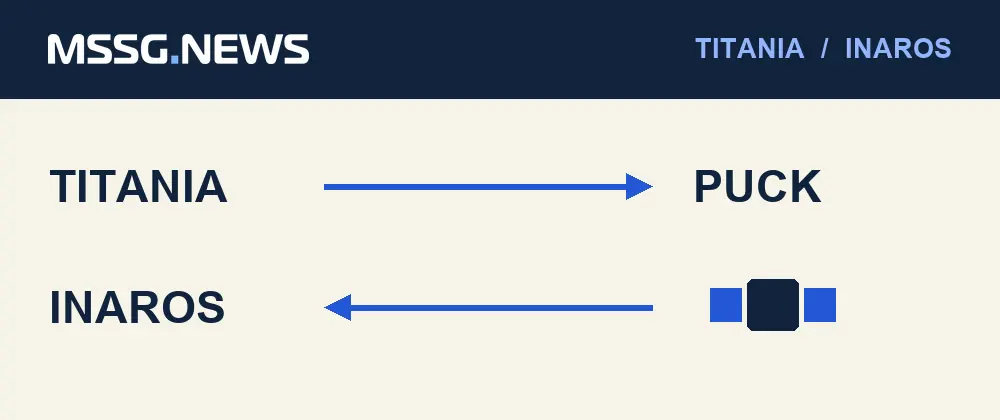
An October launch put Titania in orbit, the UK says. The original programme set out to test laser delivery of data to Earth. Inaros is a separate trial of ground sensors that watch space.
- space
- UK
The UK Ministry of Defence confirmed on 7 November that Titania reached orbit in October. The small satellite will be operated by UK Space Command within ISTARI, the programme building satellites and ground infrastructure for defence intelligence, surveillance and reconnaissance.
Titania matters to users waiting for data as much as to spacecraft builders. Collecting information in orbit and getting it to an analyst are separate tasks. Britain originally commissioned Titania to examine the second task using a laser link to Earth.
The November announcement also describes Project Inaros, a trial of three ground sensors. That work asks a different question: can operators identify unusual activity near satellites early enough to respond?
A downlink needs both ends
In 2021 Dstl announced a £9.5 million Titania build contract with In-Space Missions. The original concept used a narrow optical beam from low Earth orbit to the Puck ground terminal. The November update describes development by Dstl and BAE Systems and confirms the launch. It provides no Titania link measurement.
In May 2026 Dstl reported a separate demonstration using a deployable Archangel Lightworks ground terminal. A satellite in low Earth orbit transferred multiple gigabits during a 90-second pass. That result shows a ground terminal can receive data in a short window under the tested conditions. Dstl did not identify the spacecraft as Titania, which the ministry says launched months later.
Watching spacecraft from the ground
Inaros uses Optera sensors that respond to changes in light. The trial will use three sites. The ministry presents early warning as a possible application, so the useful evidence will be how well operators can distinguish relevant movement from background activity and pass an alert on.
The ministry puts both efforts inside a defence space investment of about £3 billion over four years. That is a portfolio figure. Titania’s £9.5 million build contract and Inaros trial each have a much narrower scope.
- Titania
- October launch confirmed in November
- Inaros
- Three ground sensors in a trial
Sources & context
- UK Ministry of Defence, 7 November launch and Inaros notice ↗
- Dstl and UK Ministry of Defence, original Titania contract and optical concept ↗
- Dstl, May 2026 optical ground-terminal test ↗
Published by Mitchell Strategic Solutions Group. See our editorial standards and corrections policy. Read more →