
AUKUS tests joint maritime autonomy as Britain takes on three underwater payloads
A three-week exercise off California put uncrewed aircraft, surface craft and underwater vehicles to work together. The next test is whether new payloads can be used across three fleets.
- AUKUS
- maritime autonomy
Australia, the United Kingdom and the United States tested how their uncrewed maritime systems work together near San Diego. Australia’s Department of Defence reported on 9 November that Maritime Big Play Pacific was the largest demonstration of this kind under the initiative, which is part of AUKUS Pillar II.
Teams used aircraft, surface craft and large underwater vehicles for surveillance, resupply in contested conditions and anti-submarine warfare trials. Australia also reported progress in acoustic communications, which can help vehicles coordinate over greater underwater distances. The statement gave no figures for range or reliability.
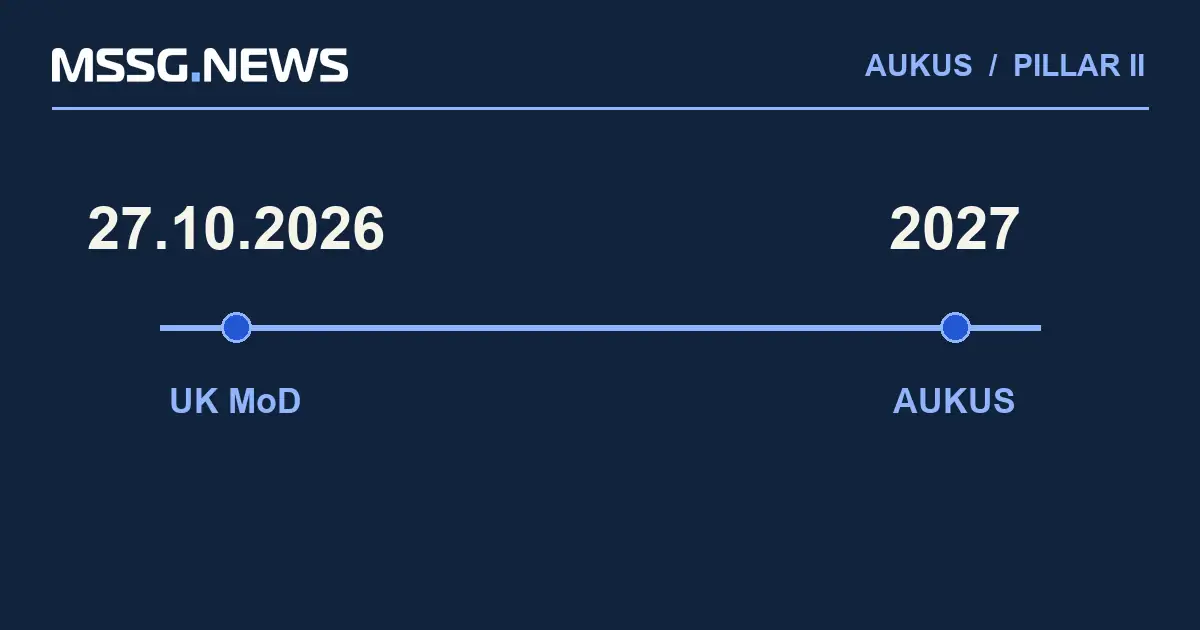
Britain’s defence ministry said on 27 October that it would lead development of three systems for uncrewed underwater vehicles. These are a synthetic aperture sonar, a deployable anti-submarine warfare sensor and a deployable non-kinetic effector. London expects the three countries’ fleets to be able to use them from 2027.
What Britain will develop
The British announcement followed a week of testing and demonstrations. Australia’s November account describes the wider exercise over three weeks. Together the reports show what the partners tried at sea and what Britain has committed to develop next.
- Exercise
- Maritime Big Play Pacific, near San Diego
- British development lead
- Three underwater vehicle payloads
- Planned availability
- From 2027, according to the UK Ministry of Defence
What to watch after the exercise
For navies that want to share equipment, a useful milestone would be the same payload working with vehicles from more than one partner. Further results on integration and acceptance will matter for the UK and for allies watching how uncrewed systems could support surveillance of seabed infrastructure.
The exercise brought the vehicles together in realistic scenarios. The two public accounts do not give acceptance results for the three British-led payloads.
Sources & context
- Australian Department of Defence, 9 November exercise report ↗
- UK Ministry of Defence, 27 October payload announcement ↗
Published by Mitchell Strategic Solutions Group. See our editorial standards and corrections policy. Read more →