ESA funds next Phoenix step toward servicing existing GEO satellites
A new ESA-ClearSpace contract advances rendezvous and docking technology for satellite life extension. The roughly EUR 100 million figure refers to the wider programme, not this contract.
- technology
- space
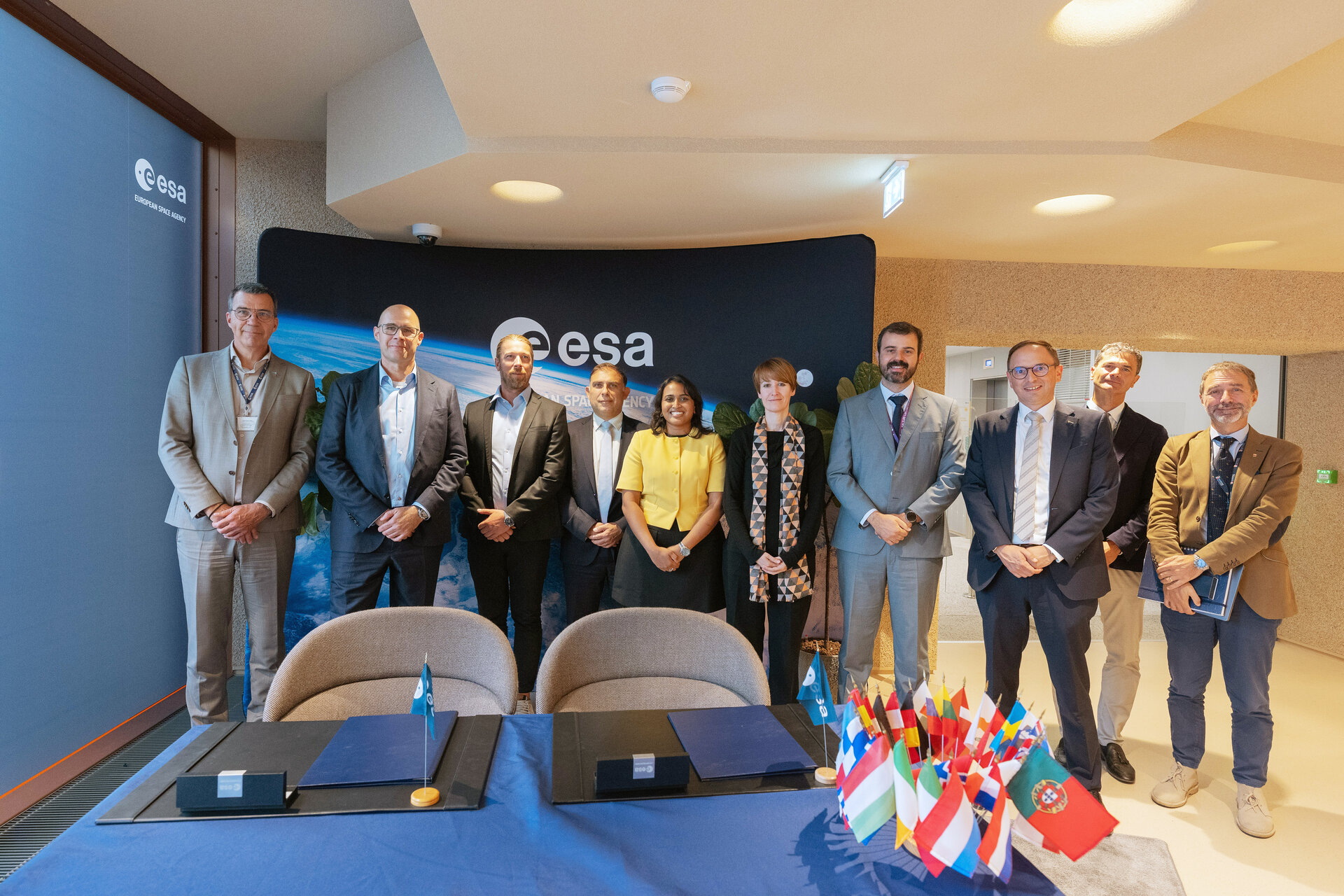
ESA and ClearSpace signed a contract on 22 September to advance Phoenix, a proposed spacecraft that could extend the life of satellites in geostationary orbit. The agency announced the next phase a day later. It is funding technology maturation, not announcing an operational servicing fleet or a booked customer mission.
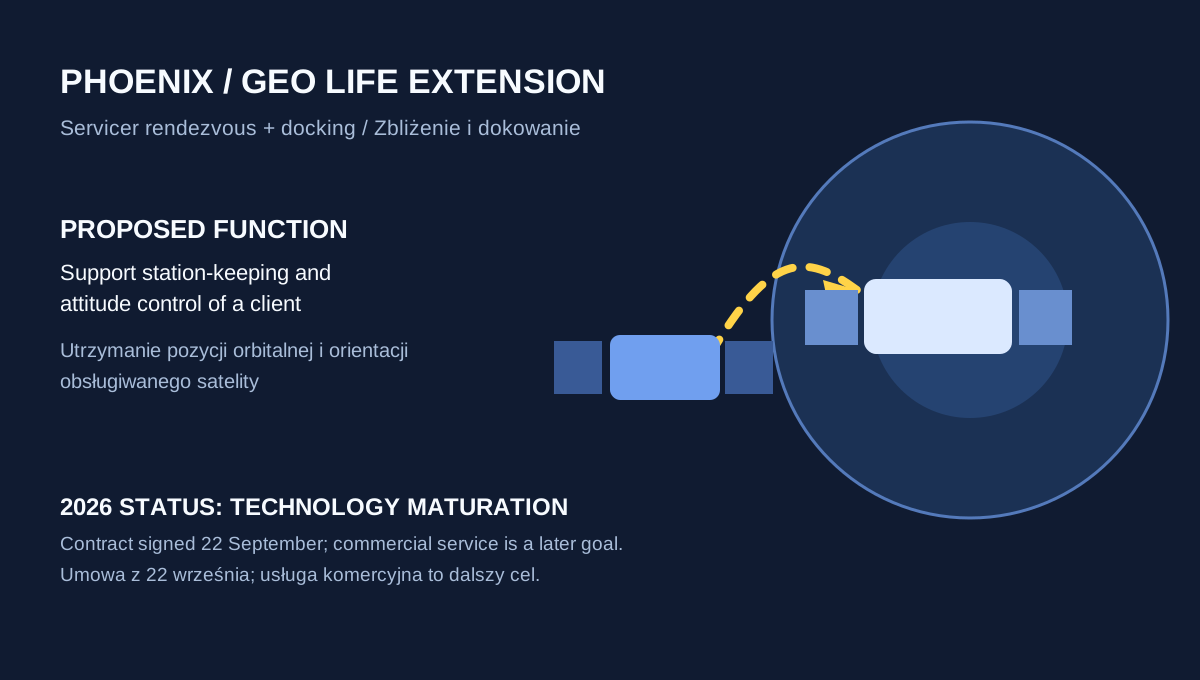
The commercial problem is straightforward: a GEO satellite can reach the end of its usable propellant while its communications or other payload still works. It needs fuel for station-keeping and attitude control. Phoenix is designed to approach and dock with such a satellite, then support manoeuvres that keep it useful. The concept aims to adapt the servicer to existing spacecraft, including those not originally equipped for servicing.
That is technically and commercially different from building a new satellite. The target is an asset already in orbit, about 36,000 kilometres above Earth. The servicer would have to rendezvous, dock and operate safely around it. For operators, the value would lie in extending a functioning asset's service and potentially delaying replacement, if the technical and business case holds.
What the new contract funds
ESA says the work will mature individual technologies and demonstrate that they can function together in conditions representative of eventual use. It covers the mission architecture and capabilities for rendezvous, proximity operations, docking and servicing. A future recurring commercial service is the programme ambition, not the current deliverable.
The project sits within ESA's ARTES Industrial Competitiveness programme and includes industrial contributions. Luxembourg, the Netherlands and Portugal are among supporting ESA member states. ClearSpace says the broader Phoenix development programme is estimated at around EUR 100 million. That is its programme estimate; the companies did not disclose the value of this newly signed ESA contract.
Why docking is the crucial boundary
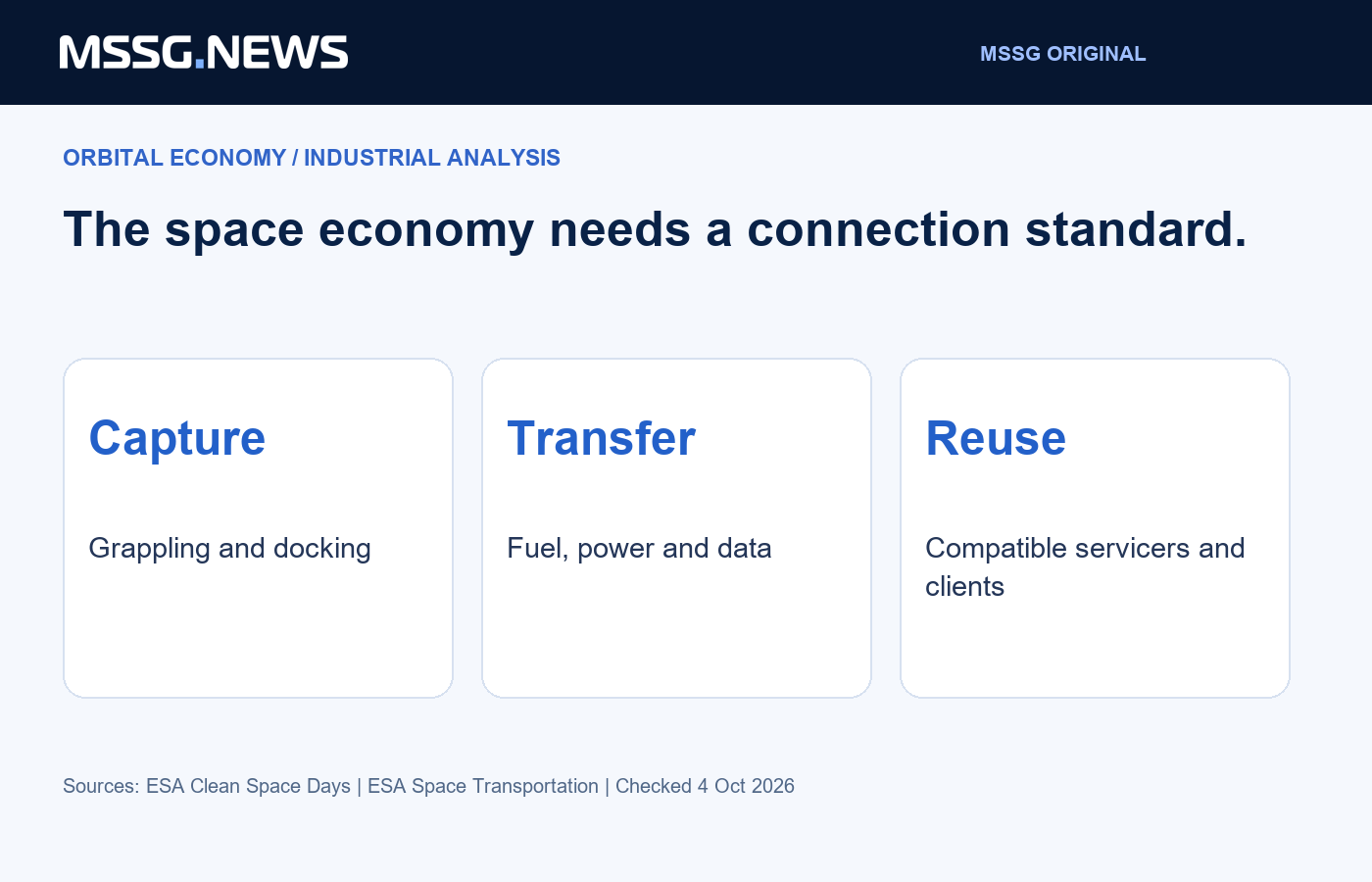
Phoenix is intended to serve satellites that were not built with a standard docking interface. Designing around the client spacecraft widens the potential market, but it also makes safe approach, capture and combined control central engineering tasks. ESA compares the basic need to meet and connect two spacecraft with routine crewed-space operations while stressing that a GEO client may lack a purpose-built servicing port.
ESA lists other possible applications of the underlying technology: repositioning a satellite, correcting its orbital inclination, inspection and end-of-life disposal. Refuelling may be explored later. These are potential paths, not services proved by the September contract. The immediately described concept is life extension through docking and support for manoeuvres.
The milestone suppliers should watch
A successful technology-maturation phase would still leave commercial questions. The servicer has to operate against the variety of spacecraft already in GEO; operators need confidence in mission safety, liability arrangements and a price that compares favourably with replacing capacity. ESA and ClearSpace have not published a deployment date or named the first client in the releases reviewed here.
The September signature is nonetheless meaningful for European industrial capability: ESA is paying to reduce the distance between a servicing concept and a repeatable mission architecture. The next public evidence should be an integrated demonstration, a defined customer mission and contract terms for an actual service. Until then, Phoenix is an advancing project rather than an available product.
Sources & context
Published by Mitchell Strategic Solutions Group. See our editorial standards and corrections policy. Read more →