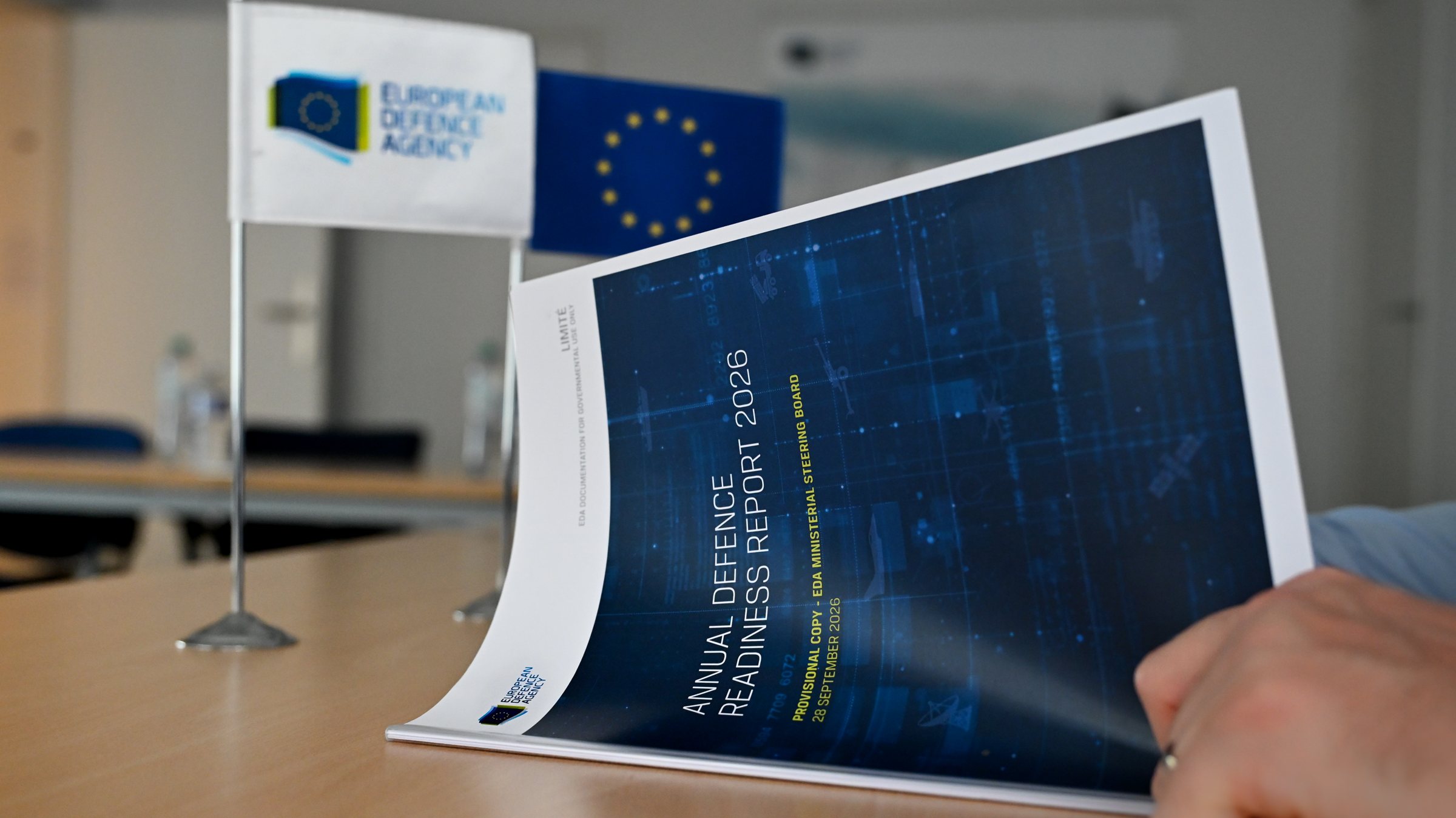
Fifteen states back EDA space-data access, but an operational service is years away
EDA is building a route for EU militaries to obtain space situational-awareness data. Fifteen countries have joined the mechanism. A supplier survey is due in 2026; initial capability is targeted for 2029.
- EDA
- space
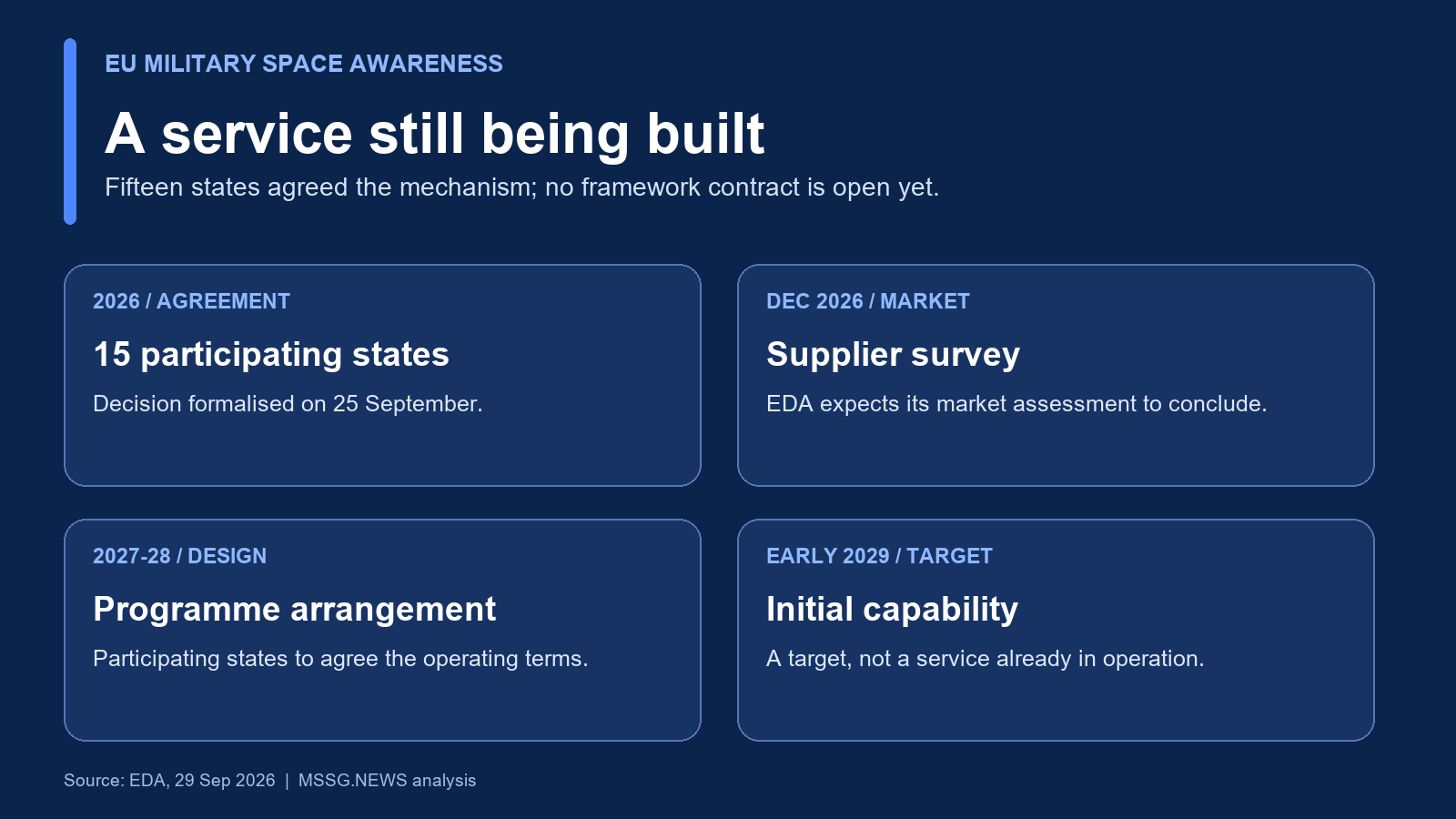
Fifteen European countries have agreed to take part in a European Defence Agency mechanism for military access to space situational-awareness data. The participating group, which includes Poland, formalised the decision on 25 September; EDA announced it on 29 September. The aim is to give defence users a more coordinated way to obtain information about objects and conditions in orbit. It is a programme-building decision, not the launch of an operational service.
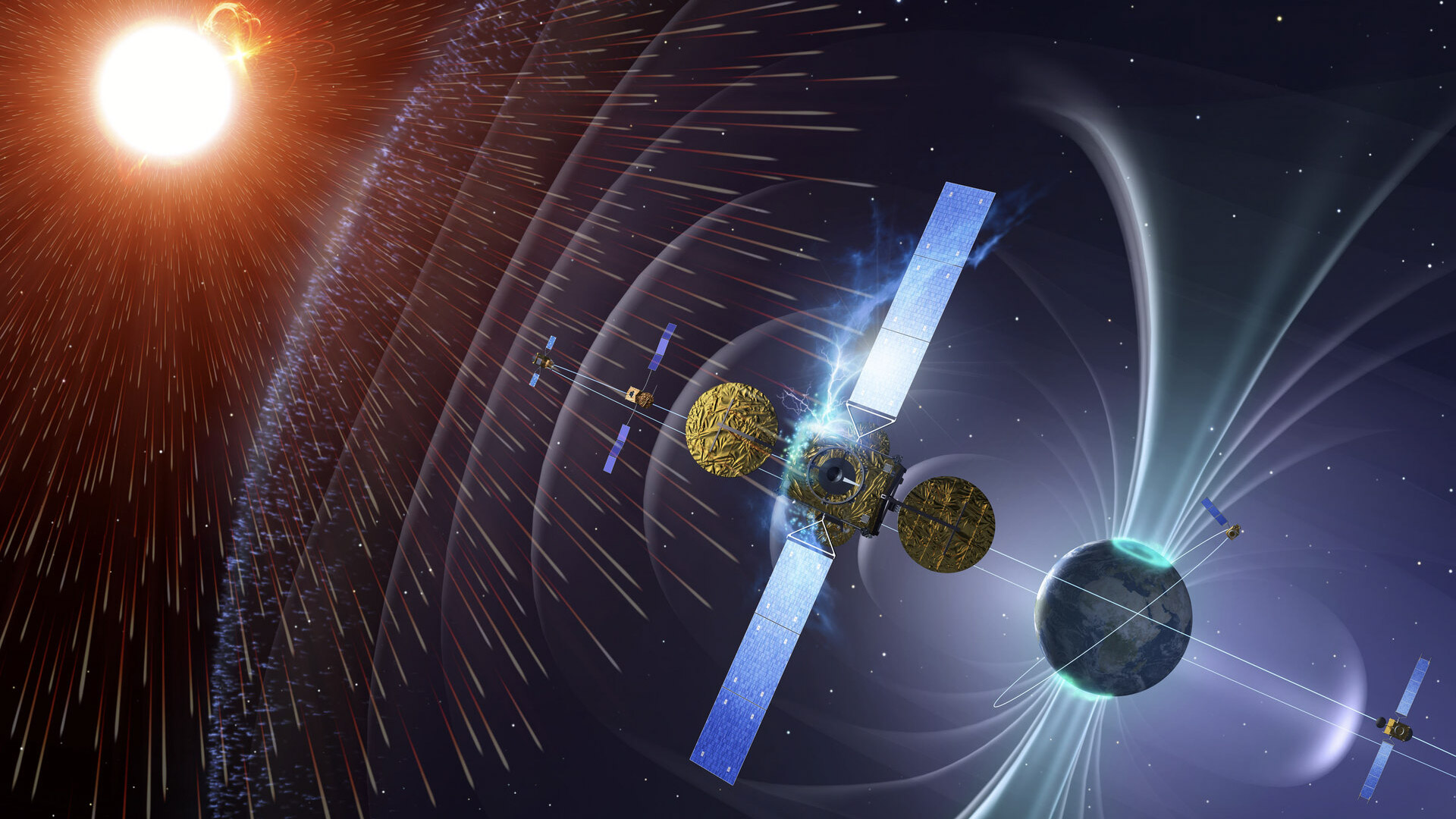
Space situational awareness helps users understand what is in orbit and how events there may affect their systems. The underlying information can come from different providers and technologies. EDA's role is to aggregate demand and organise an access route for participating governments, rather than to imply that it will itself build every sensor. The agency describes a future service drawing on commercial data under common arrangements. The announcement does not give a technical specification, a list of suppliers or a military performance claim.
EDA puts the initial scale at about EUR 50 million. That figure describes the anticipated scheme; it is not a tender value open for immediate bidding. The agency plans to complete a survey of the market by December 2026. Participating states are then expected to agree a programme arrangement in 2027-28, before a framework contract is established. Initial operating capability is targeted for early 2029. Each of these milestones remains prospective.
Why a shared access route matters
Individual militaries can buy data separately, but fragmented contracts may make availability, terms of use and continuity harder to align. A joint mechanism could give participating states more predictable access and allow common requirements to shape procurement. Whether it succeeds will depend on the data products specified, coverage, reliability, licensing and how military users can integrate them. The public release leaves those questions for later project documents.
EDA says the idea builds on experience with the EU SatCom Market. That is an organisational comparison, not a claim that satellite communications and space awareness are the same product. Communications capacity moves information; space-awareness data helps users understand the orbital environment. Suppliers should distinguish those markets and wait for the actual market engagement and procurement documents.
What suppliers and readers can check next
The near-term signpost is EDA's market assessment due by the end of 2026. It should reveal which capabilities the agency wants to explore and how it intends to compare offers. A later programme arrangement would show which states commit to the service and on what terms. Only a published procurement procedure would establish eligibility, evaluation criteria and a route to a contract.
For now, the strongest conclusion is that fifteen governments see value in a shared data-access mechanism. The calendar runs to 2029, so describing the scheme as a capability already protecting European satellites would overstate what has been agreed. The announcement identifies an institutional customer group and a timetable, while leaving operational and commercial terms unresolved.
Sources & context
Published by Mitchell Strategic Solutions Group. See our editorial standards and corrections policy. Read more →