

terrAIntel brings satellite-data questions into the newsroom
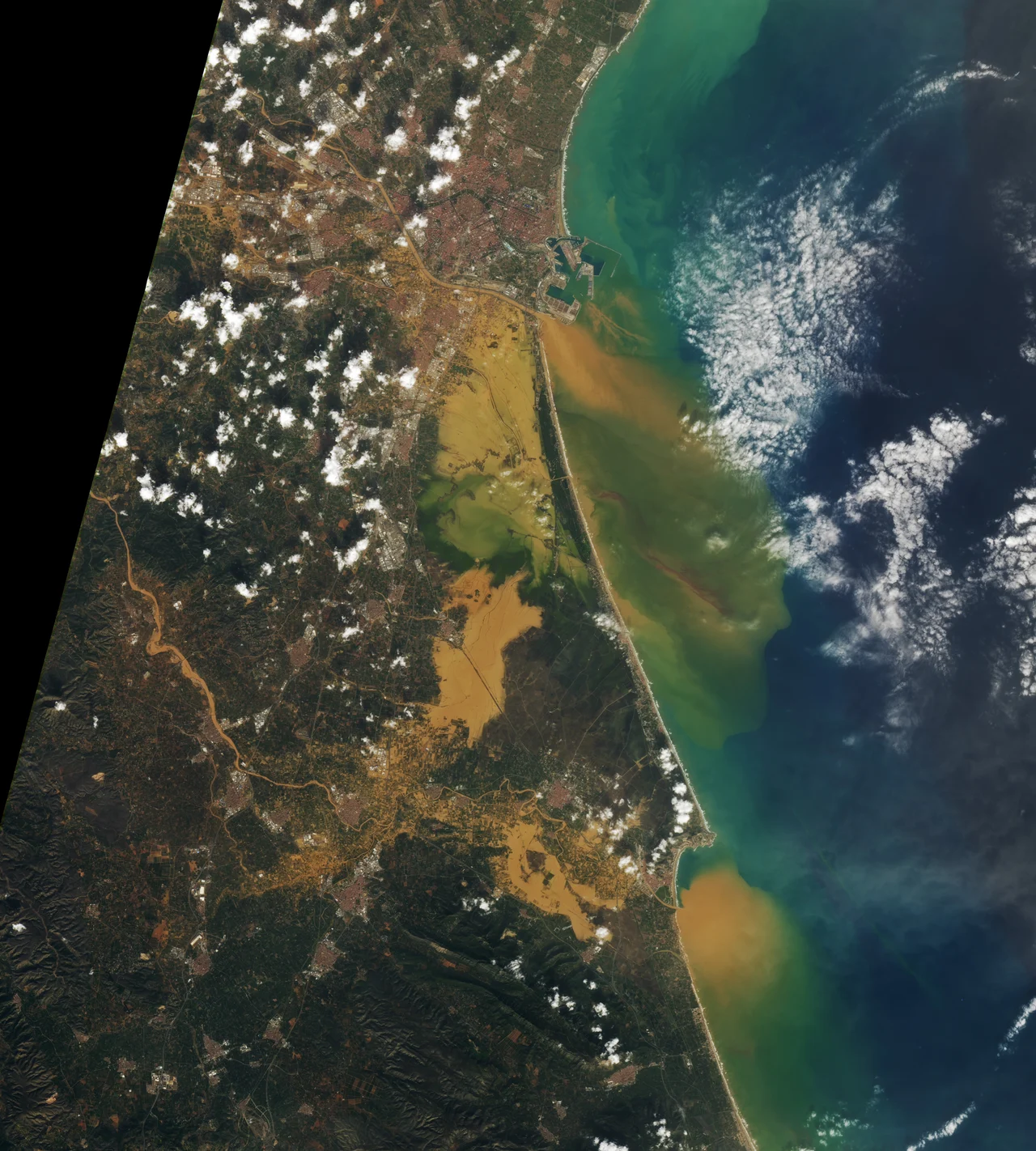
ESA reports a working natural-language Earth observation platform from GeoVille and Cortecs. Its early release makes data provenance a central test for journalists considering it.
- Earth observation
- AI
ESA Φ-lab announced on 3 November that terrAIntel, developed by GeoVille and Cortecs with InCubed co-funding, is now operational. The same announcement describes the accessible product as an early version. That qualification matters for newsrooms assessing what they can publish from it.
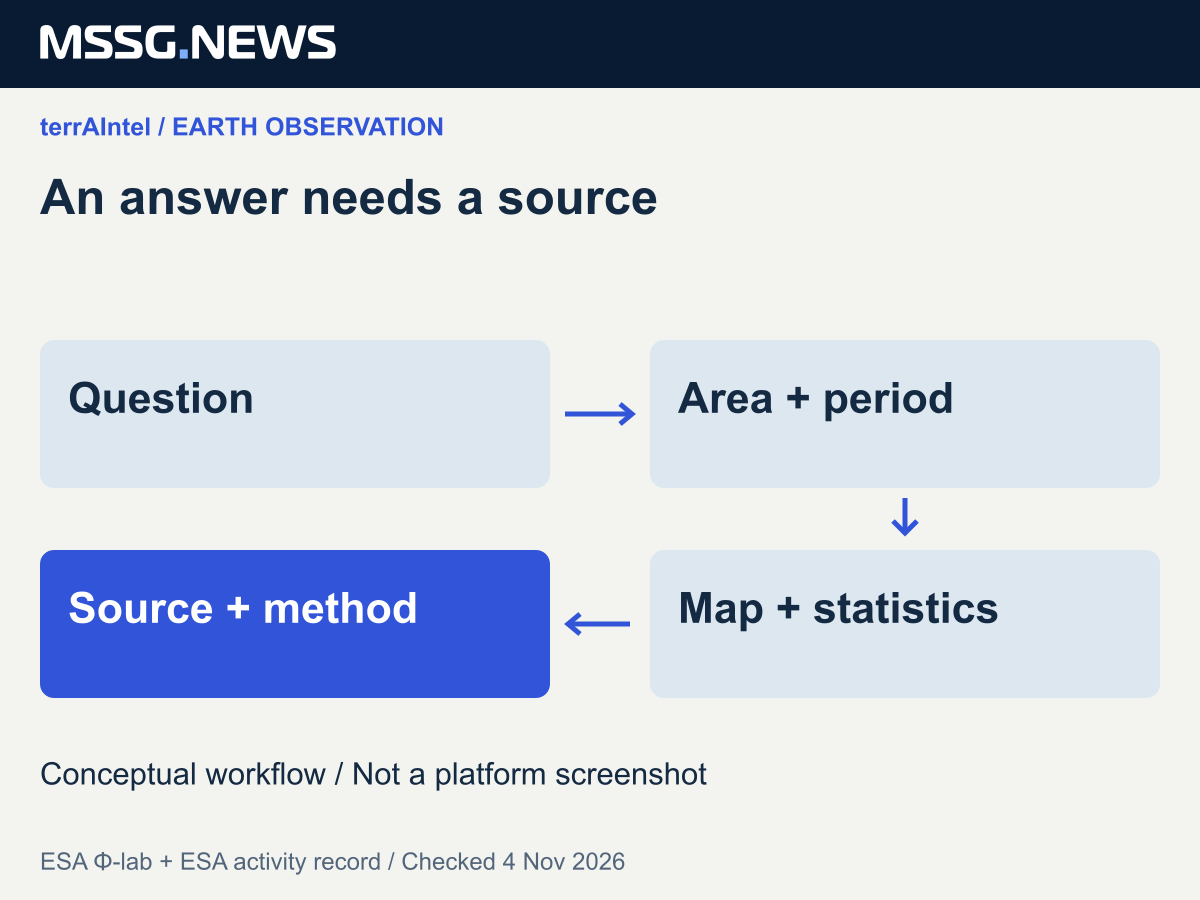
The proposed workflow starts with an ordinary-language geographical question and returns maps, statistics and information about the underlying data. Users can define an area and period rather than begin with specialist Earth observation software. Journalism is the project’s lead user segment.
A separate ESA activity record marks the funded project completed following its final review on 29 June 2026. It describes a demonstrator and controlled pilot baseline, supported by user sessions, feedback, telemetry and software testing. Project completion and wider product maturity therefore describe different milestones.
The useful output is evidence you can trace
For a reporter investigating land use or a disaster, a conversational interface could reduce the work needed to find a relevant dataset. The more consequential feature is whether a result retains its geographical boundary, observation period, source and method. Those details let an editor distinguish an observation from an interpretation.
Our editorial assessment is to evaluate a small, reproducible question first: retain the original query, inspect the map and underlying dates, and compare the answer with the cited data. A polished explanation alone cannot resolve cloud gaps, a mismatched comparison period or an unsuitable dataset.
An early release, with tests still to make
The announcement discusses disaster response and other public-interest applications, while the activity record keeps journalism at the centre of validation. Neither page supplies an independent accuracy benchmark covering every suggested application. The reported validation work should be read within its stated project scope.
For Polish and Ukrainian media, the immediate opportunity is a bounded tool evaluation with an audit trail. Before relying on it for sensitive reporting, a newsroom should establish what data a particular answer uses, how uncertainty is shown, and whether another editor can reproduce the result. The release is a reason to test those questions, not a substitute for answering them.
Sources & context
- ESA Φ-lab: terrAIntel announcement, 3 November 2026 ↗
- ESA Activities: terrAIntel project record and completed activity ↗
Published by Mitchell Strategic Solutions Group. See our editorial standards and corrections policy. Read more →
Related reporting
ESA’s Earth Virtual Expert puts scientific retrieval inside the AI workflow

A forest robot can move its sensors. Some measurements still need a stop.
