Sentinel-3C delivers its first measurements: Europe’s data continuity is the bigger story
The new Copernicus satellite has returned colour images and radar measurements of ocean and ice height. For users building services on satellite data, continuity matters more than a striking first picture.
- Space
- Earth observation
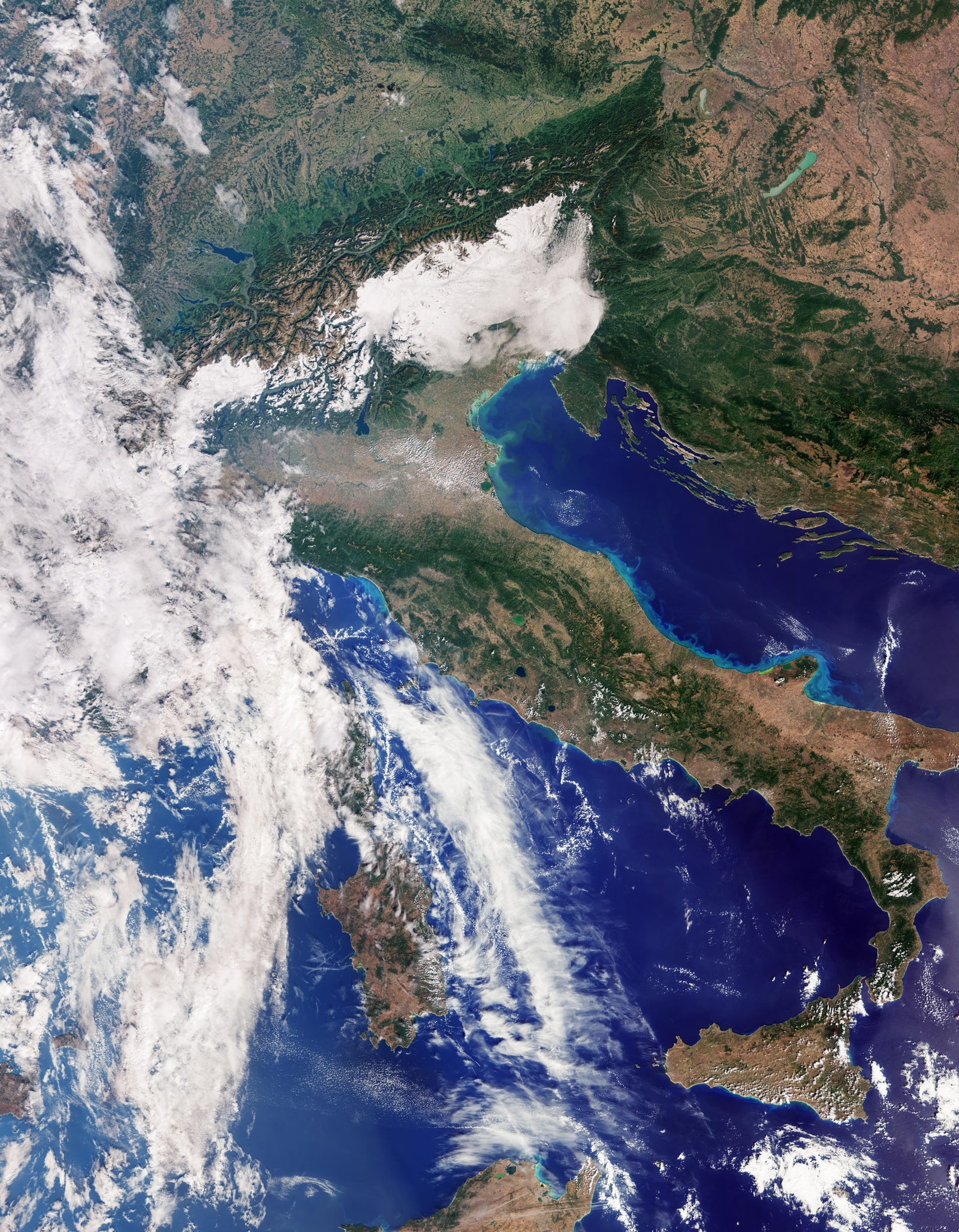
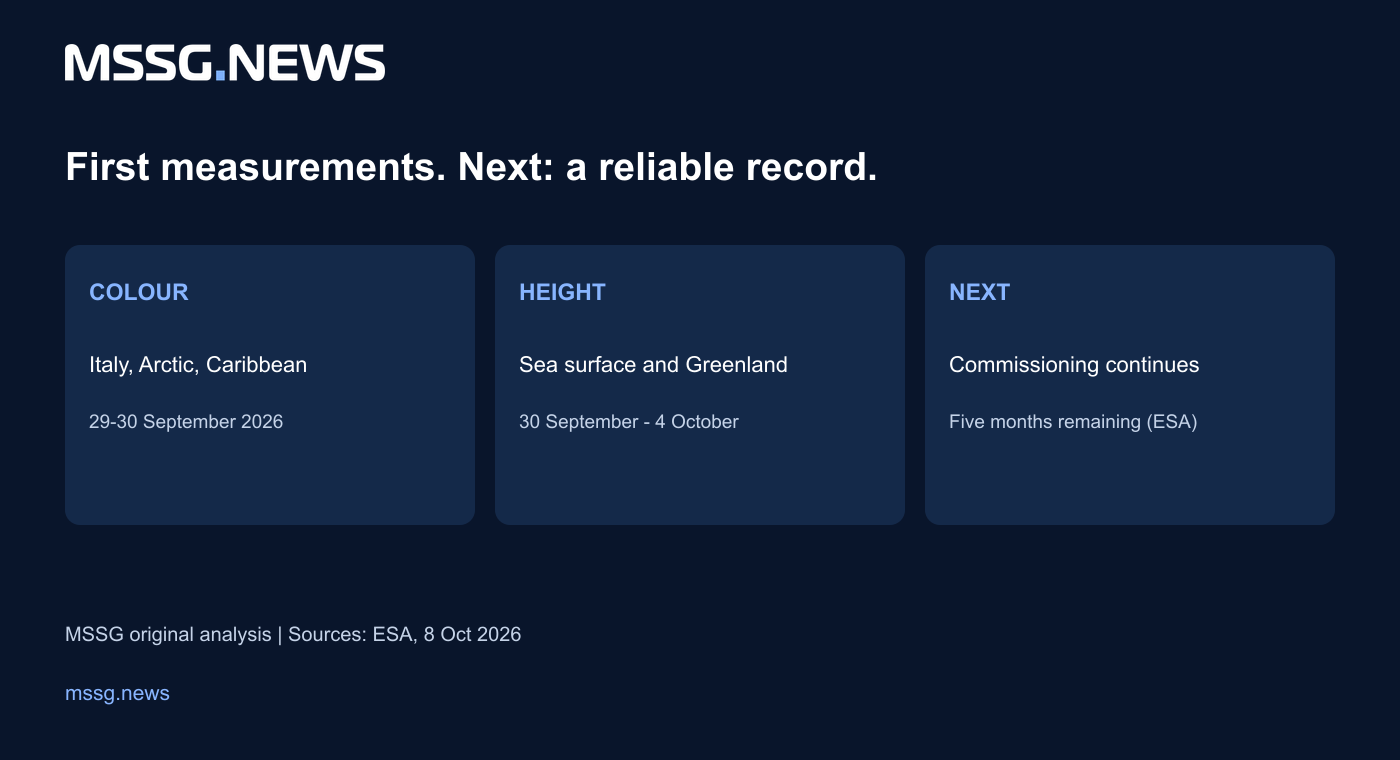
ESA released Sentinel-3C’s first images and measurements on 8 October. The ocean and land colour instrument observed Italy, the Canadian Arctic and the Caribbean on 29-30 September. The radar altimeter returned sea-surface height measurements and Greenland ice-sheet measurements acquired between 30 September and 4 October.
The instruments answer different questions. Colour observations reveal differences across land and water; radar altimetry measures surface height. ESA reports that the initial altimeter results agree closely with reference measurements. Together, they offer a stronger assessment than a single impressive image.
Commissioning continues for another five months, according to ESA. The agency has not yet released the first observations from the sea and land surface temperature radiometer. The announcement therefore marks an instrument milestone on the way to routine service.
The product is a usable record
Our assessment is that the commercial story lies in continuity. An environmental service needs to distinguish a real change on Earth from a change in its measuring instrument. Adding a satellite therefore requires more than obtaining a clean image: users need confidence that its observations fit the record they already use.
That gives data-processing and verification teams a concrete task. Compare outputs, document differences and test how an updated input affects the service. A supplier that can explain this transition gives its customer more useful evidence than one that simply demonstrates an attractive image.
A practical question for buyers
ESA develops the spacecraft and runs commissioning. After that phase, EUMETSAT handles routine satellite operations and marine and atmospheric data delivery, while ESA delivers land, cryosphere, inland-water and offline atmospheric products.
For a company procuring a service built on these observations, the question is straightforward: how does the provider preserve a comparable record when the constellation changes? Sentinel-3C’s first measurements make that question timely. Our diagram separates the published results from the work still ahead.
- Announcement
- 8 October 2026
- First colour observations
- 29-30 September 2026
- Commissioning remaining
- Five months, according to ESA
Sources & context
Published by Mitchell Strategic Solutions Group. See our editorial standards and corrections policy. Read more →