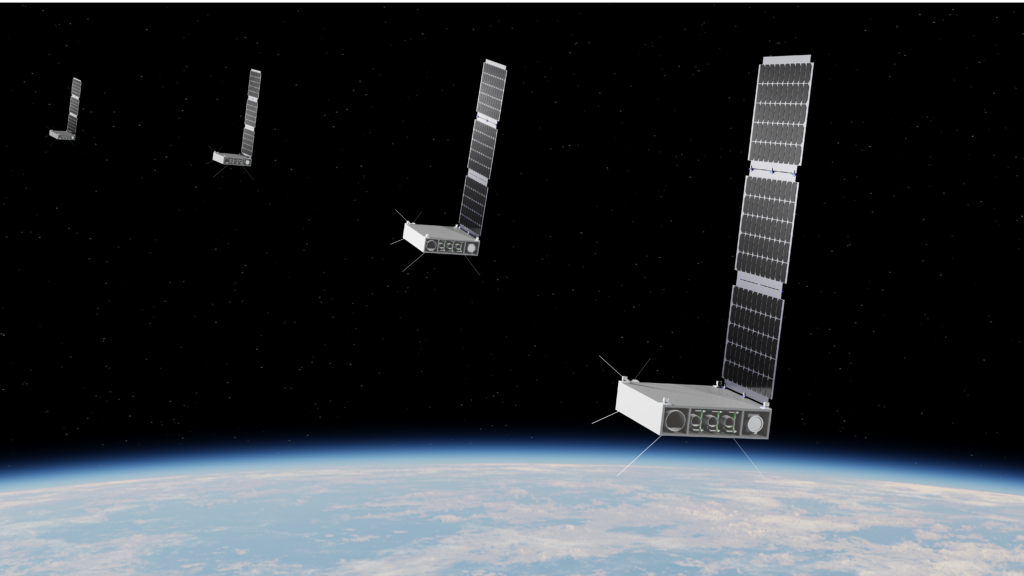
A satellite can leave a clean orbit and still spoil the sky
ESA and IAU CPS are joining forces on satellite interference with astronomy. For manufacturers, reflected light and unintended radio emissions create two distinct engineering tasks during a mission’s working life.
- Space
- Satellite design
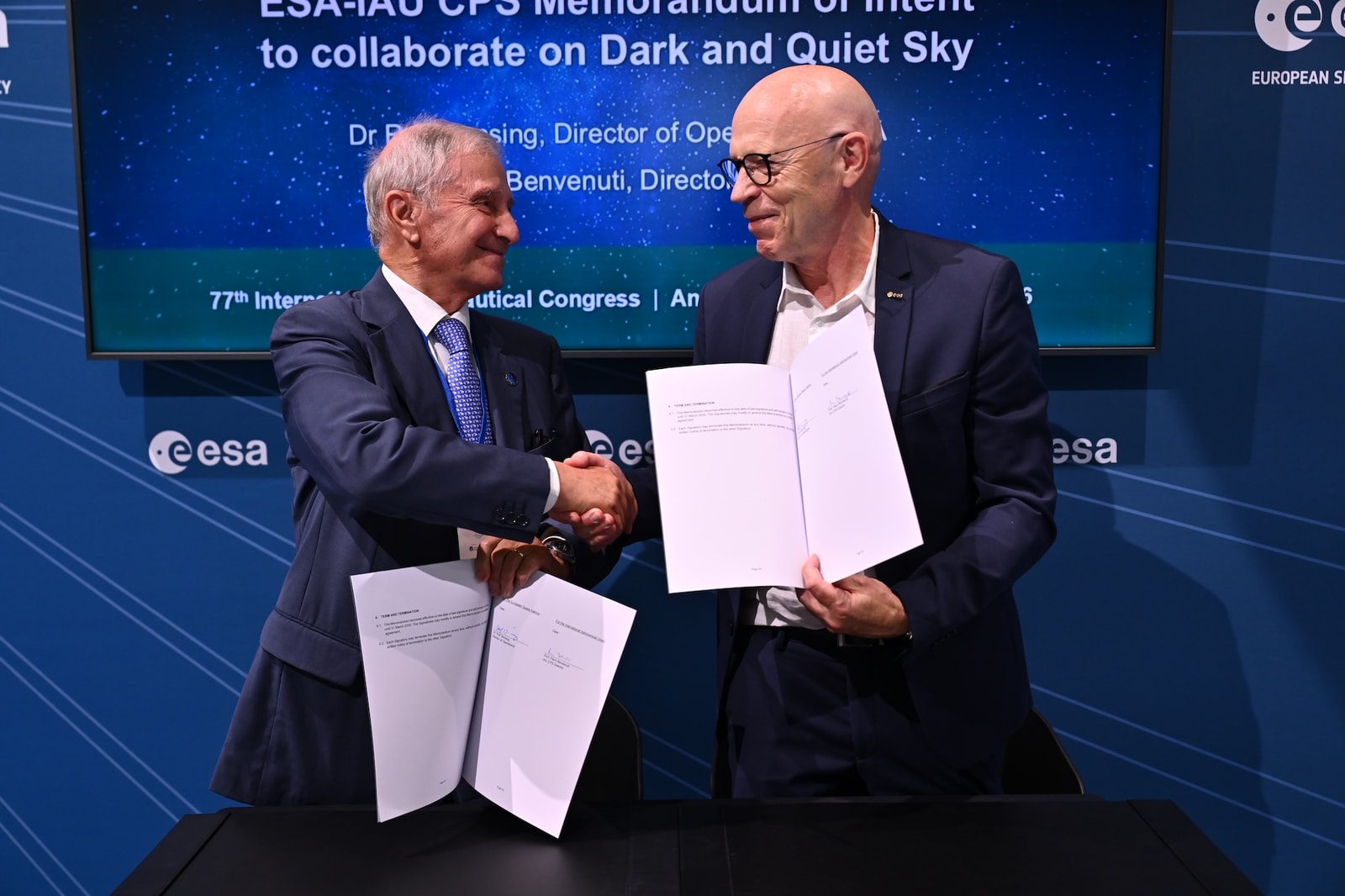
ESA announced on 8 October that it and the International Astronomical Union’s Centre for the Protection of the Dark and Quiet Sky signed a Memorandum of Intent at IAC. Their cooperation will support technical solutions and dialogue with satellite operators.
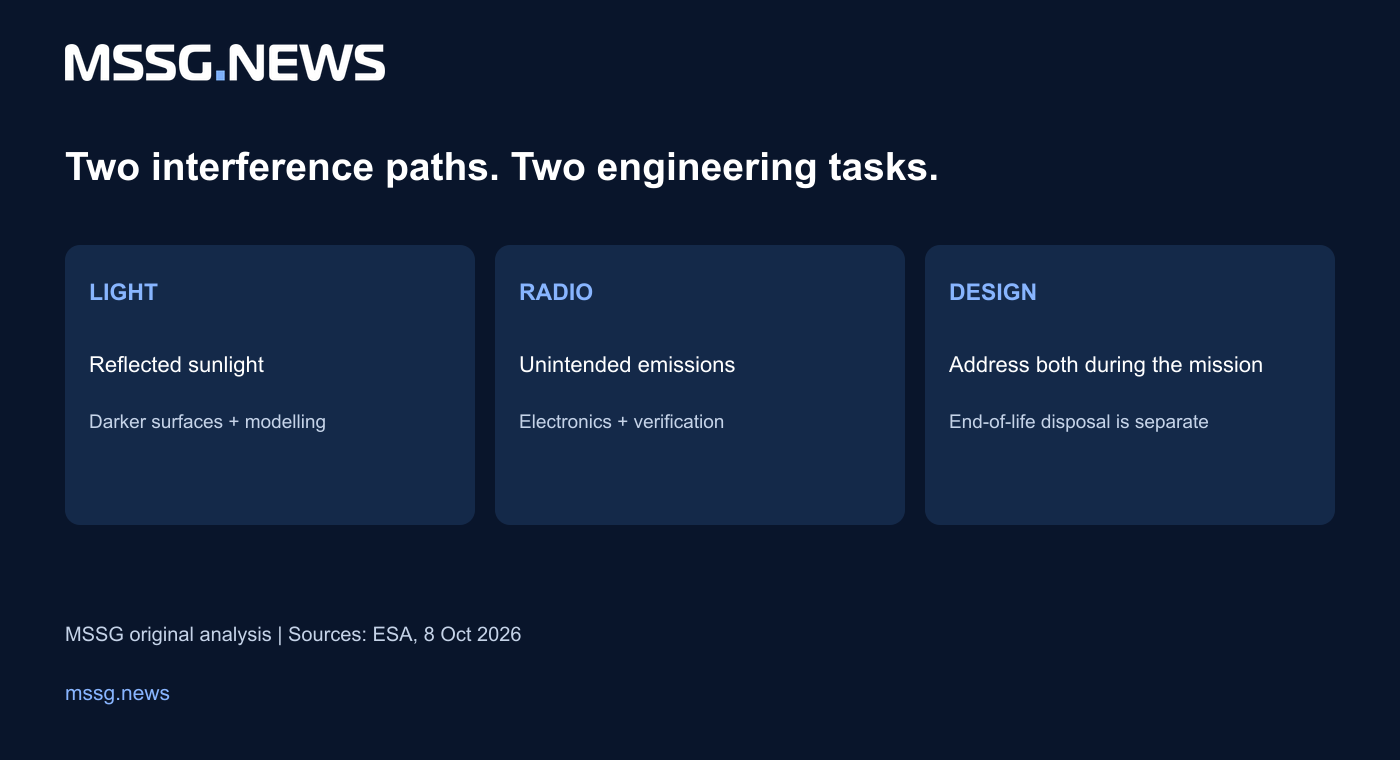
The interference has two paths. Reflected sunlight leaves streaks in telescope images. Unintended radio emissions from onboard electronics affect sensitive radio observations. ESA identifies darker surfaces, radio-quiet electronics and modelling of how spacecraft appear to ground-based telescopes as areas of work.
The IAU centre’s earlier recommendations, released in March 2024, addressed industry, astronomers and regulators. This week’s memorandum adds ESA’s technical expertise and industry engagement; it is a cooperation framework, not a new binding satellite standard.
End-of-life design does not solve in-service interference
Our assessment is that these issues belong in the same design programme but need different tests. A plan to remove a satellite from orbit does not establish how bright it appears during its mission. Likewise, reducing reflected light does not demonstrate control of unintended radio emissions.
For a manufacturer, the useful step is to turn each concern into a traceable verification question. Which surfaces dominate the optical signature? Which electronics produce emissions of interest to observatories? What evidence shows that the proposed mitigation works under relevant operating conditions?
An opportunity for specialist suppliers
Materials, electronics and modelling specialists can contribute to those questions. The strongest proposition would connect a design intervention to a measured or modelled reduction in a defined interference path. That makes the contribution assessable by both the spacecraft team and the affected observatory.
The commercial insight is broader than astronomy: constellation scale makes effects that are tolerable for one spacecraft more consequential across a fleet. Addressing them early is an integration task, not a cosmetic change at the end of production. Our diagram separates the two mechanisms and the engineering response to each.
- Framework
- Memorandum of Intent
- Optical mechanism
- Reflected sunlight
- Radio mechanism
- Unintended onboard emissions
Sources & context
- ESA: dark and quiet sky cooperation, 8 October 2026 ↗
- IAU CPS: recommendations for constellation interference, March 2024 ↗
Published by Mitchell Strategic Solutions Group. See our editorial standards and corrections policy. Read more →