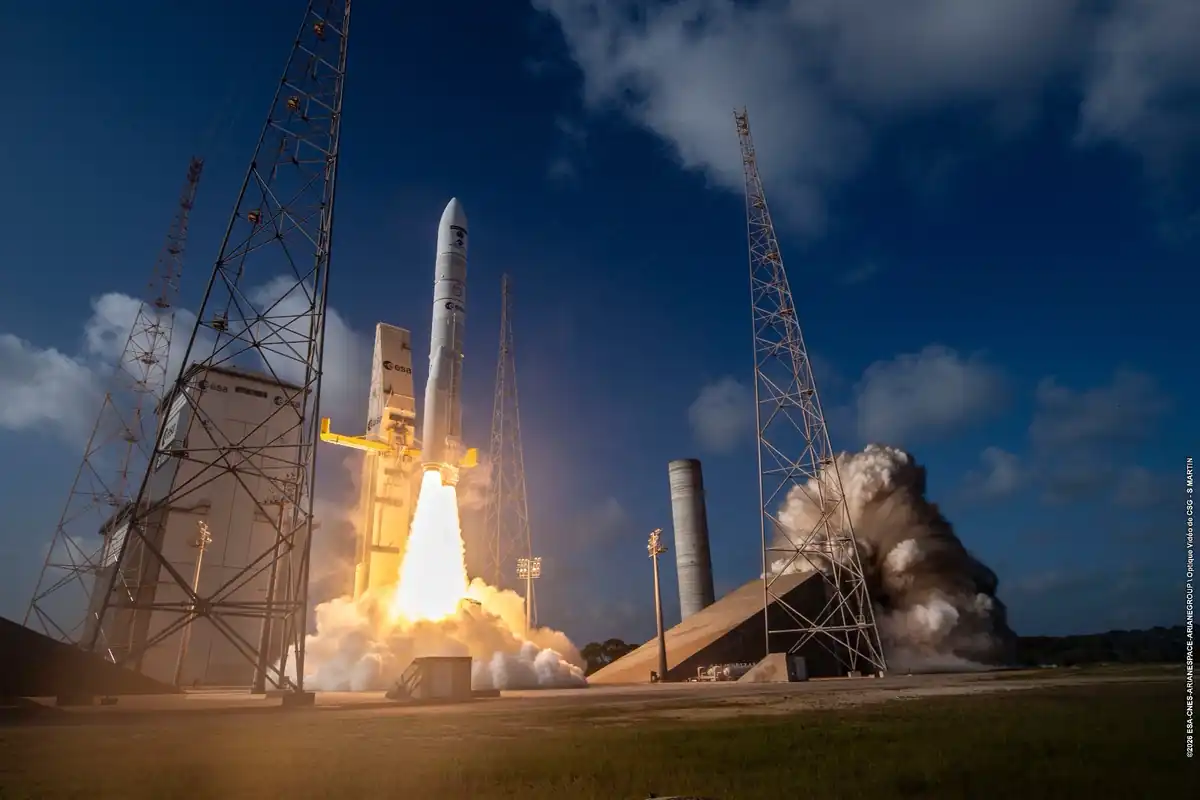

Prometheus tests add methane-engine capability to Europe’s P5 test bench
The October campaign tested a newly manufactured combustion chamber and an upgraded facility. Its industrial value includes the ability to test repeated operating sequences for future reusable launch systems.
- Space industry
- Prometheus
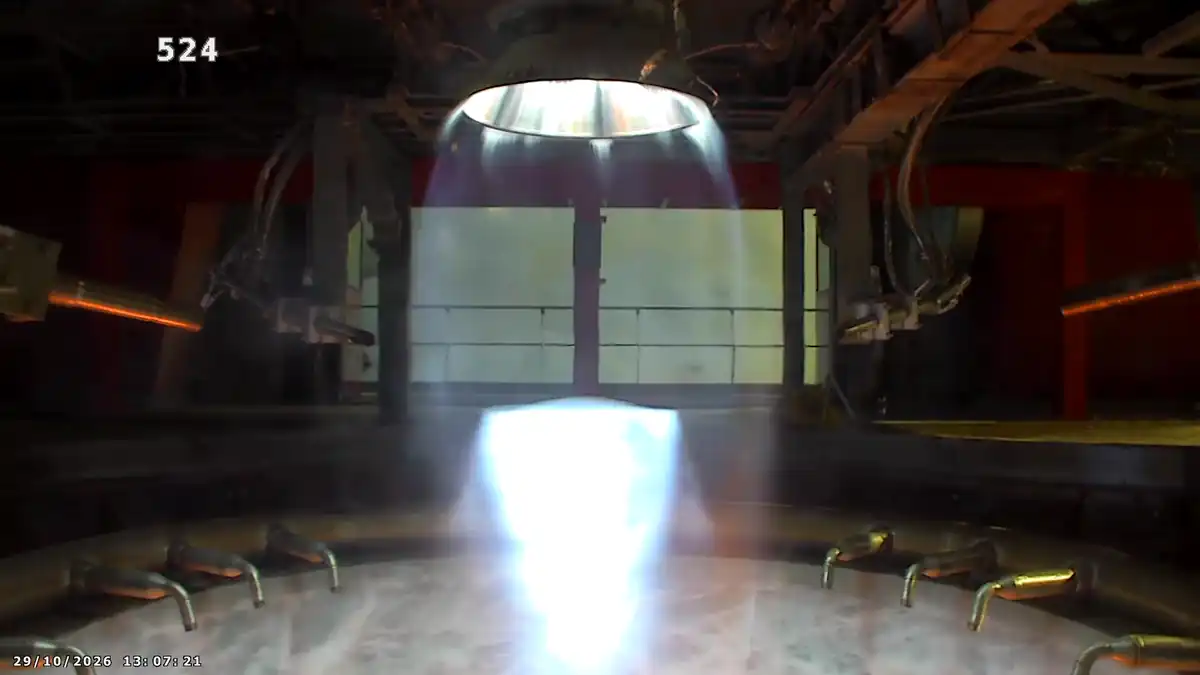
Europe’s reusable-launcher programme has gained testing capacity as well as another engine result. On 29 October, Prometheus completed several hot-fire tests at the upgraded P5 bench in Lampoldshausen, Germany. ESA and DLR reported the campaign on 6 November, highlighting methane operation and repeated starts.
Prometheus is being developed by ArianeGroup under ESA’s Future Launchers Preparatory Programme. It uses liquid oxygen and liquid methane. P5 is part of ESA’s test infrastructure and is operated by DLR; its upgrade allows the facility to supply methane and investigate more complex operating sequences.
That combination matters industrially: an engine design needs facilities able to reproduce relevant operating phases and collect comparable measurements. The current campaign advances that testing capability alongside the engine itself. It does not constitute a flight demonstration of a reusable launch vehicle.
A manufacturing change reaches the hot-fire stage
ESA says the tested engine incorporated a combustion chamber produced using cold gas spray, an additive manufacturing technique. The announcement presents the tests as validation of both the upgraded bench and the new production approach. It gives no measured unit-price saving or series-production rate for the chamber.
Our assessment is that the useful manufacturing milestone is the connection between a new way of producing a component and an operating test. A lower-cost production objective becomes more assessable when hardware made by that process can be tested repeatedly. Cost and production claims would still need their own manufacturing evidence.
The new capability belongs to a sequence of tests
The earlier Prometheus campaign in Vernon, France, already demonstrated four consecutive ignitions on 20 June 2025, according to ESA’s July 2025 account. The October 2026 campaign should therefore be read for its specific additions: the P5 methane upgrade, repeated operation there and the newly manufactured chamber.
ESA also reports repeated re-ignition without a high-pressure starter system in the new campaign. DLR emphasises stable operating points and the ability to investigate changes in thrust. These are defined ground-test results and capabilities; the reports do not supply a completed flight-reuse record.
Facilities are part of the route to reusable launch systems
DLR describes P5’s measurement systems recording thrust, propellant flow, pressure ratios and temperatures. Its expanded capability allows researchers to study the interaction between operating phases. ESA says the bench can also be adapted back to oxygen-and-hydrogen operation, preserving a role in testing hydrogen engines.
For European equipment and manufacturing teams, this illustrates why test infrastructure belongs in the industrial plan alongside components and final launch vehicles. A facility that can investigate repeated sequences provides a place to compare design changes under controlled conditions. Neither agency announces a new supplier competition in these reports.
The next campaign described by ESA concerns an improved Prometheus Mark 2, with initial testing planned at ArianeGroup’s Vernon centre. Following the results of that campaign will help show how the production and operating changes progress through successive engine versions. The published next step is further testing, with no new launch date specified.
Sources & context
- ESA: Prometheus tests and upgraded P5, 6 November 2026 ↗
- DLR: repeated ignition capability at P5, 6 November 2026 ↗
- ESA: earlier Prometheus campaign, 2 July 2025 ↗
Published by Mitchell Strategic Solutions Group. See our editorial standards and corrections policy. Read more →
Related reporting
ESA’s Low-LEO programme tests services before they can join IRIS²