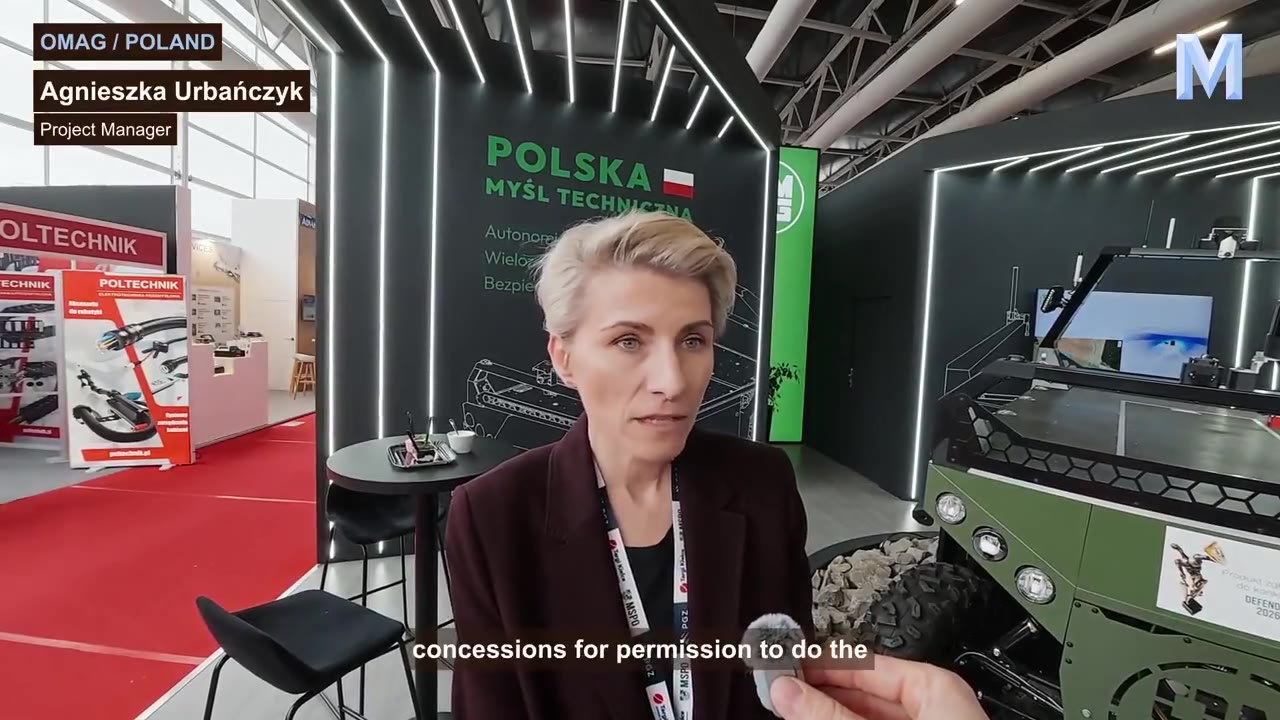

PERAVIA at MSPO: the propulsion problem behind vertical and horizontal flight
Jacek Piwkowski describes development work on drive efficiency. Our interview and the company’s product description point to a component-level engineering challenge.
- MSPO 2026
- PERAVIA
Watch the video
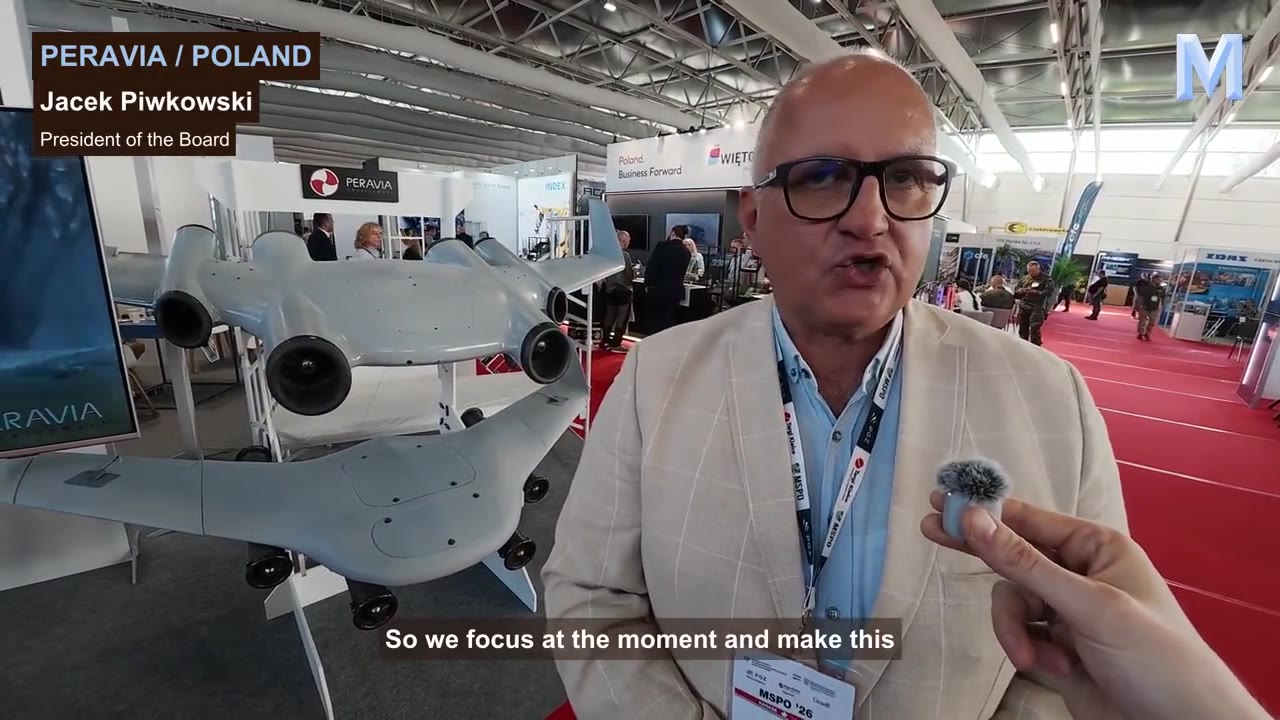
When MSSG asked about autonomy at MSPO, PERAVIA’s Jacek Piwkowski brought the discussion back to propulsion. His account concerned technology for vertical and horizontal flight, still in research and development. The interview was first published in our MSPO video on 10 September.
That answer changes the frame of the discussion. A propulsion company is solving a different problem from a supplier of navigation software. Calling both autonomous-drone businesses can obscure what an integrator would actually buy from each.
PERAVIA’s website describes distributed electric propulsion integrated into a wing, with thrust direction changing without rotating the entire wing. These are manufacturer descriptions. MSSG has not independently measured the system’s efficiency or reliability.
What the interview establishes
Piwkowski identified improving drive-unit efficiency as part of the ongoing work. That is evidence of the development priority he described, not a published performance curve. The conversation did not provide a basis for comparing the product numerically with competing propulsion systems.
For a reader evaluating maturity, the relevant distinction is between a concept, a working development unit and a product qualified for a defined aircraft. The interview establishes the research-and-development stage described by the company. It does not establish completion of every subsequent stage.
The integration question
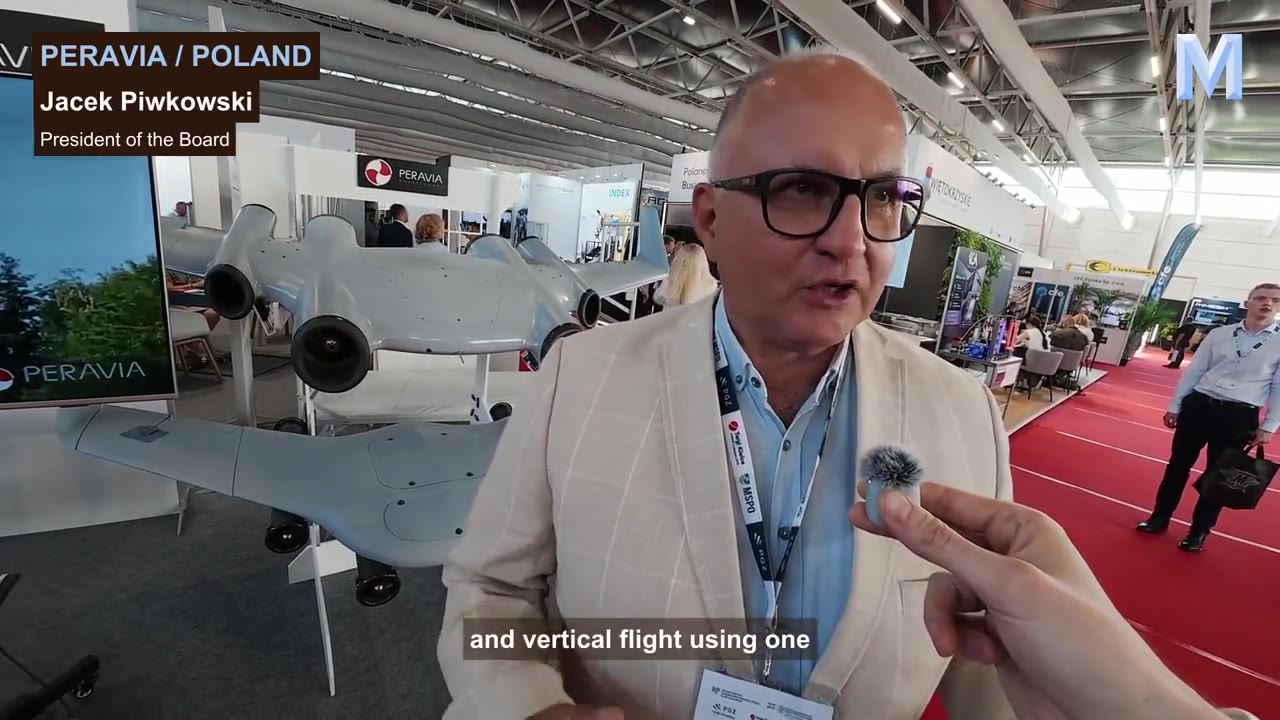
Our analysis is that an aircraft integrator would need evidence tied to the proposed configuration: the particular drive unit, aircraft and operating conditions. A result from one arrangement cannot simply be assigned to every possible installation. Interface and support responsibilities also need to be agreed.
This does not make the concept less interesting. It makes the commercial conversation more precise. An investor considering the development programme and an operator considering an aircraft are asking different questions of the same technology.
Reading the original material
The embedded film contains the original conversation, together with our separate interview with Lendurai. This article is a focused expansion of that reporting, not a second interview or a new announcement from PERAVIA. The company website supplies product context; the interpretation here is ours.
The next useful evidence would be results for a named configuration and a clear account of the remaining development stages. Until those are available, the responsible description is a propulsion technology under development, rather than an operational capability already demonstrated to MSSG.
Sources & context
- MSSG: Martin Mycielski interviews PERAVIA and Lendurai at MSPO 2026 ↗
- PERAVIA: propulsion concept ↗
- Lendurai: Accipiter and Neocortex product descriptions ↗
Published by Mitchell Strategic Solutions Group. See our editorial standards and corrections policy. Read more →
Related reporting
Ekolot at MSPO: certification time is part of product readiness
Octava Defence: the economics of a wider-area acoustic sensor network