

NATO’s DiBaX tests the civilian networks behind military resilience.
In Latvia, 5G slicing, multiple-network communications and dual-use sensing share an experimental backbone. The industrial opportunity is integration evidence before a procurement decision.
- NATO
- Dual-use
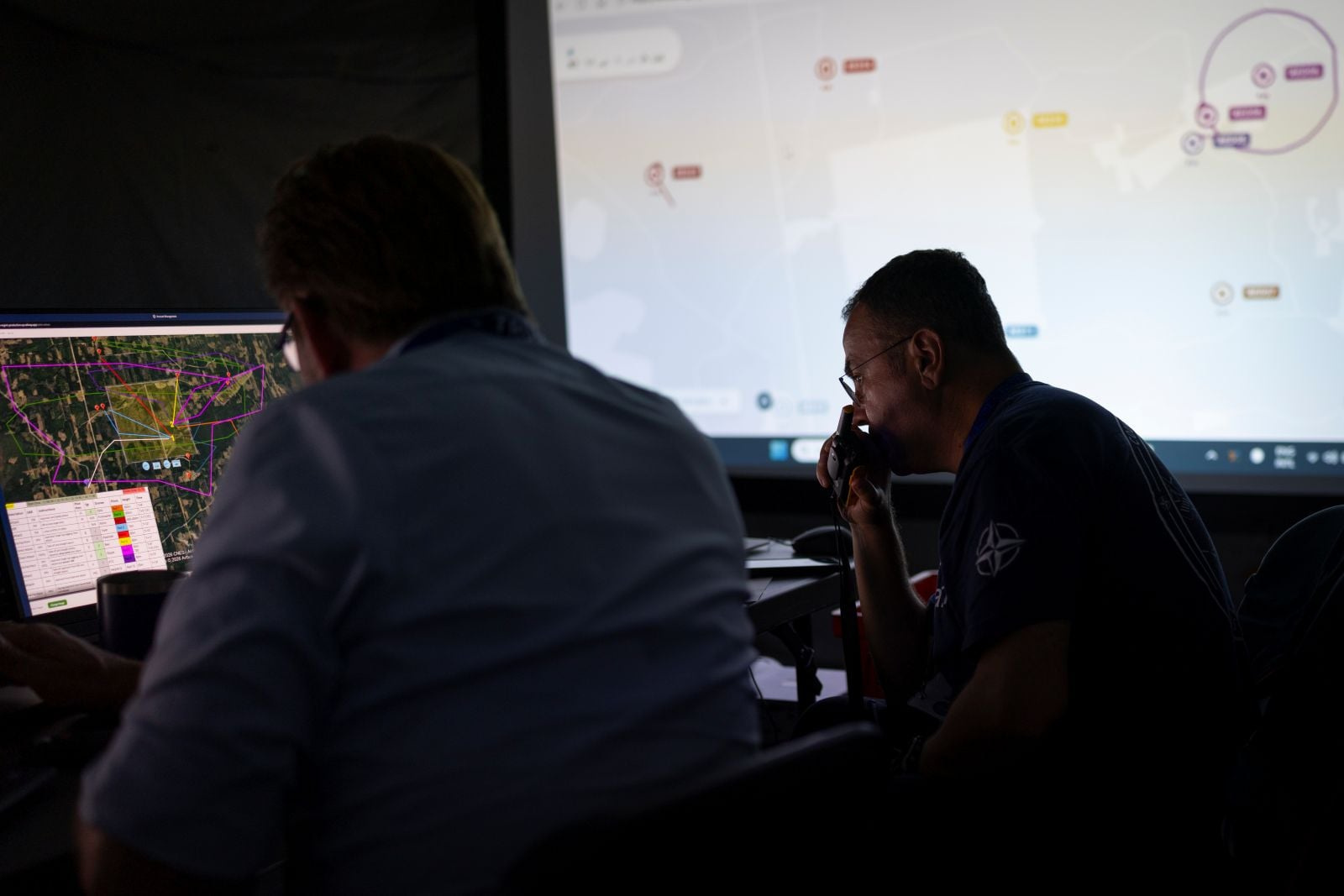
Civilian telecommunications can matter to European defence before dedicated military infrastructure is in place. NATO’s Digital Backbone eXperimentation, DiBaX26, is testing that proposition in Latvia this October, according to Allied Command Transformation.
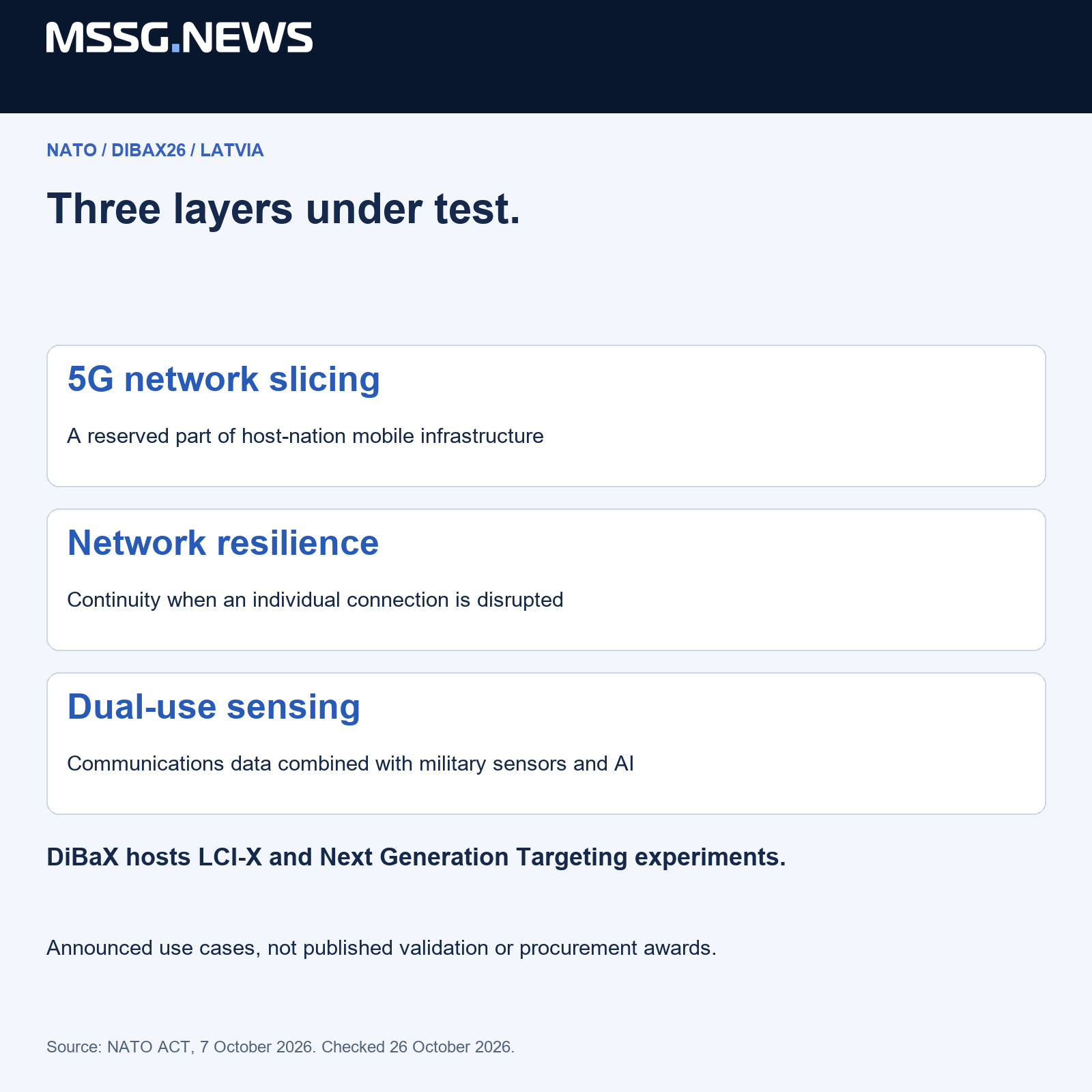
ACT’s 7 October account describes three use cases: rapid deployment through 5G network slicing, resilient communications across multiple networks and situational awareness using integrated data, including dual-use sensing from communications infrastructure.
The significance for a technology company is the connection between those layers. An individual component needs to exchange information with other suppliers’ systems under difficult conditions. DiBaX provides an experimental setting; participation or a demonstration is not a procurement award.
A service before dedicated infrastructure arrives
ACT describes combining host-nation telecommunications and non-terrestrial networks to explore early command, coordination and data services. A reserved 5G network slice is one part of that investigation. The programme also tests continuity when an individual network is weak, disrupted or unavailable.
The useful distinction is between access to more than one network and continuity of a required service. Our analytical test would ask whether the same priority information remains usable by its recipient through a disruption. A count of available links cannot answer that alone. Integration, service priorities and the receiving application remain part of the result a buyer would need to assess.
Everyday networks as sensors
The third use case examines whether everyday communications infrastructure can supply sensing information. ACT describes combining such data with dedicated military sensors and analysing it with artificial intelligence to improve situational awareness.
That creates an evidence question separate from connectivity. Information can arrive reliably yet remain incomplete, outdated or wrongly interpreted. A useful assessment would distinguish data access, the quality of the resulting observation and the decision it supports. These are evaluation questions, not a claim that DiBaX has already published a validated detection capability or the results of its current trials.
NATO’s role is the shared integration problem
ACT identifies Latvian Mobile Telephone as the 5G testbed provider and integrator. DiBaX also hosts experimentation for the Layered Counter-UAS Initiative and Next Generation Targeting. Those programmes supply use cases and data that put demands on the shared digital environment.
This is a concrete contribution to European security: giving national operators and suppliers a setting where systems must work across organisational boundaries. For dual-use companies, useful outputs would be documented interfaces, repeatable test conditions and evidence that an operator’s required service survives disruption. Such evidence can inform later development or acquisition. The public account does not make the experiment an order or an Alliance-wide operational deployment.
Sources & context
Published by Mitchell Strategic Solutions Group. See our editorial standards and corrections policy. Read more →