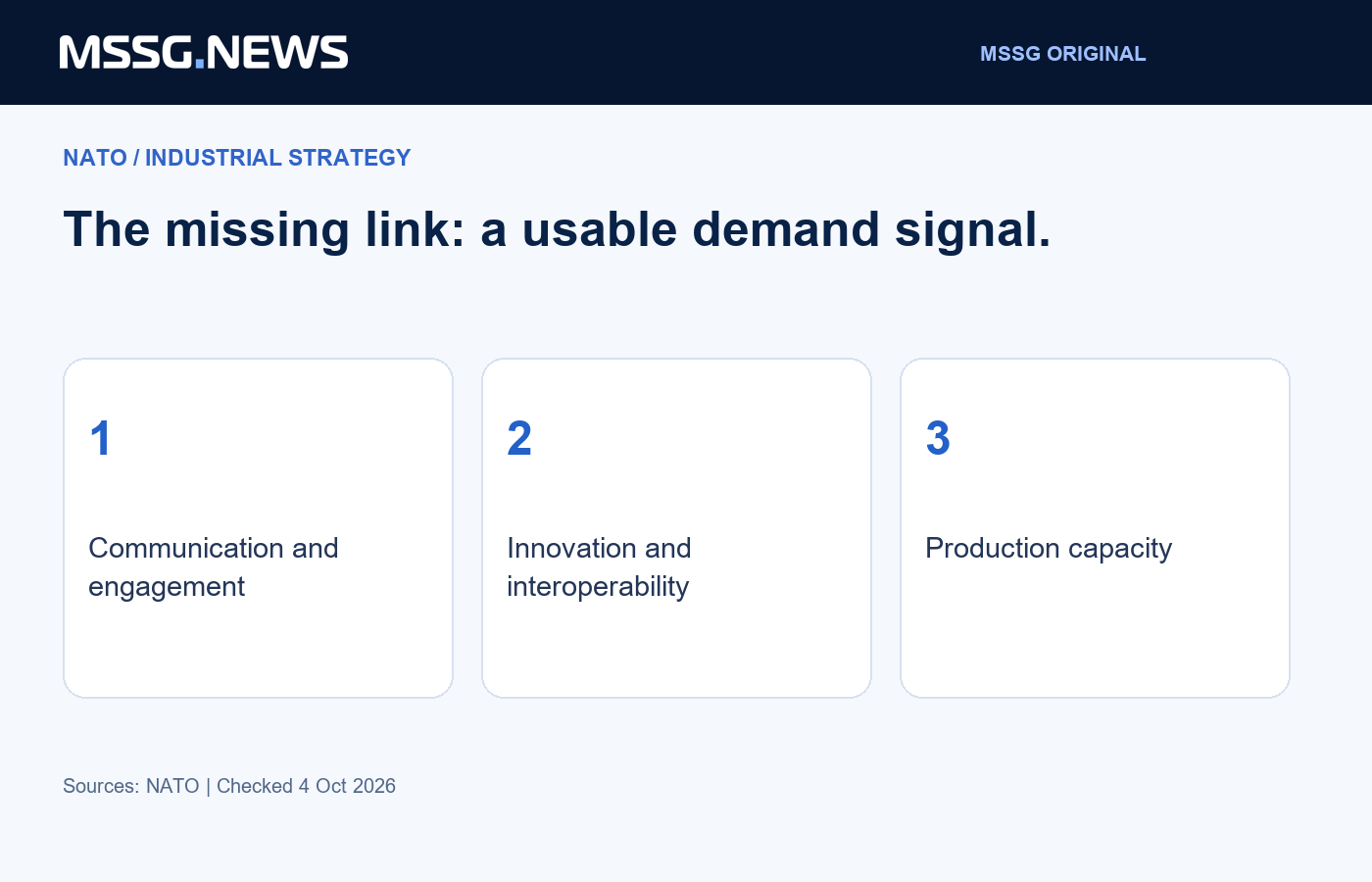

NATO takes deep-strike demand to industry. Production commitments come next
A Brussels meeting brought established companies and start-ups into the same discussion. The published demand signal gives firms a direction for investment and a national route for procurement enquiries.
- NATO
- industry
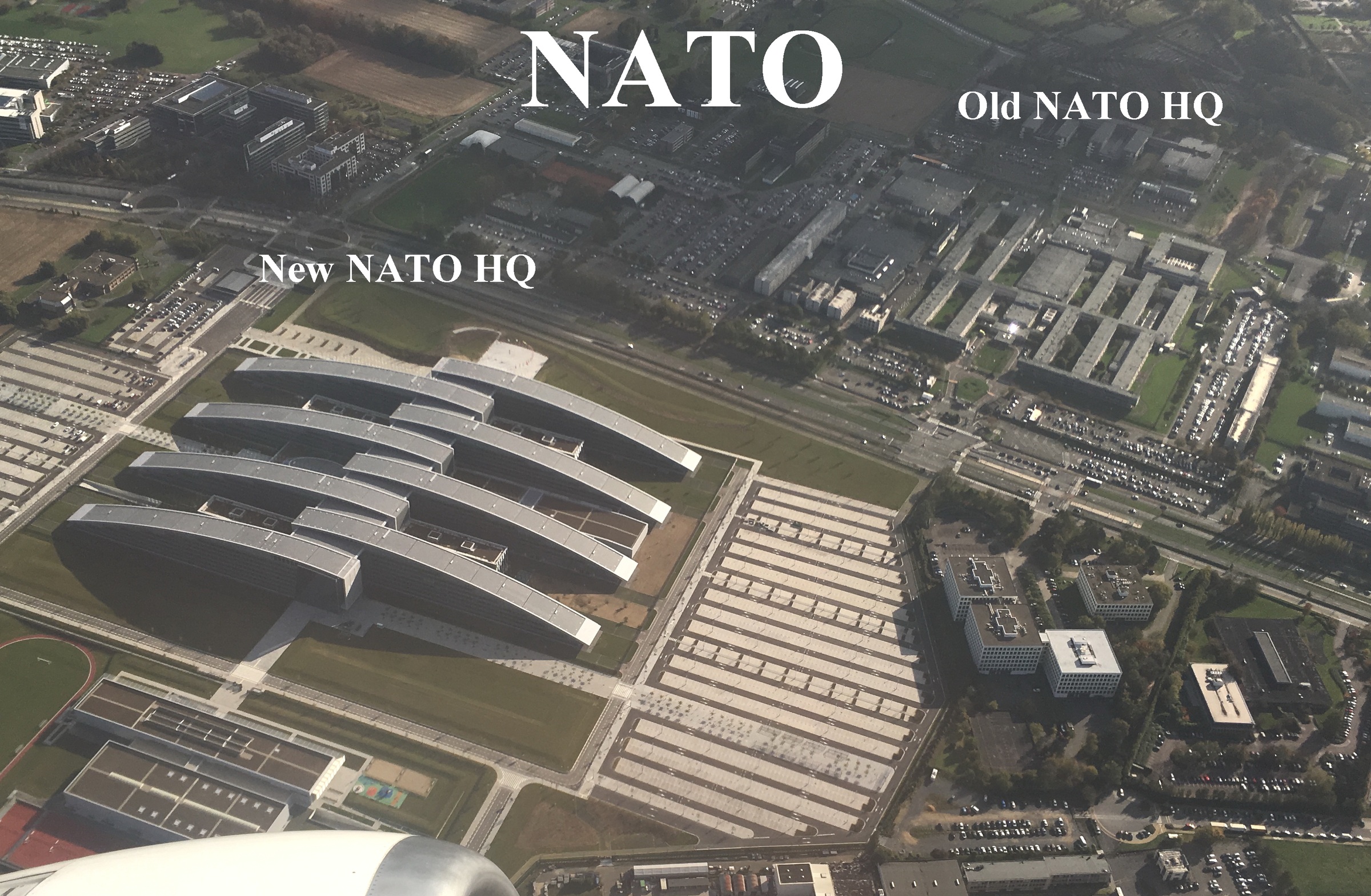
NATO met Allied representatives, defence companies and start-ups in Brussels on 10 November to discuss deep precision strike. The meeting connects a publicly stated capability priority with a problem manufacturers must solve before expanding production. They need confidence about what customers intend to buy and over what period.
The Alliance’s account points to a mix of cruise missiles, drones and maritime strike systems. It also stresses secure procurement commitments alongside speed and scale of production. Its emphasis brings industrial planning into a conversation often dominated by the characteristics of individual systems.
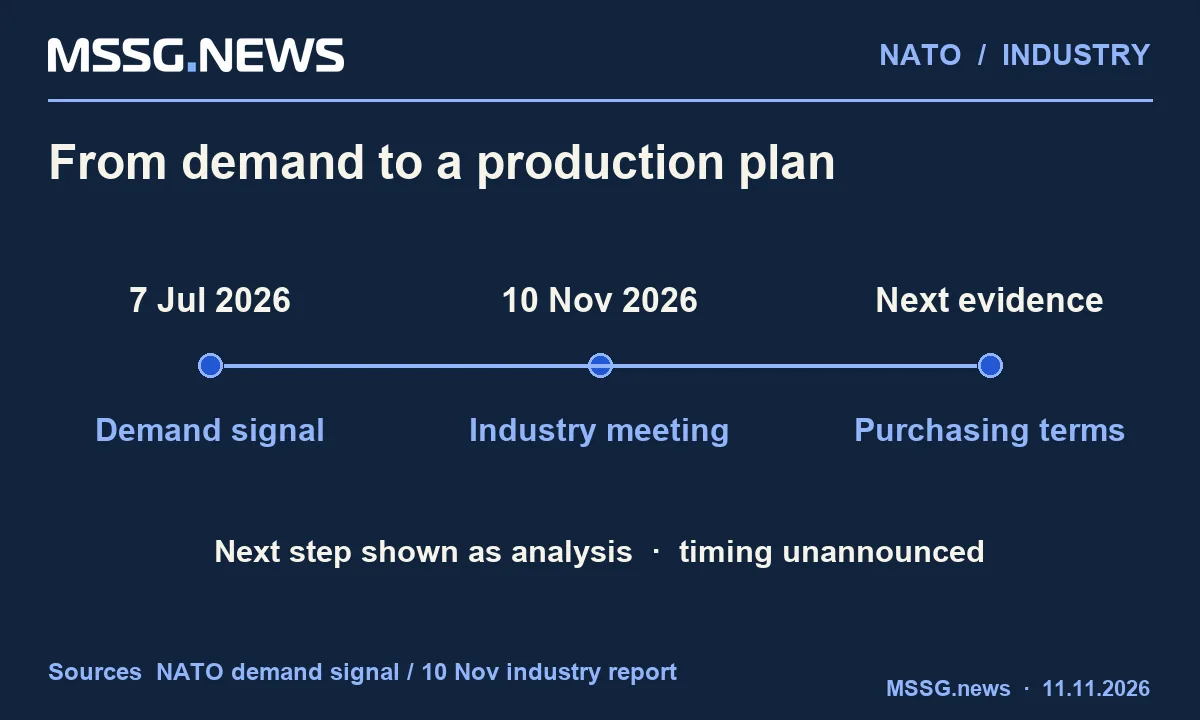
Deep strike is one of five priority areas in NATO’s aggregated demand signal released at the Ankara defence industry forum on 7 July. The public document describes requirements through 2035. It provides market guidance and directs suppliers towards national procurement authorities for possible notices.
What pooled demand can change
NATO identifies its multinational Deep Strike Drone and Ground-Based Precision Strike Capabilities High Visibility Projects as ways to centralise national requirements. In the Alliance’s description, this can support industrial planning, production over time and faster procurement.
For manufacturers, the economic question is whether several countries can turn similar needs into a sufficiently clear production outlook. In MSSG.news’s analysis, common requirements can make investment easier to plan when they lead to agreed volumes, delivery windows and responsibility for support. The Brussels report supplies no new figures for those commitments.
A defined need opens several supplier roles
The public demand signal seeks precision, an effective cost per hit and interoperability with NATO standards. It allows solutions that meet a requirement wholly or in part. That wording makes the signal relevant to companies contributing a component or service as well as those offering a complete platform.
The signal’s stated purpose includes investment decisions, workforce planning and stronger supply chains. A smaller supplier can therefore begin by matching its contribution to a named requirement and identifying the appropriate national customer or industrial partner. Qualification, security and contractual conditions still depend on the actual procurement.
- Industry meeting
- Brussels, 10 November 2026
- Planning horizon
- Requirements through 2035
- Procurement enquiries
- National defence procurement authorities
From public priority to an investable order
NATO’s recommended engagement routes include national defence industry associations, innovation agencies, DIANA and procurement authorities. These have different functions. A technology challenge can help establish suitability, while a purchasing authority determines the conditions of an acquisition.
For a Polish or other European firm, the next useful document is a notice or industrial invitation that names the customer, scope, timetable and evidence required. The public meeting makes the priority visible. The commercial turning point will be a commitment a supplier can use to plan capacity and delivery.
Sources & context
- NATO, Brussels industry discussion, 10 November 2026 ↗
- NATO, complete public aggregated demand signal ↗
Published by Mitchell Strategic Solutions Group. See our editorial standards and corrections policy. Read more →
Related reporting
DIANA and Ukraine sign a testing partnership. The practical work starts with requirements.
Britain and Germany deepen defence cooperation. The decisive question is who delivers.