
“Autonomous” - but which part?
At MSPO, PERAVIA and Lendurai describe two different engineering challenges. The interviews cover propulsion efficiency, onboard functions and the operator’s role.
- MSPO 2026
- Propulsion · operator · testing
Watch the video
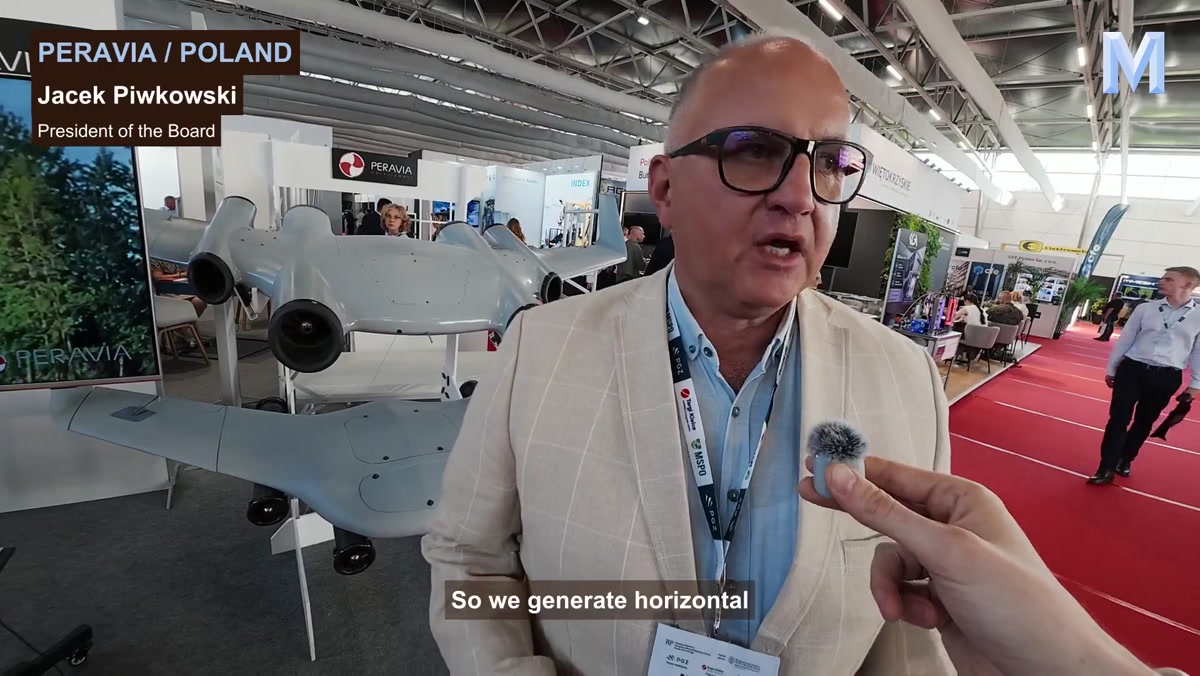
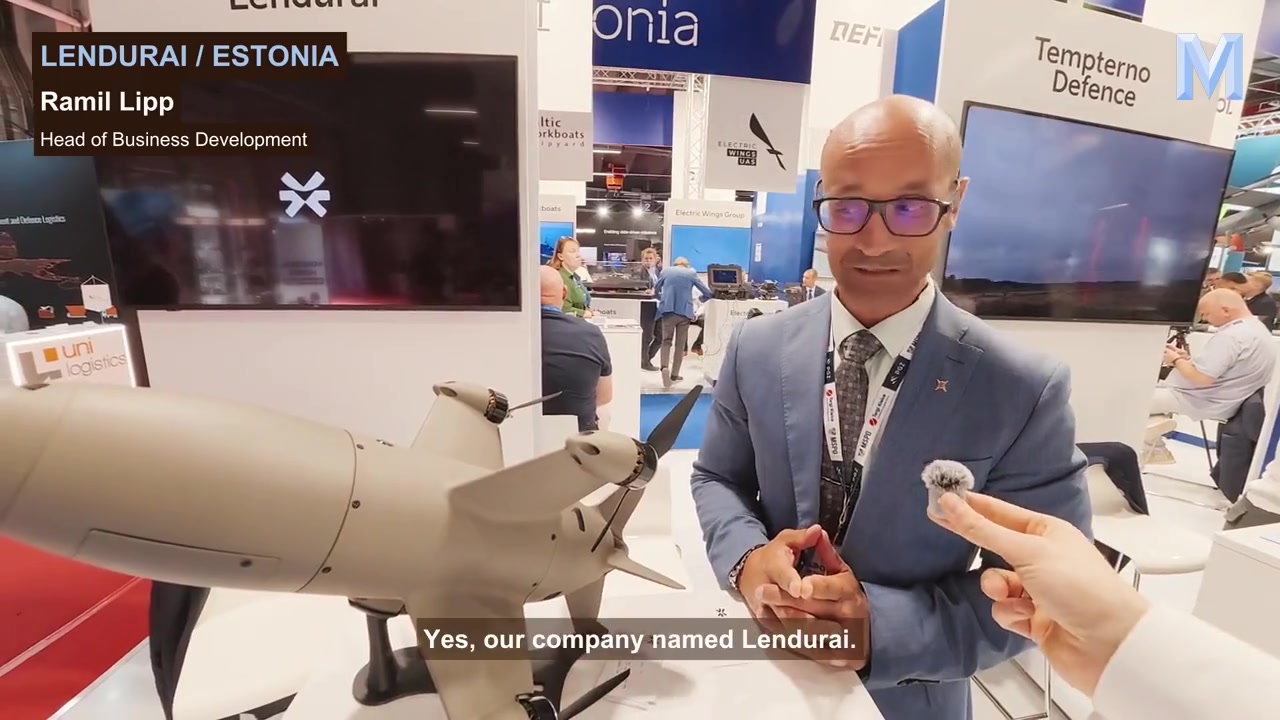
MSSG’s Martin Mycielski spoke with Jacek Piwkowski of Poland’s PERAVIA and Ramil Lipp of Estonia’s Lendurai at MSPO in Kielce. The interviews were first published by MSSG on 10 September.
Piwkowski described propulsion technology for vertical and horizontal flight. The work remains in research and development, with the efficiency of the drive units among the problems the team is working on. This is development work, not evidence of an operationally deployed product.
Lipp explained Lendurai’s approach to interceptor autonomy: functions performed onboard, the operator’s role and an option to require human confirmation of a target. At the time of the interview, combat testing in Ukraine was still ahead.
Navigation, detection and engagement decisions are different functions. A claim of autonomy does not establish that all three are automated, or that a system has been tested in combat.
These are the manufacturers’ accounts, recorded at a trade fair. MSSG has not independently tested the systems. The original video lets readers hear the answers in context.
PERAVIA: propulsion comes first
At MSPO, Jacek Piwkowski described PERAVIA’s work on propulsion for vertical and horizontal flight. He emphasised the research-and-development stage and efforts to improve drive-unit efficiency. The distinction matters: while our question concerned autonomy, this company’s core engineering problem is generating and directing thrust.
The manufacturer describes distributed propulsion integrated into a wing, using electrically driven fans and changing thrust direction without rotating the entire wing. These are the company’s descriptions, not independent measurements of efficiency, reliability or safety.
Lendurai: what happens onboard
Ramil Lipp addressed a different issue: the interceptor’s autonomy and the division of work between system and operator. Our discussion covered onboard computation and the option to retain human target confirmation. It does not establish identical operator involvement in every configuration.
Lendurai’s current website separates its Accipiter interceptor from Neocortex, a package of software, computer and cameras for UAV platforms. The latter is described with visual navigation, PX4/MAVLink support and C2 integration. Separating aircraft from software helps avoid assigning the same maturity status to the whole portfolio.
Experience does not transfer automatically between products
In our interview, combat testing of the displayed interceptor in Ukraine remained planned. Lendurai also describes earlier Ukrainian experience with its software. Both can be true: the track record of one product does not validate a new platform automatically.
Exhibition reporting can lose that distinction. Describing a company as proven in Ukraine may be read as a claim about every item on its stand. We therefore distinguish the supplier’s history, the product description and the status given in the interview.
Different forms of maturity
A propulsion claim needs to be tied to a particular unit and configuration. Autonomy introduces questions about the functions performed by software and the data on which they depend. Demonstrating one function does not describe every operating condition of the complete product. This is our analysis of the interviews, not another manufacturer claim.
Nor should PERAVIA and Lendurai be ranked from one film. They address different parts of the problem. Together they show why an autonomous-system label needs a product, function, version and evidence attached to it.
Implications for integrators and investors
An integrator may be interested in propulsion or software rather than a complete aircraft. Responsibility, compatibility with the intended platform and evidence for the component then become separate subjects. An exhibition conversation begins that assessment; it does not complete it.
The video remains the primary record of our conversations. Additional context comes from company websites, with our interpretation separated from their statements. We do not present unverified performance comparisons or claim that planned testing has been completed.
Sources & context
- MSSG: Martin Mycielski interviews PERAVIA and Lendurai at MSPO 2026 ↗
- PERAVIA: propulsion concept ↗
- Lendurai: Accipiter and Neocortex product descriptions ↗
Published by Mitchell Strategic Solutions Group. See our editorial standards and corrections policy. Read more →