IAC’s 8,330 abstracts reveal a research pipeline, not a ready-made investment map
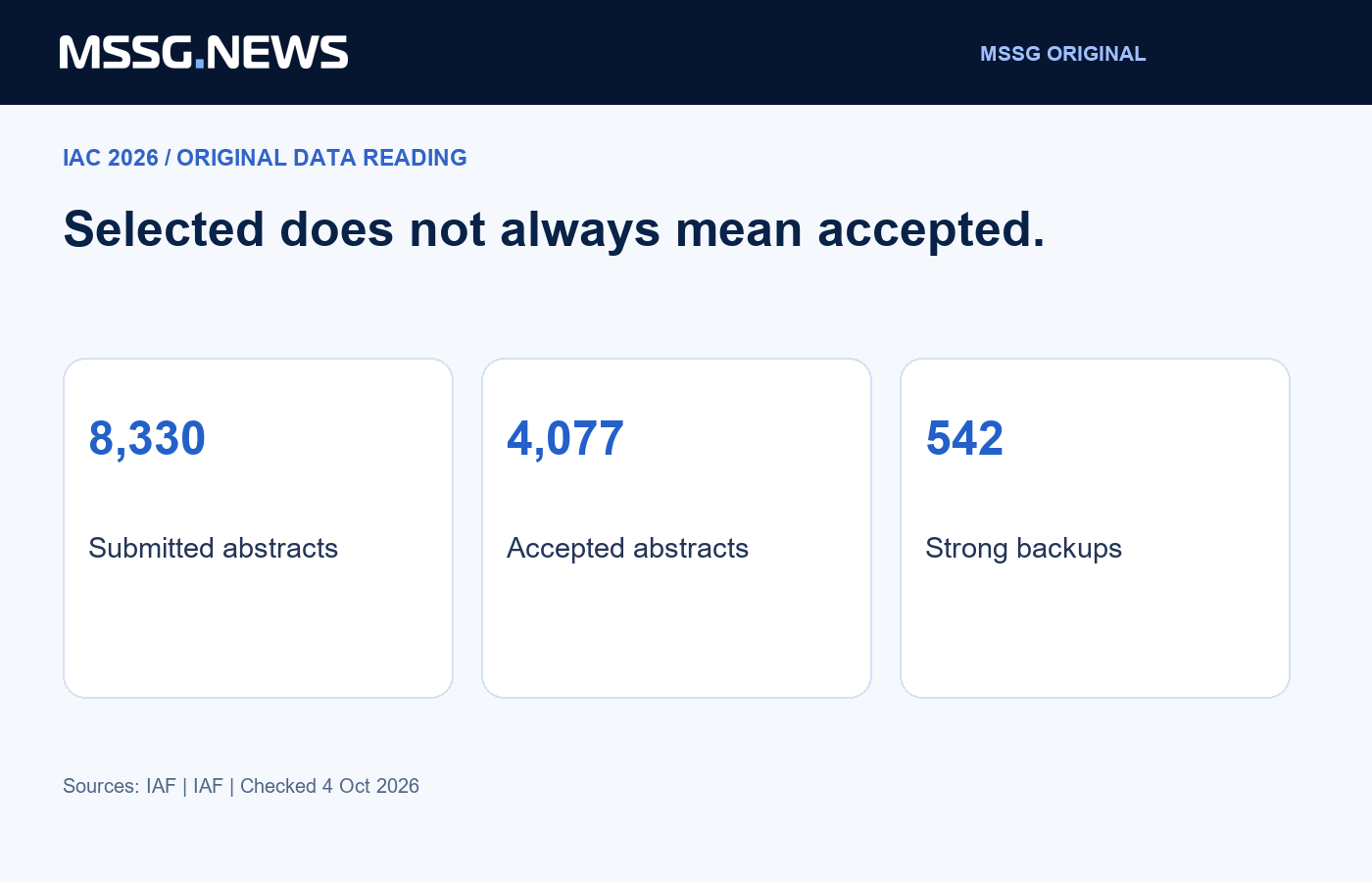
IAF’s selection announcement records 4,077 accepted abstracts and 542 backups. Our calculation separates those categories and explains how an industry reader can use a major congress programme without confusing research visibility with commercial readiness.
- IAC 2026
- research
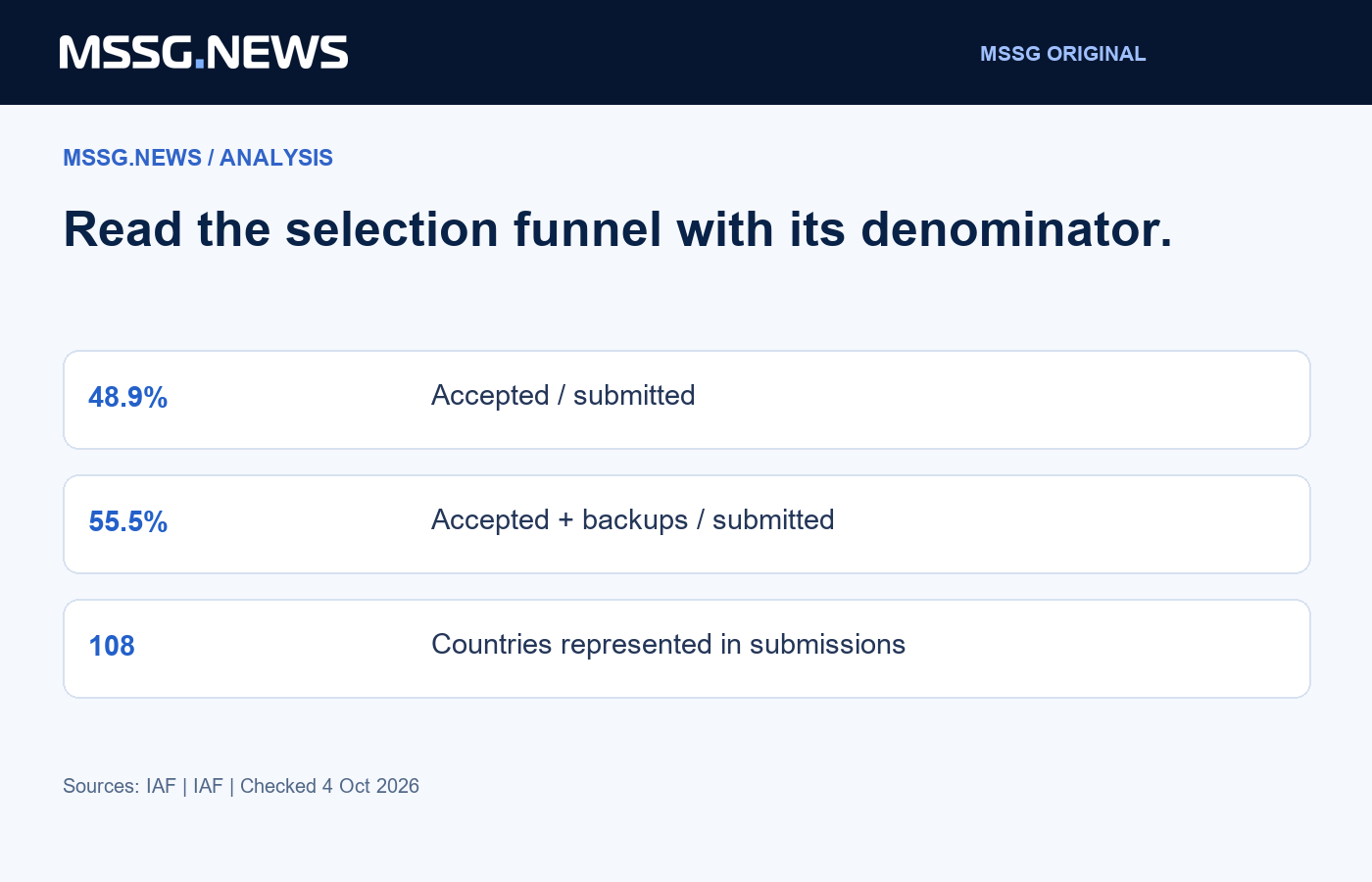
The International Astronautical Congress in Antalya brings a large research pipeline into view. IAF’s April selection announcement records 8,330 abstracts submitted from 108 countries, 4,077 accepted abstracts and 542 strong backups. Those categories are more useful than a single headline about a record programme.
MSSG.news calculates that accepted abstracts represent 48.9% of submissions. Including backups produces 55.5%, rounded to one decimal, consistent with the organiser’s stated 55.45% for the combined selection. The different figures reflect different numerators, not competing accounts of the same category.
The congress is scheduled for 5-9 October. This analysis concerns its published research-selection data; it does not report how many people attended, which presentations ultimately took place or what agreements emerged.
A programme is a map of expertise
For an industrial team, the first useful task is to connect a technical problem to the authors and institutions working on it. A paper on a specific interface, component or measurement method can be more relevant than the most prominent session title. The programme helps identify those connections.
It does not rank commercial readiness. An accepted abstract may describe a simulation, an experiment or a mature application. The evidence behind the individual contribution determines which conversation an investor, integrator or customer should have next.
Geography needs careful interpretation
The 108-country figure concerns submitted abstracts. It should not be presented as the number of countries represented by attendees or accepted presenters without a corresponding dataset. Likewise, an abstract count does not measure the size of a national space industry.
MSSG.news’s reading is that this broad submission base shows the reach of the congress’s research call. For market decisions, it needs to be supplemented with programme details, institutional capabilities and evidence of development or adoption. Our chart intentionally avoids turning it into an investment league table.
A practical use for the selection funnel
The acceptance and backup categories describe the programme’s selection process. They help explain why a submitted idea, a selected contribution and a delivered presentation are not interchangeable records. That distinction also matters when counting research activity across recurring events.
The industrial value comes from following a relevant idea through its evidence: what was tested, with which methods, by which team, and what can be transferred into a product or partnership. The congress provides a dense starting point for that work; the original source behind each contribution supplies the next level of detail.
Sources & context
- IAF: IAC 2026 abstract selection results, 24 April 2026 ↗
- IAF: International Astronautical Congress dates and locations ↗
Published by Mitchell Strategic Solutions Group. See our editorial standards and corrections policy. Read more →