ESA puts industry-driven R&D behind one portal. What OSIP Orbit changes
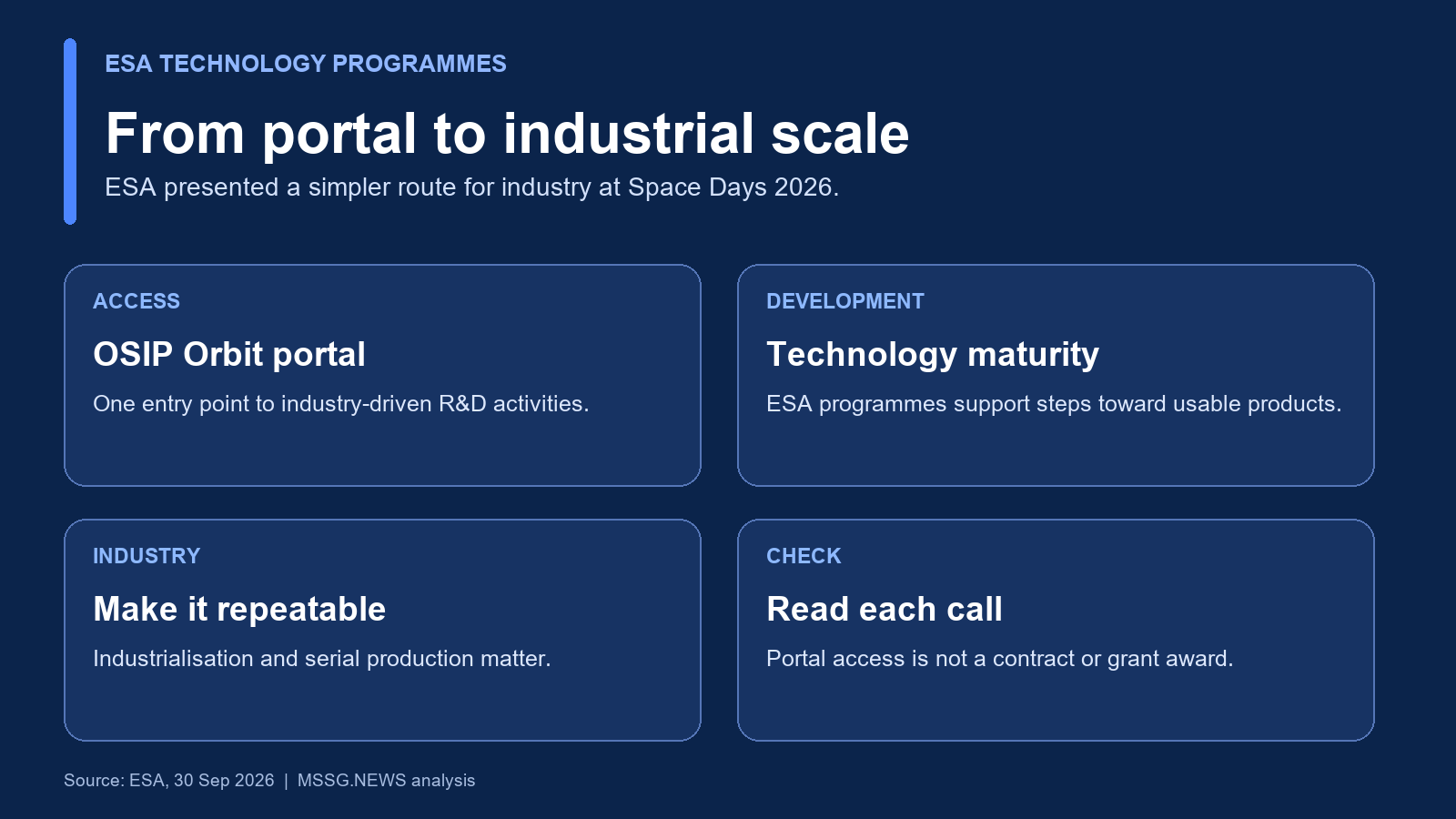
ESA used Industry Space Days to present OSIP Orbit as a single entry point for industry-driven research and development opportunities, while stressing manufacturing scale and resilience. A portal is an access route, not an award.
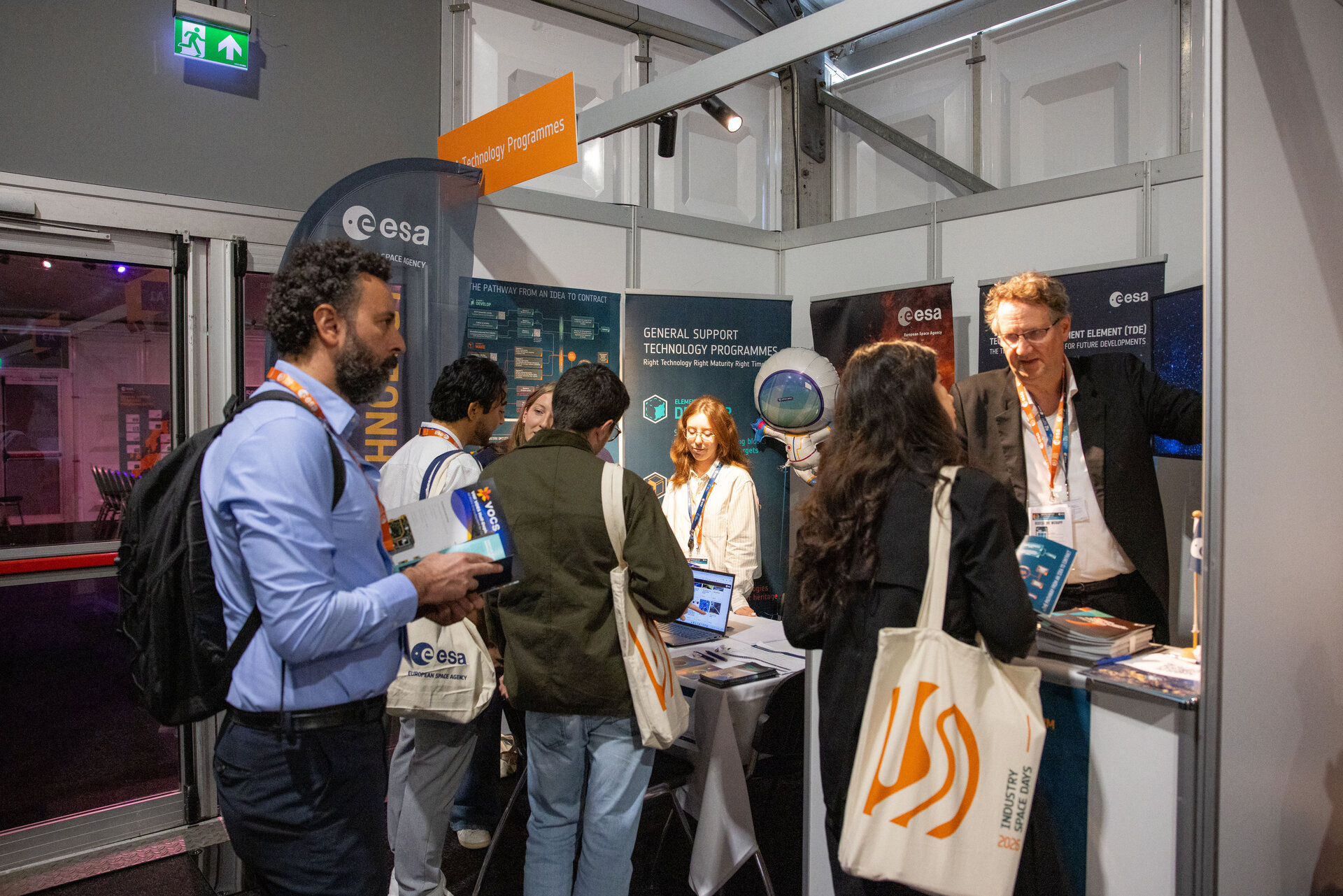
- ESA
- OSIP Orbit
At Industry Space Days in September, the European Space Agency presented OSIP Orbit as a single entry point to its industry-driven research and development activities. ESA says the portal responds to feedback from companies that wanted a simpler route into technology programmes. The agency also describes leaner processes and a shorter time from approach to contract. Its public account does not say that all activities now share one funding rate, selection procedure or application deadline.
The access change matters because space technology programmes have different purposes. An early idea may need proof of feasibility, a component may need testing, and a manufacturer may need to move a product into repeatable production. A common doorway can make opportunities easier to find, but it cannot make these stages interchangeable. Each notice still needs to specify who may apply, the intended outcome, the budget and the maturity level expected.
ESA framed industrialisation and serial production as central to European resilience. Its technology leadership argued that the market value of an invention depends on the ability to manufacture it reliably at scale. That point is particularly relevant to constellations and critical components: a successful laboratory result is only one step towards supplying multiple missions. The conference statement is an agency priority, not evidence that any named supplier has passed qualification.
Resilience and security within the technology programme
ESA also referred to a dedicated Resilience and Security component within the General Support Technology Programme. The agency linked it to technology sovereignty and the ability to support future missions. Its announcement cites five billion euros invested by Member States for technology developments at the latest ministerial. That is a programme-level statement; it must not be described as a current open grant pot available through a single form.
For a company working on dual-use components, the useful distinction is between strategic direction and a live activity. Resilience may shape future topics, but only the published opportunity defines the target technology, security conditions and contract. A firm should use Orbit to identify the relevant activity and then check those documents.
What to watch after the conference
Industry Space Days took place in September and has ended. ESA says presentations will become available through the event site, which may provide more detail on how the new portal operates. The next practical test is whether companies can see comparable opportunities and receive clear decisions without navigating multiple disconnected programme pages.
A simpler front door is useful, but success will be measured later: more relevant applications, faster contracting and products that can be made and supported in volume. None of those outcomes is established by a conference presentation alone. For now, OSIP Orbit is a navigational improvement to monitor alongside the substance of each ESA call.
Sources & context
- ESA: simpler R&D and OSIP Orbit at Industry Space Days, 30 September 2026 ↗
- ESA: technology booth image and credit ↗
Published by Mitchell Strategic Solutions Group. See our editorial standards and corrections policy. Read more →