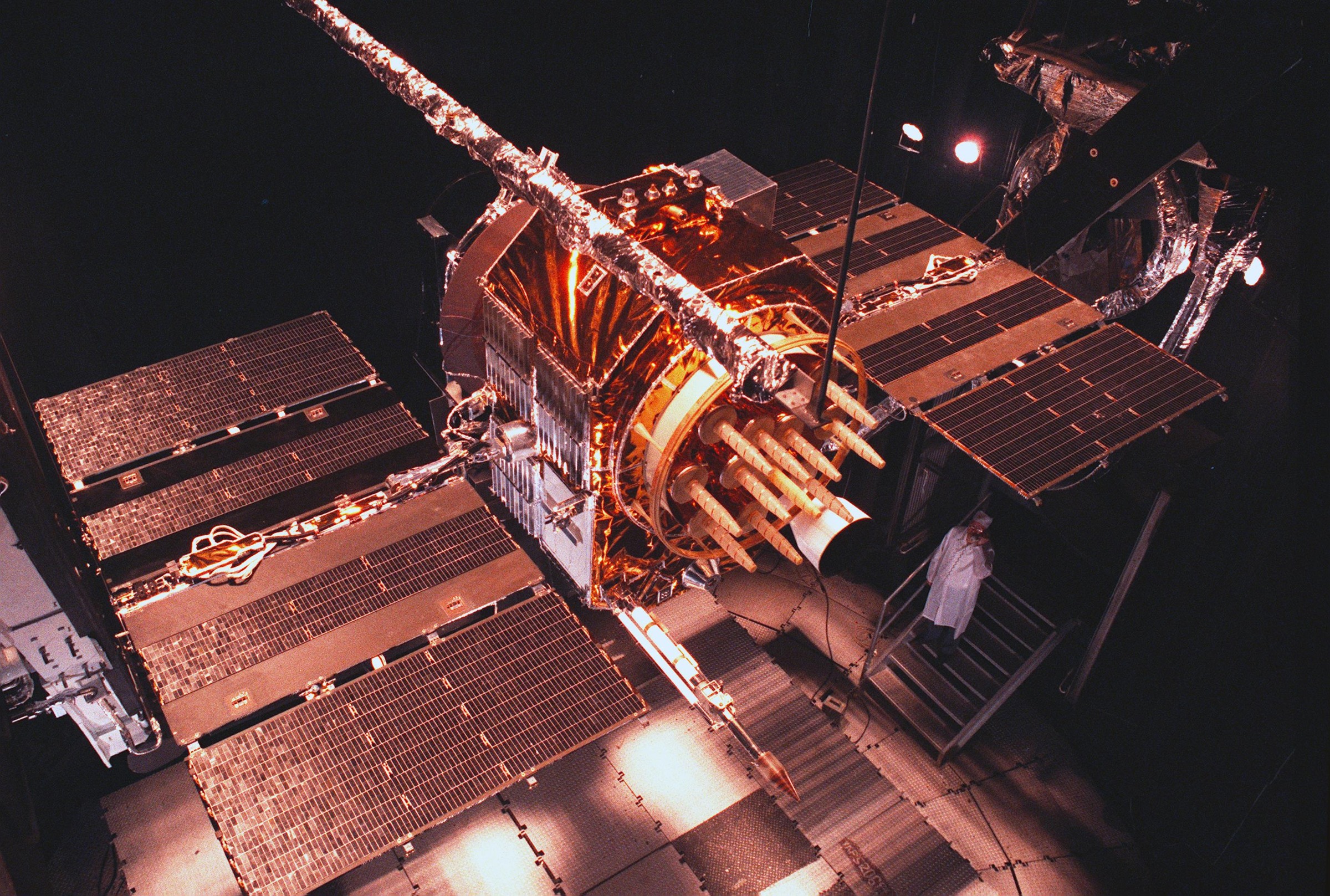
Galileo is closing a second trust gap in civilian navigation
A September demonstration combined authenticated navigation data with authenticated ranging information. That changes the receiver question: can it trust both what the satellite says and the measurement used to calculate position?
- Galileo
- EUSPA
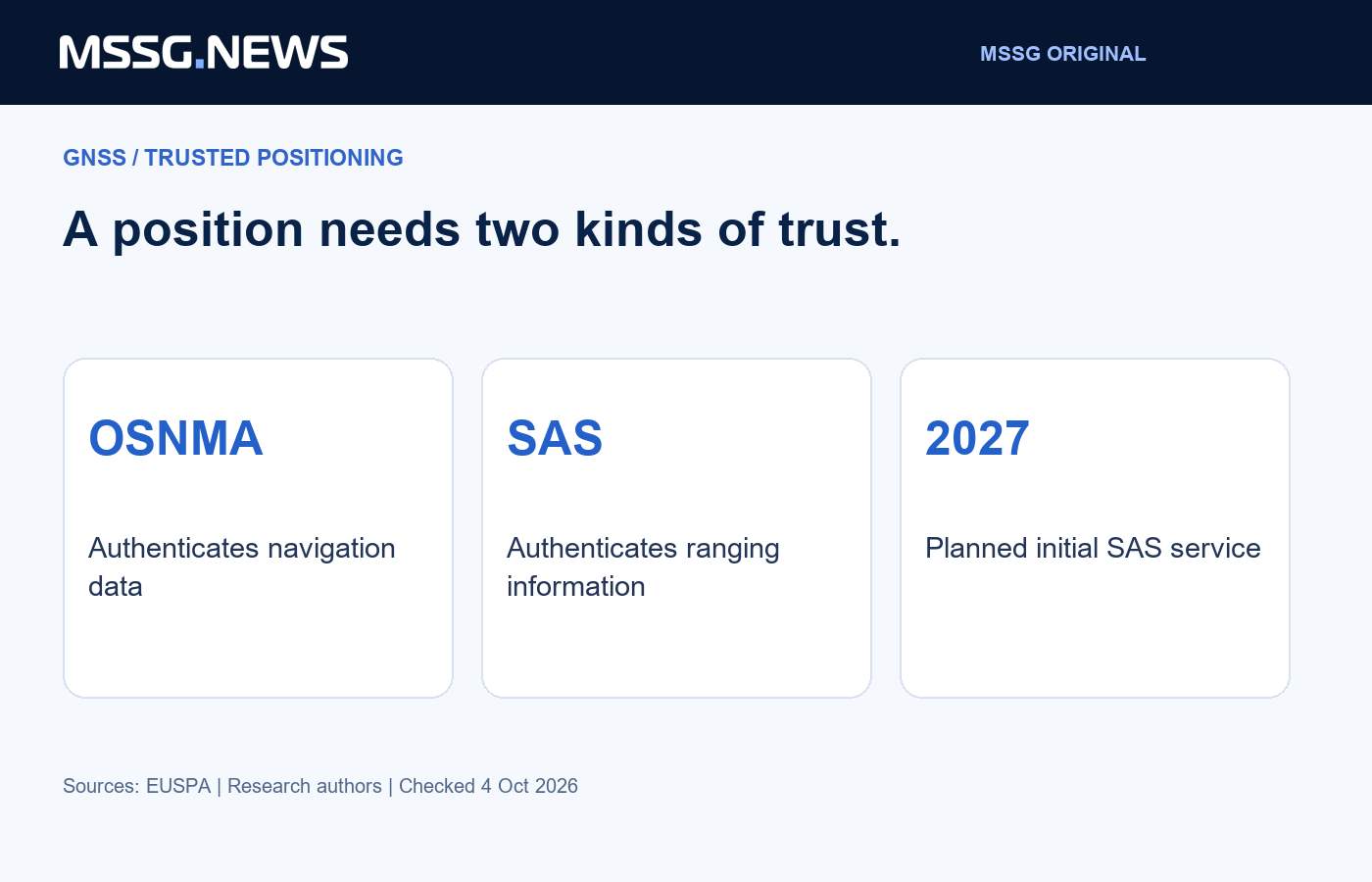
Civilian satellite navigation is moving beyond trusting the message alone. On 16 September, Galileo demonstrated a position authenticated through both navigation data and ranging information. EUSPA announced the result the next day. The important advance is a second layer of verification for the ingredients of a position fix.
Open Service Navigation Message Authentication, or OSNMA, verifies the navigation data. The Signal Authentication Service concept, SAS, adds authentication of ranging information. These protect complementary inputs: a genuine message does not by itself settle whether the receiver’s distance-related observations can be trusted.
Five Galileo satellites took part in the demonstration. Some testing occurred during Jammertest in Norway, where controlled interference can be exercised with real signals. EUSPA says further tests will support a planned SAS Initial Service declaration in 2027. The demonstration is the foundation for that service, not its public launch.
The receiver becomes the decision point
MSSG.news’s engineering reading is that authentication must produce usable behaviour at the receiver. An operator needs to know whether a position is verified, pending verification or unavailable, and what the equipment does in each state. A cryptographic feature hidden behind a normal-looking position display is an incomplete operational proposition.
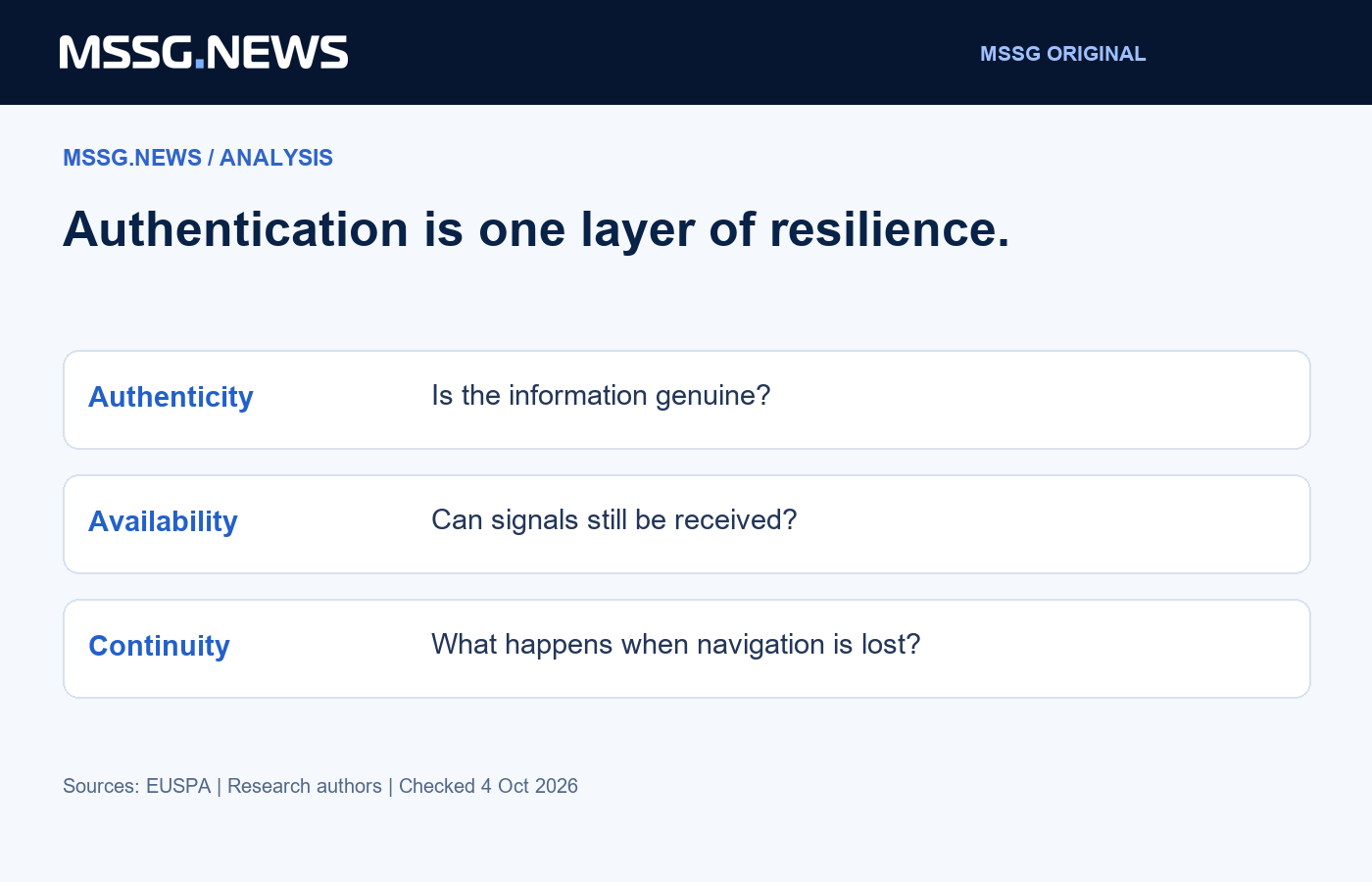
This creates a meaningful integration task for navigation developers. Hardware support, processing, timing and the application’s response to failed verification need to work together. The article’s diagram distinguishes trust in the information from the ability to receive a usable signal.
Spoofing and jamming are different problems
Spoofing aims to make a receiver accept misleading navigation information. Jamming disrupts reception. Authentication strengthens the ability to reject false inputs, but cannot on its own guarantee that enough useful signals remain available. A system still needs a defined response when trusted satellite navigation is lost.
That distinction matters for drone, maritime and transport products. A supplier claiming resilient navigation should describe the protected input and the operating conditions, rather than turning one successful authentication test into a blanket promise about all interference.
A sharper specification for the market
For buyers, the next useful evidence is a repeatable account of verified fixes, unsuccessful verification and continuity under the intended conditions. For manufacturers, the commercial opportunity is an implementation that makes these states clear and usable to the rest of the platform. These are our assessment criteria, not announced procurement requirements.
The September result gives civilian navigation a stronger trust architecture. The milestone deserves attention precisely because it addresses a defined missing layer. Its value should be measured through the receiver and application behaviour it enables, alongside the separate work of maintaining navigation when signals are denied.
Sources & context
- EUSPA: authenticated civil position using Galileo SAS, 17 September 2026 ↗
- Research authors: First Galileo SAS Authenticated Time Solution, September 2026 ↗
Published by Mitchell Strategic Solutions Group. See our editorial standards and corrections policy. Read more →