Europe targets the next autonomy bottleneck: refuelling drones in flight
Spain, Germany and Belgium are advancing an estimated €8 million EDA project. The challenge is to coordinate several uncrewed receivers with one tanker.
- EDA
- Autonomy
Europe is moving beyond autonomous aircraft towards the infrastructure that lets them stay in the air. Spain, Germany and Belgium advanced the second phase of an EDA refuelling research project on 8 October, according to the agency’s 9 October announcement. Its estimated value is €8 million.
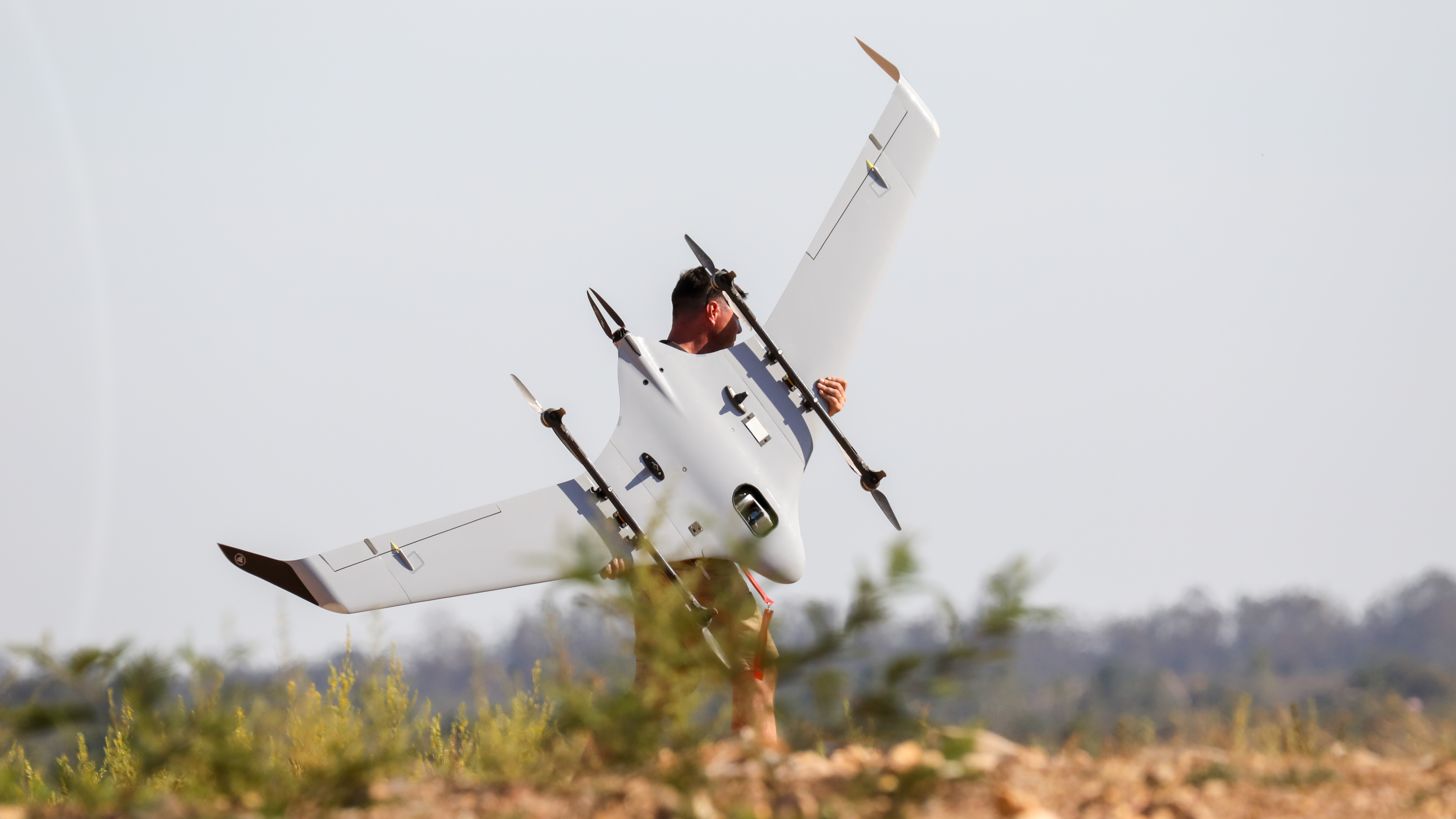
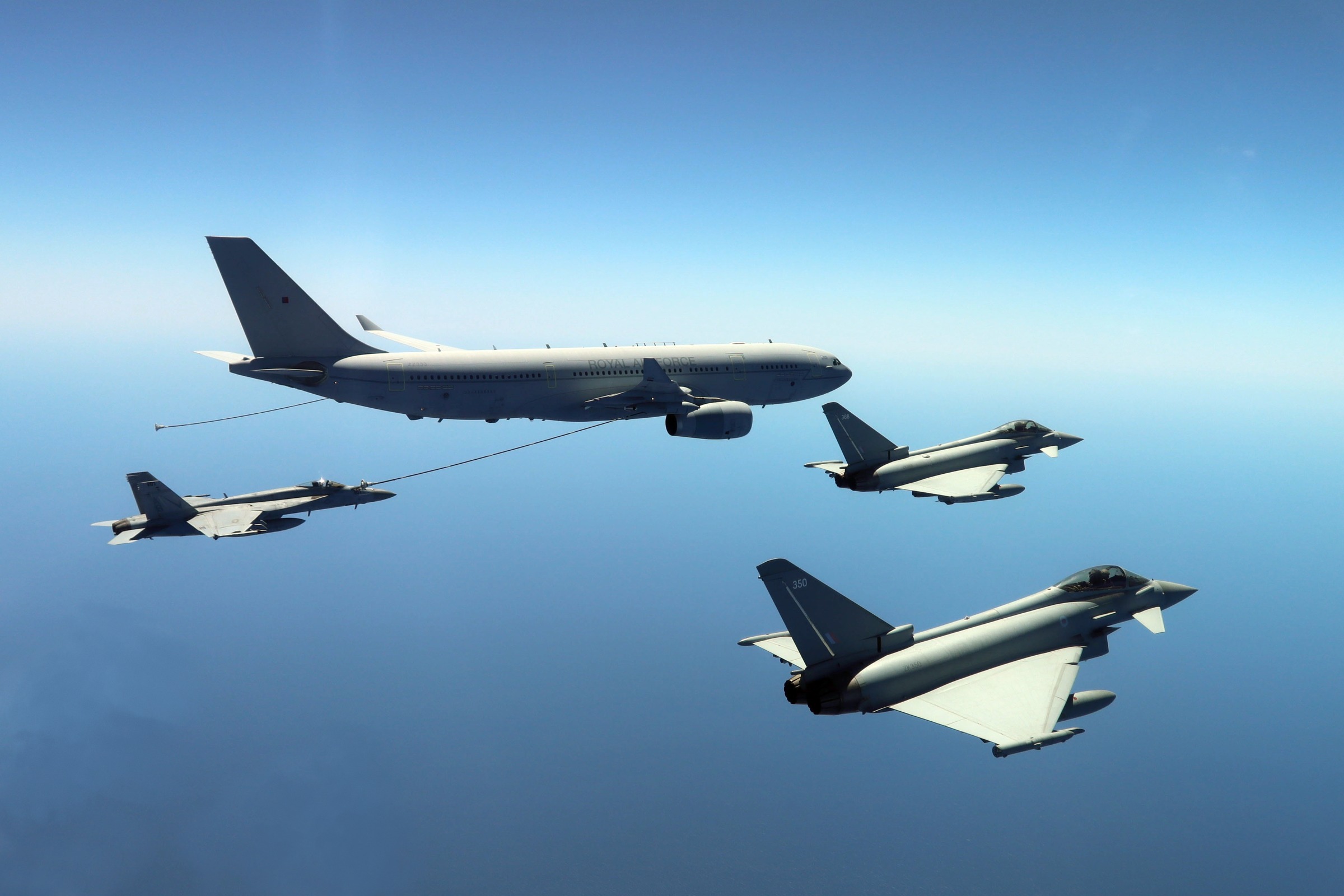
The new phase addresses hose-and-drogue refuelling for uncrewed aircraft. Its industrial significance is the coordination problem: one tanker, several receivers and a fuel-transfer operation that depends on precise relative position.
For European suppliers, that shifts attention towards the sensors, onboard processing and communication needed around the aircraft. Our reading is that autonomy cannot be judged only by the vehicle: the supporting operation must also become repeatable.
A different problem from automated boom refuelling
EDA’s original December 2022 project, budgeted at €4 million, focused on automating hose-and-drogue operations. Its announcement distinguished this work from automatic contact already achieved using a rigid boom. These are different interfaces, so progress in one does not remove the engineering work in the other.
GMV’s account of the first phase explains why the drogue matters. The company planned onboard hardware and sensors to collect data on its position relative to the tanker and compare that information with visual tracking. The engineering task includes the accuracy and integrity of the measurement, rather than simply detecting an aircraft in a camera image.
From a single contact to a coordinated operation
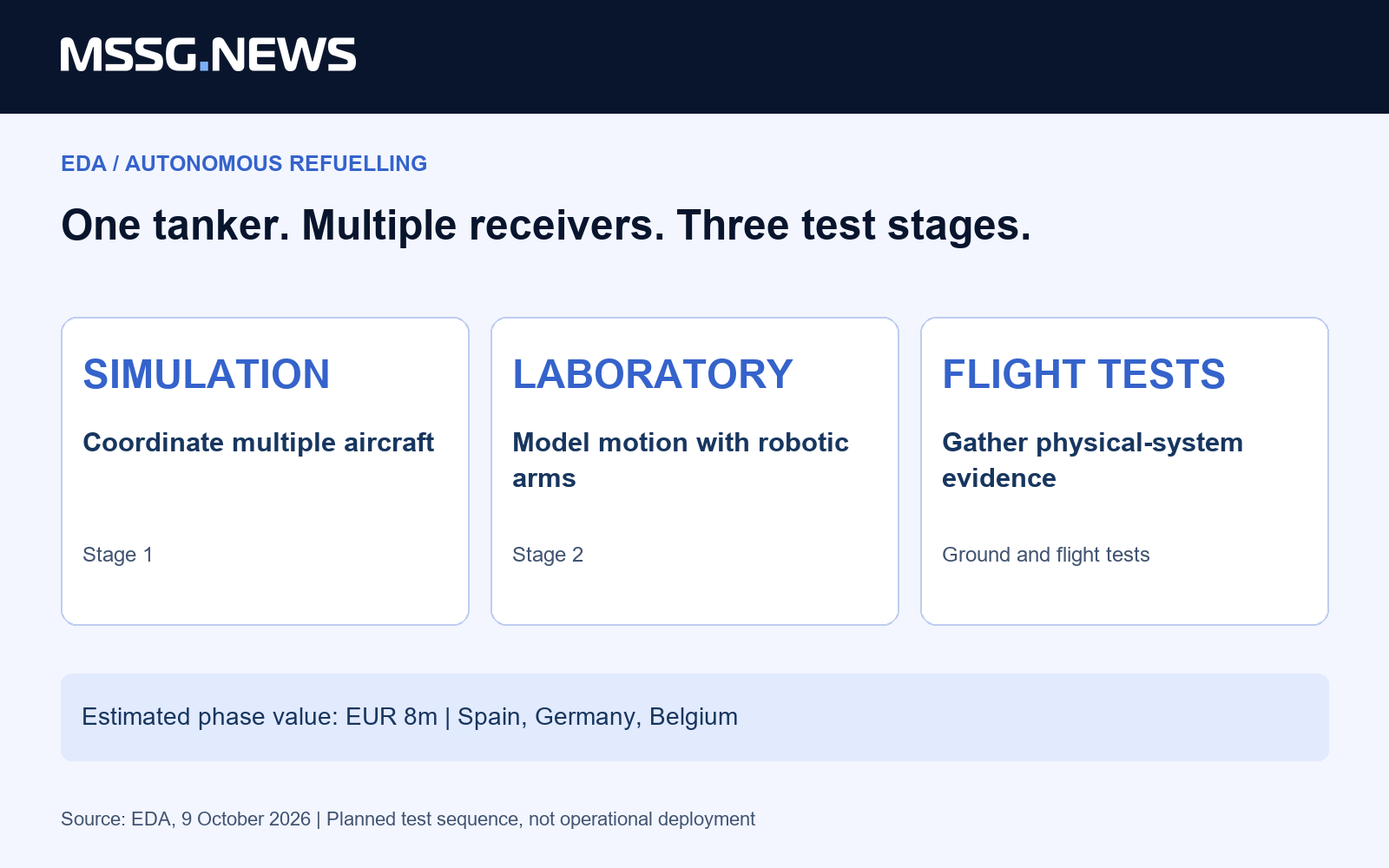
The new phase will investigate relative navigation, image sensors, connectivity and processing hardware. EDA lists three steps: multi-aircraft simulations, laboratory work with robotic arms, then ground and flight tests. The important progression is from a controlled model towards evidence from physical systems.
A relative-navigation system measures one moving aircraft against another. That is the relevant frame for connecting a receiver to a moving refuelling interface. In our analysis, the industrial value lies in making this whole chain behave consistently, including when the individual sensor readings and communication do not arrive together.
A multinational integration task
Spain leads, Germany supports and Belgium joins the second phase. EDA acts as contracting authority and coordinates requirements and risks. This combines national research and industrial capabilities within one programme rather than leaving each participant to define its own test in isolation.
That structure matters to a component supplier. A camera, processor or data link must ultimately fit a shared interface and an agreed evaluation. The useful commercial question is which integration responsibility the supplier can take on and what evidence it can deliver to the system team.
What would count as the next breakthrough
The programme is development work towards autonomous refuelling, not an announcement of an operational fleet. Its next important evidence will be successful coordination across the planned test stages. For Europe and NATO, the strategic question is whether the supporting technology can extend the practical usefulness of uncrewed aviation.
Our conclusion is concrete: refuelling deserves a place in the autonomy discussion alongside navigation and mission software. Building an autonomous aircraft solves only part of the endurance problem; integrating the operation that supports it is another major industrial task.
Sources & context
- EDA: second phase, 9 October 2026 ↗
- EDA: first phase, December 2022 ↗
- GMV: sensor and relative-position work, December 2022 ↗
Published by Mitchell Strategic Solutions Group. See our editorial standards and corrections policy. Read more →