Ukraine expands drone orders sharply. The next industrial test is repeatable delivery
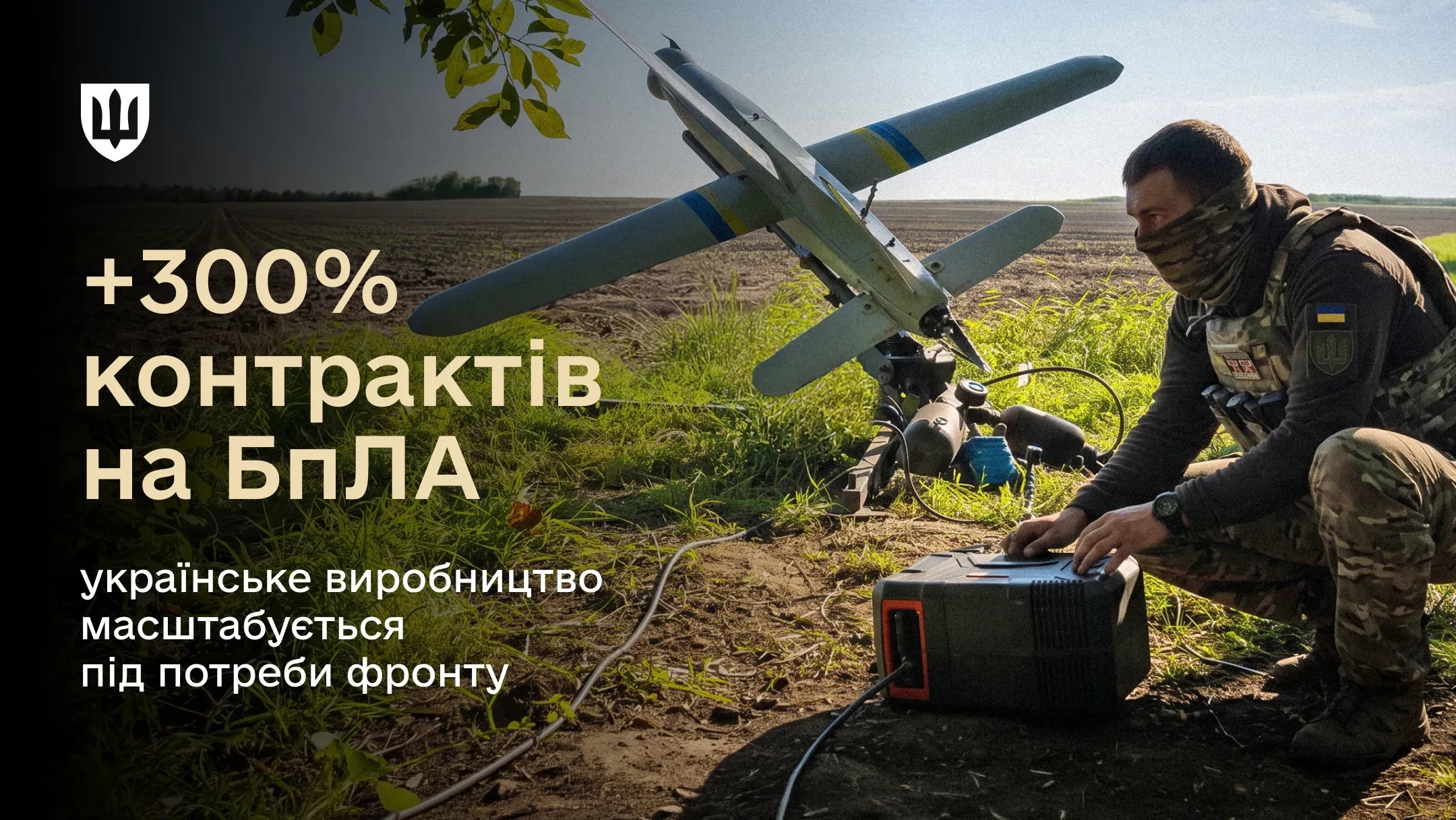
Ukraine reports FPV contracts 54% above the whole of 2025 and a steep rise in wider drone orders. For manufacturers, the decisive opportunity is turning larger commitments into a production rhythm.
- Ukraine
- Drones
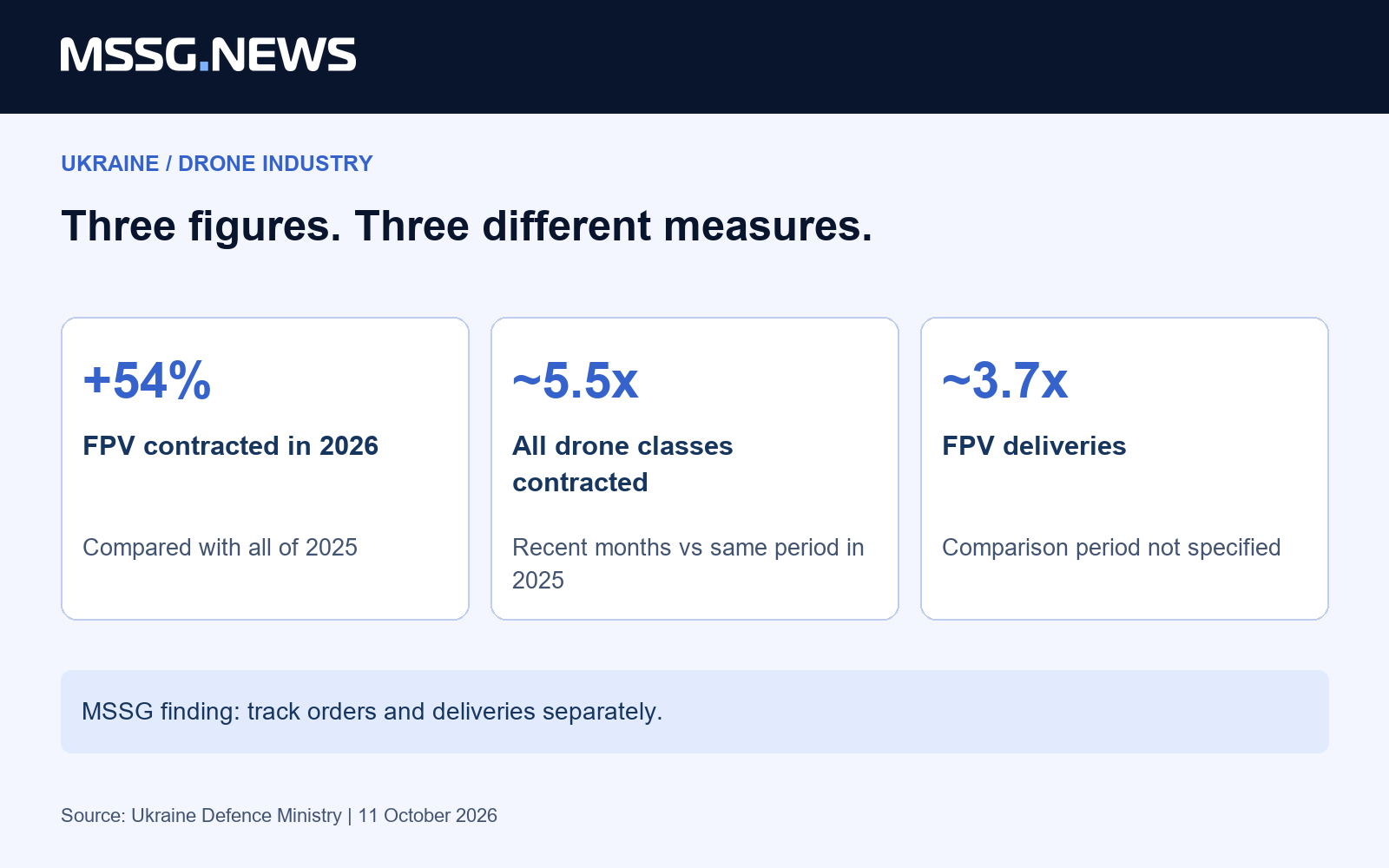
Ukraine’s Defence Ministry announced a sharp expansion in drone contracting on 11 October. Its Defence Procurement Agency, AOZ, reports that 2026 FPV contracts are already 54% above the volume contracted during all of 2025. That is a concrete demand signal for an industry in which production capacity and battlefield requirements move quickly.
The same announcement reports roughly 5.5 times as many drones of different classes contracted in recent months as in the corresponding period last year. The headline puts overall contracting 300% above last year. These figures describe different baskets and periods. They are useful as separate indicators, rather than a single growth series.
The ministry also reports an almost 3.7-fold rise in FPV deliveries, without specifying the comparison period for that figure. The distinction is essential to understanding the industrial story: an order creates a commitment; a delivered and accepted product turns that commitment into usable equipment.
The order book changes the factory’s decisions
Our assessment is that predictable demand matters as much as the headline increase. A manufacturer must decide when to buy components, commit a production line and recruit or train people. Larger orders can support those decisions when the delivery schedule and payment terms make the commitment credible. A bigger total alone does not resolve the working-capital requirement.
For European dual-use suppliers, the practical opening lies in a defined bottleneck. Electronics, communications, production tooling and testing can each improve the throughput of a Ukrainian manufacturer. The strongest proposal identifies the production step it improves, the time needed for qualification and the additional units that the change could enable. Those are our commercial criteria, not newly announced AOZ procurement rules.
A supplier should also separate a successful prototype from a repeatable batch. Consistent component sourcing, documented configuration and an acceptance process allow a customer to order the same capability again. This is where civilian manufacturing discipline becomes directly relevant to defence production.
Measure the conversion from commitment to supply
The useful dashboard has three columns: contracted volume, accepted deliveries and the time between them. Keeping those columns distinct exposes whether growth is reaching users or accumulating as an unfinished order book. Comparable periods and product categories are indispensable; a whole-year FPV baseline cannot be substituted for a recent-months all-drone baseline.
This announcement strengthens the case for sustained Ukrainian production capacity. It also makes execution a more demanding competitive test. Our industrial conclusion is straightforward: the next valuable partnership is one that makes an existing production chain more reliable, faster or easier to expand, with evidence that the customer can verify.
For buyers and partners, the next questions should concern delivery cadence, acceptance and replenishment. Those measures turn a dramatic contracting announcement into a durable industrial capability. We will track that progression separately from the size of the contracts themselves.
Sources & context
Published by Mitchell Strategic Solutions Group. See our editorial standards and corrections policy. Read more →
Related reporting
€1.24 billion for Ukrainian drones and missiles: the next test is production

Ukraine moves to turn defence export fees into weapons funding and military pay