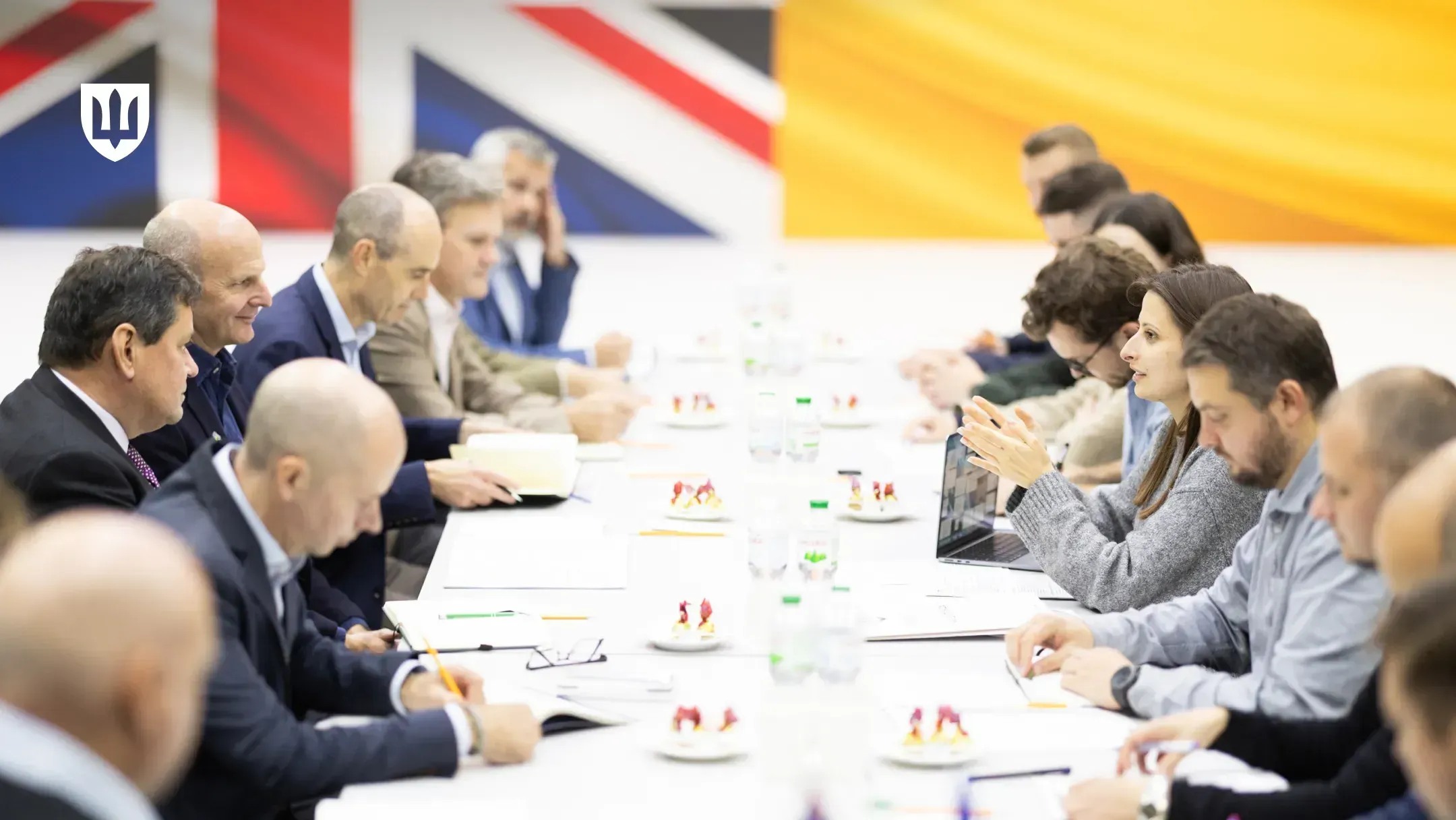
Ukraine moves to turn defence export fees into weapons funding and military pay
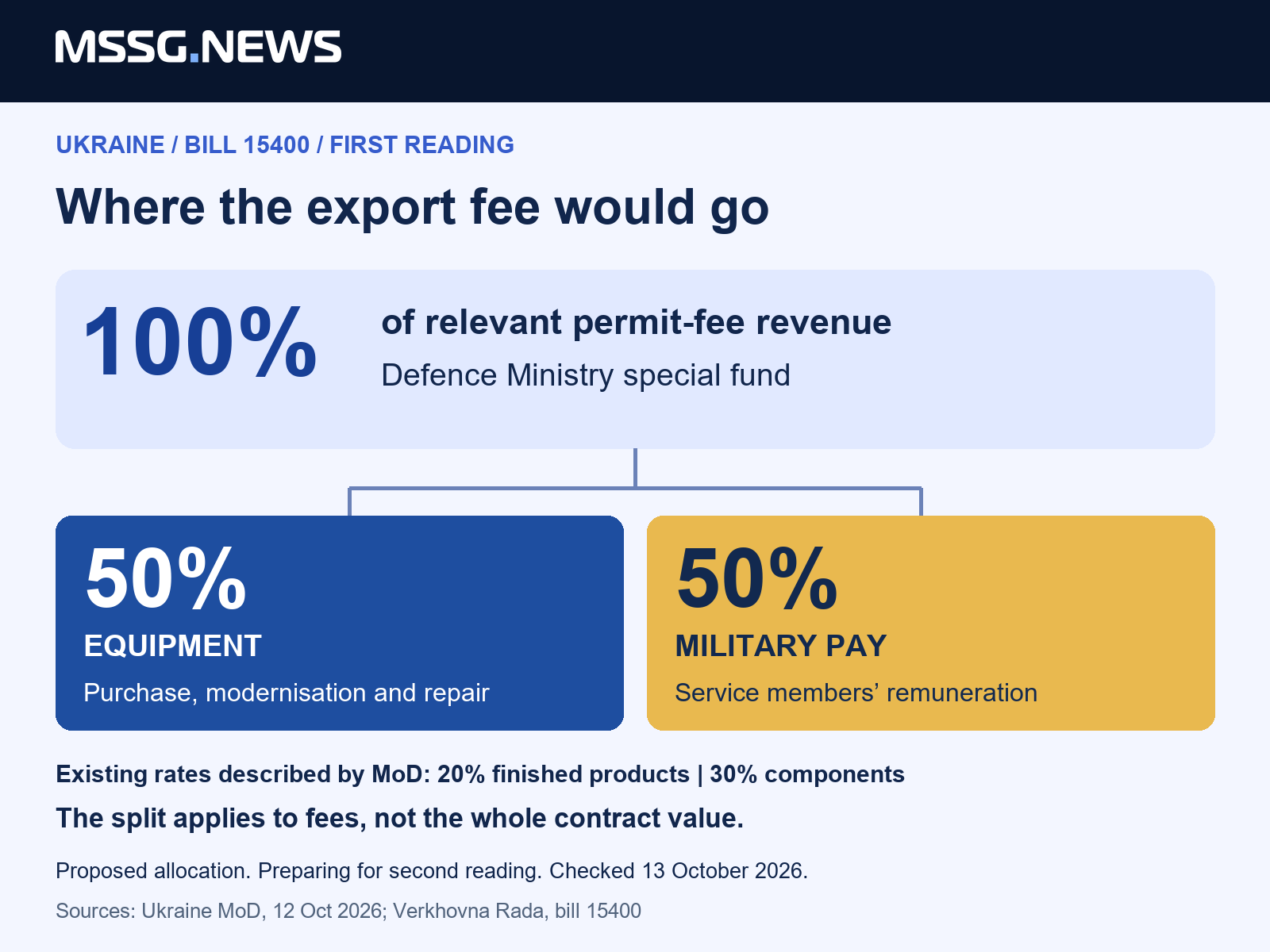
Bill 15400 has cleared its first reading. It would direct all relevant permit-fee revenue to defence, split equally between equipment and service members’ remuneration.
- Ukraine
- Defence exports
Ukraine is moving to connect defence exports more directly to the resources sustaining its armed forces. Parliament backed bill 15400 at its first reading on 12 October. The proposal would direct all revenue from the relevant export-control documentation fees to a special budget fund for the Ministry of Defence, with an equal split between equipment and military remuneration.
The concrete change concerns where the fee goes. It does not mean that the state takes the entire value of an export contract. The Defence Ministry describes permit charges of 20% of the value of finished products and 30% of components under the controlled-export mechanism introduced in July. These are the fee rates; 100% describes the proposed destination of the resulting fee revenue.
The parliamentary register records adoption as a basis on 12 October and preparation for a second reading. The allocation is therefore a legislative proposal, not an already completed transfer of money to military accounts. That stage matters when assessing the announcement’s immediate financial effect.
The denominator changes the story
The ministry sets out two equal uses for the revenue: one half for buying, modernising and repairing weapons and military equipment, and the other for service members’ remuneration. The denominator for this 50/50 split is the fee collected, not the exporter’s turnover.
A simple illustration makes the distinction visible. Applying the stated finished-product rate to a hypothetical EUR 1 million value yields EUR 200,000 in fees. The proposed equal division would allocate EUR 100,000 to each purpose. Applying the component rate to the same illustrative value yields EUR 300,000, or EUR 150,000 for each purpose. These are MSSG calculations to explain the percentages, not reported receipts, a forecast or a quotation for a particular transaction.
Domestic supply remains the controlling condition
The July government announcement links export authorisation to a manufacturer’s ability to meet Ukrainian defence orders and export obligations simultaneously. It also identifies possible refusal where a state customer intends to buy the same goods, or where the item is on the critical-goods list. The government says the Defence Ministry updates that list quarterly and the Foreign Ministry maintains the list of eligible destination countries.
For a European partner, this separates three commercial questions: can the product be exported, what payment is attached to the authorised transaction, and how would the state use that payment? A foreign order and unused manufacturing capacity alone do not answer the first question. The October bill addresses the third, building on the existing controlled-export framework.
The industrial consequence is a funding link
MSSG’s reading is that the proposal makes the benefit to Ukraine’s armed forces more explicit: an authorised external sale would generate a payment with two defined defence uses. That gives industrial partners a clearer account of how export activity could support the domestic war effort while Ukrainian supply remains the priority.
The next useful evidence is the final legislative text and implementation, followed by actual fee revenue and spending. The sources reviewed do not quantify those future receipts. The stronger conclusion available today is about the mechanism: export permission, a value-based fee and a proposed defence allocation are separate steps in one industrial and budget chain.
Sources & context
- Ukraine Defence Ministry: proposed allocation, 12 October 2026 ↗
- Verkhovna Rada: bill 15400 and legislative stage ↗
- Cabinet of Ministers: controlled-export mechanism, 1 July 2026 ↗
Published by Mitchell Strategic Solutions Group. See our editorial standards and corrections policy. Read more →
Related reporting
NATO puts dual-use technology in front of operators. SHINE turns the pitch into a test
Ukraine expands drone orders sharply. The next industrial test is repeatable delivery