
Ukraine redesigns the field ration around ready meals and flameless heating.
The approved alternative combines two packs providing 4,100 kcal in total. A survey of more than 60,000 service personnel helped shape the new supply requirement.
- Ukraine
- Logistics
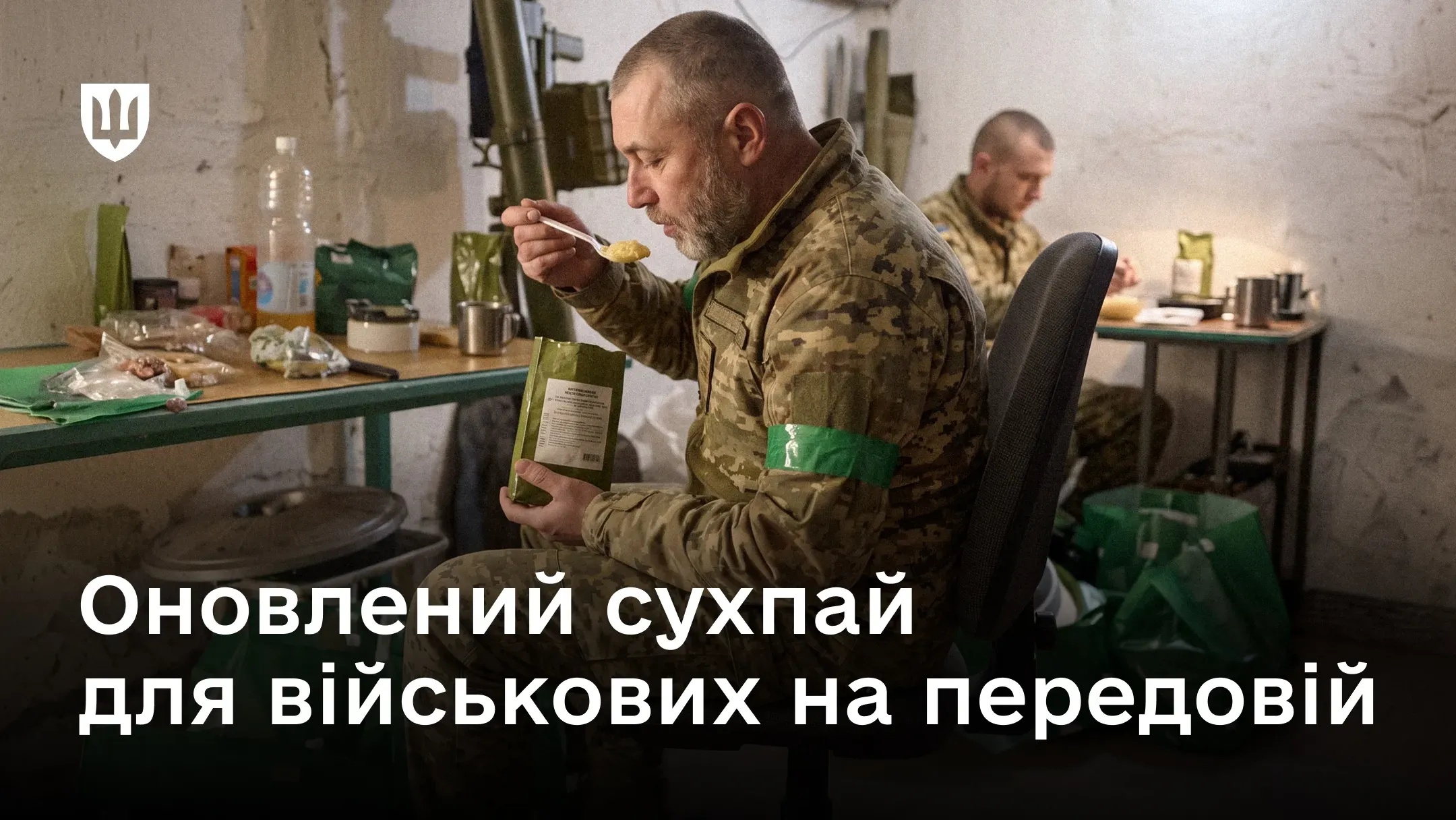
Ukraine has approved an alternative field ration built around ready-to-eat retort meals, flameless heaters and water-purification tablets. The Ministry of Defence announced the change on 16 October, following a Cabinet decision.
The ration consists of two separate packs providing 4,100 kcal in total. That is the combined figure, not the energy content of each pack. The ministry says the option provides 600 kcal more than the standard ration and supplements the existing Norm 15 arrangement.
The strongest development is the feedback loop. More than 60,000 service personnel responded to an Army+ survey held from 29 May to 12 June. The resulting requirement changes the composition of the supplied kit, rather than simply adding another menu choice.
Users helped define the product
The ministry's July account of the survey reported that 80.4% of respondents preferred ready meals in retort packaging. It also identified weight, usability, nutrition and taste as issues for improvement. These requirements cross food manufacturing, packaging and equipment design.
The approved alternative combines elements that otherwise risk being assessed in isolation. A meal, a package and a heating method are useful together only when the complete kit works consistently for its intended user. A supplier's component specification is only part of the acceptance case.
Our analysis is that procurement should begin with the complete meal system. It needs a clear relationship between portion, packaging, included equipment and instructions. This is about repeatable usability, not claiming that a larger calorie number alone proves a better product.
A combined figure needs a clear denominator
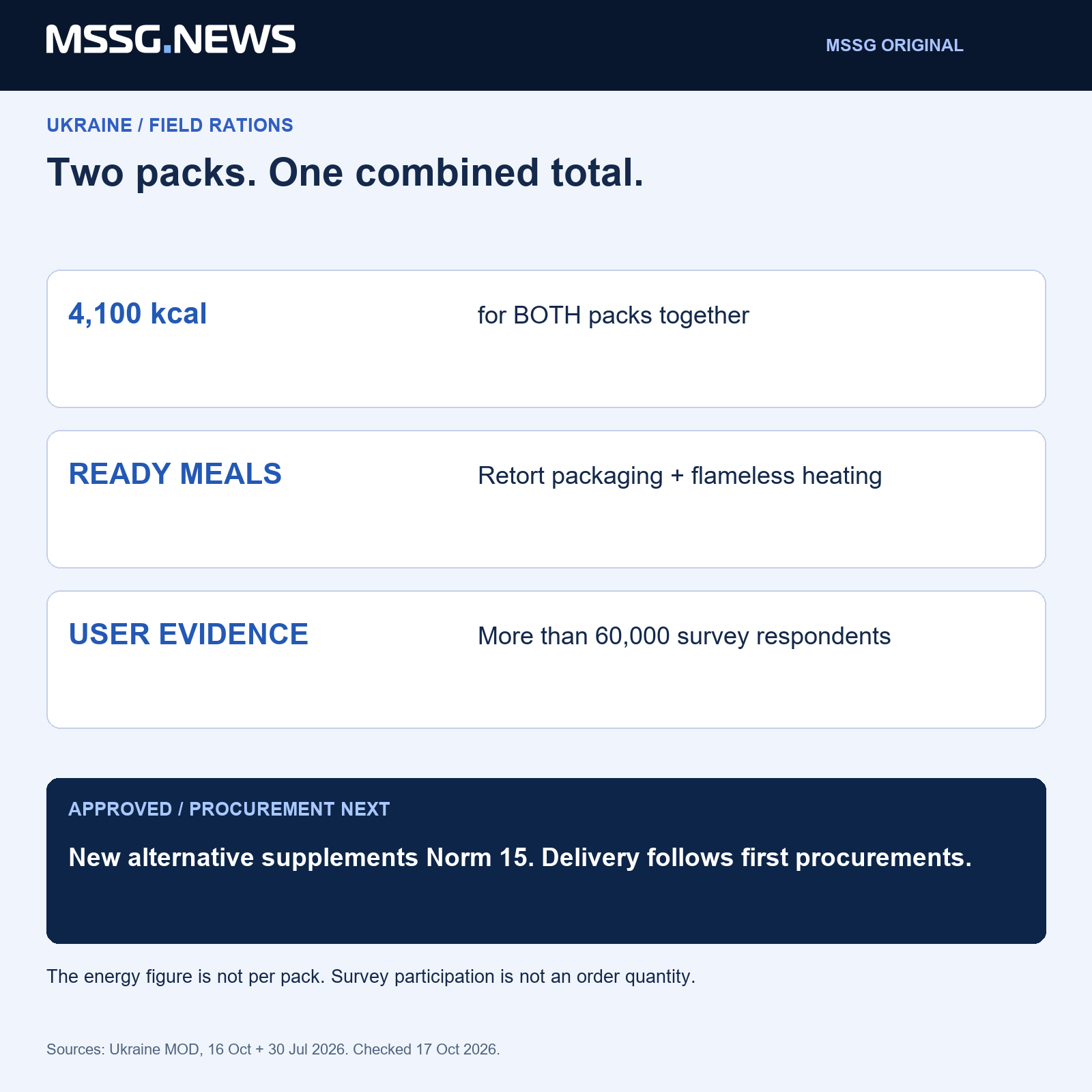
The announced 4,100 kcal belongs to the two-pack ration as a whole. Presenting it as the value of one pack would double the announced provision. Our graphic makes the combined total explicit and separates survey evidence from the approved kit's composition.
The change also adds water-purification tablets and flameless heating to the supply concept. The announcement is a procurement and logistics development, not a substitute for equipment instructions or medical guidance. Its industrial relevance is that food and supporting components must be considered in the same package.
For manufacturers, this broadens the acceptance discussion. Food quality, package integrity and compatibility with the included heating equipment need to remain consistent across production batches. A change to one element can require checking the combined product again.
Approval opens the next procurement stage
The ministry says delivery will follow the first procurements. It has not announced a purchased quantity or contract value for the alternative. The next concrete milestones are purchasing, acceptance and distribution; approval itself does not establish that the ration is already issued.
There is a wider dual-use lesson for food technology and civil protection. A meal system designed for constrained access to normal cooking can interest several institutional buyers. Each still needs its own requirements and acceptance process, rather than inheriting a military specification unchanged.
The ration demonstrates a useful industrial sequence: user evidence, revised requirements, formal approval, then procurement. The opportunity lies in delivering a complete, reproducible meal system. The next report should test whether purchasing and acceptance preserve what users asked to improve.
Sources & context
- Ministry of Defence of Ukraine, 16 October 2026 ↗
- Ministry of Defence of Ukraine: Army+ ration survey, 30 July 2026 ↗
Published by Mitchell Strategic Solutions Group. See our editorial standards and corrections policy. Read more →
Related reporting
Ukraine orders 4,700 fragment-protection suits. Mobility is part of the specification.

NATO scales up its counter-drone network. Ukraine helps shape the test.