

Ukraine orders 4,700 fragment-protection suits. Mobility is part of the specification.
The first centralised contract exceeds UAH 186 million. Its industrial test is moving from protective material to equipment compatible with the rest of a soldier's kit.
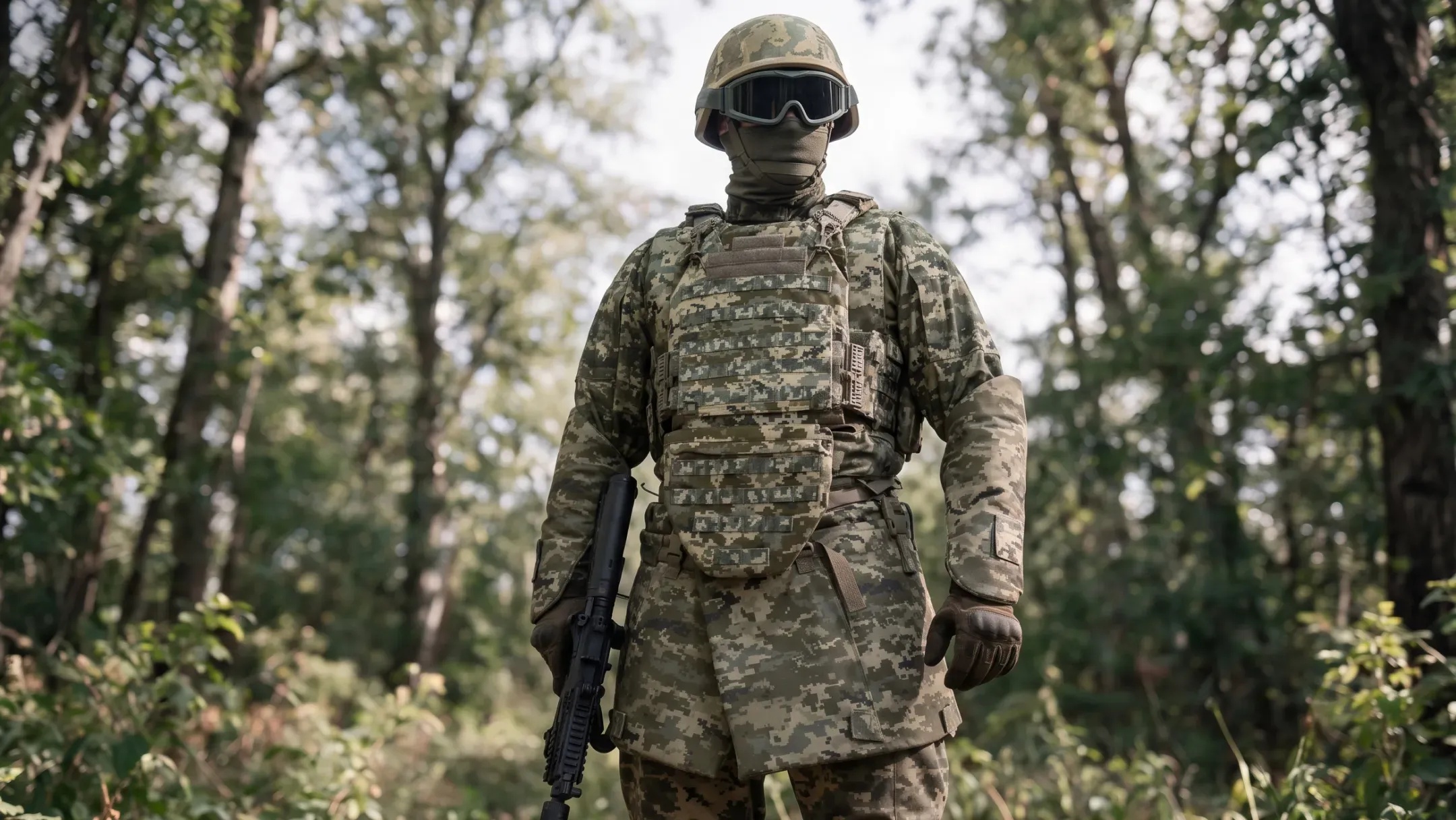
- Ukraine
- Protection
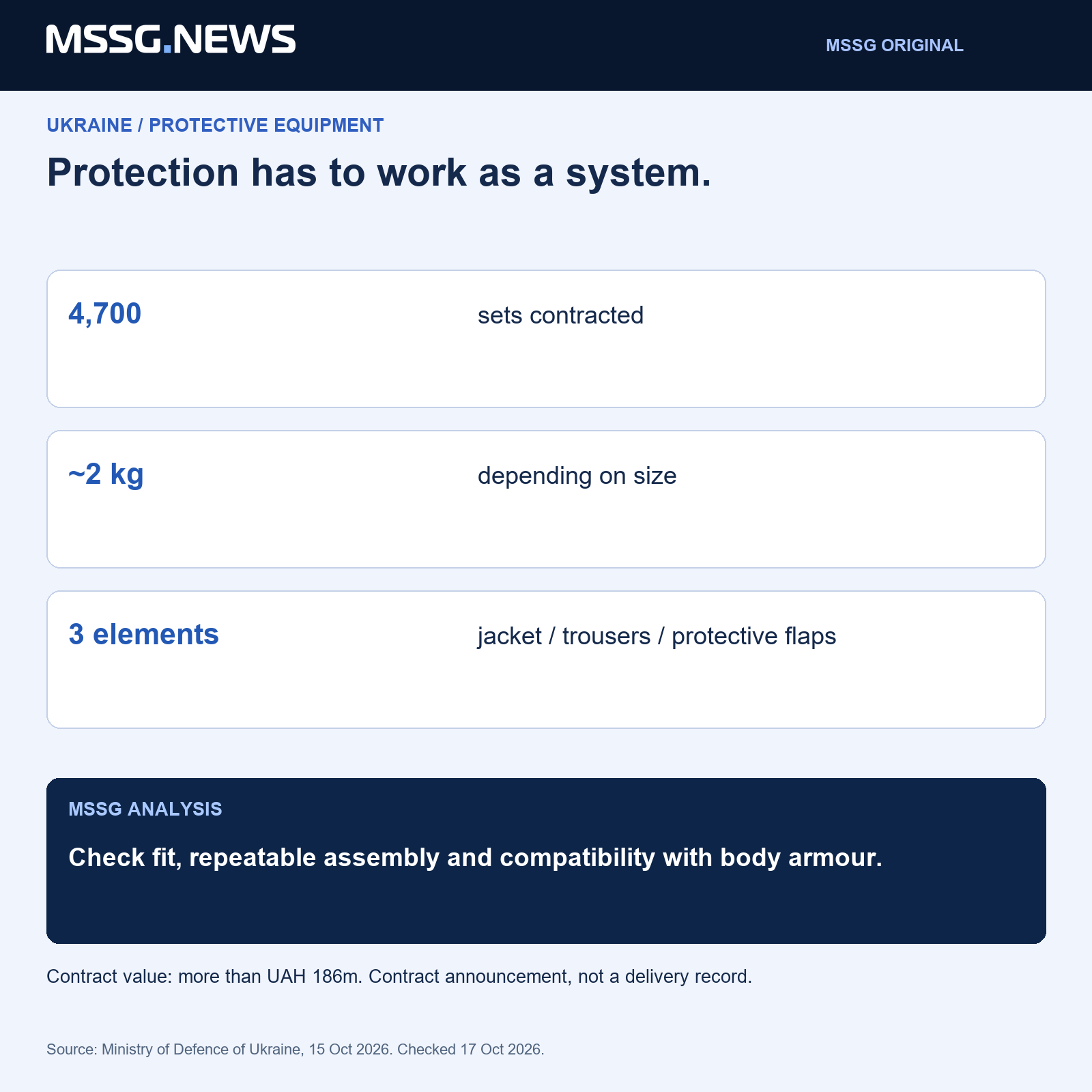
Ukraine has placed its first centralised contract for 4,700 fragment-protection suits, worth more than UAH 186 million. The Ministry of Defence announced the purchase on 15 October, following approval of the technical specification in May.
Each set combines a jacket, trousers and protective flaps for the hip and upper-leg area. The ministry puts the weight at approximately two kilograms, depending on size, and describes flexible protective material that allows the suit to be worn with body armour.
The industrial story goes beyond a new fabric. A protective garment must work with the wearer's existing equipment, sizing and movement. Those interfaces determine whether a laboratory material becomes equipment that can be manufactured consistently and used as intended.
The contract turns a specification into a production task
A centralised order gives manufacturers a defined requirement to reproduce across thousands of sets. Sizing, seams, assembly consistency and traceability become production questions. A subsequent official ministry and DOT Instagram post specifies four suppliers and shipment by 18 December 2026. That is the announced shipping deadline, not evidence of completed delivery or acceptance.
The useful follow-up is the transition from approved specification to accepted output. That includes consistent manufacturing documentation and a method for checking whether a delivered set matches the agreed configuration. A photograph alone does not establish that the new order has reached units.
The public announcement does not state a protection class or publish comparative trial results. Describing the garment as fragment protection preserves the established scope without turning it into a claim of universal protection against projectiles.
Weight is one interface among several
The approximate two-kilogram figure matters because the garment joins an existing equipment load. Its relevance depends on size, fit and compatibility with the protective vest, clothing and other issued items. The same material can produce different user experiences when the garment's construction changes.
Our assessment is that acceptance should examine the complete wearable configuration. Fit across the size range, repeatable assembly and compatibility with other equipment are separate checks. Reporting only weight leaves the manufacturer and buyer without a common view of the finished system.
This is a commercial opening for specialist textile and equipment suppliers, but it is not an announcement of a new open tender. A credible offer would identify a component or production service, its interface with the approved specification and the party responsible for accepting it.
Protective equipment is a wider procurement portfolio
The suit order follows another October announcement covering more than 40,000 tactical hearing-protection headsets for the armed forces this year. The ministry reported that deliveries under that separate programme were under way. The products and delivery evidence differ; the programmes should be assessed separately.
Together, they illustrate a broader industrial problem: protective equipment has to function as a set. Compatibility, fitting, user feedback and replacement arrangements can be as consequential for procurement as a component's headline property.
The strongest suppliers will document the whole interface between material, garment and user equipment. Ukraine's first centralised suit contract creates a concrete production requirement. Its next meaningful milestone is accepted equipment that meets that requirement consistently.
Sources & context
- Ministry of Defence of Ukraine, 15 October 2026 ↗
- Ministry of Defence of Ukraine: hearing protection, 7 October 2026 ↗
- Ukraine MOD and DOT: official shipment deadline and suppliers, Instagram ↗
Published by Mitchell Strategic Solutions Group. See our editorial standards and corrections policy. Read more →