NATO SPS: a research partnership for civilian security
Science for Peace and Security supports collaborative work. It should not be confused with a sales route for an existing defence product.

- funding
- Europe
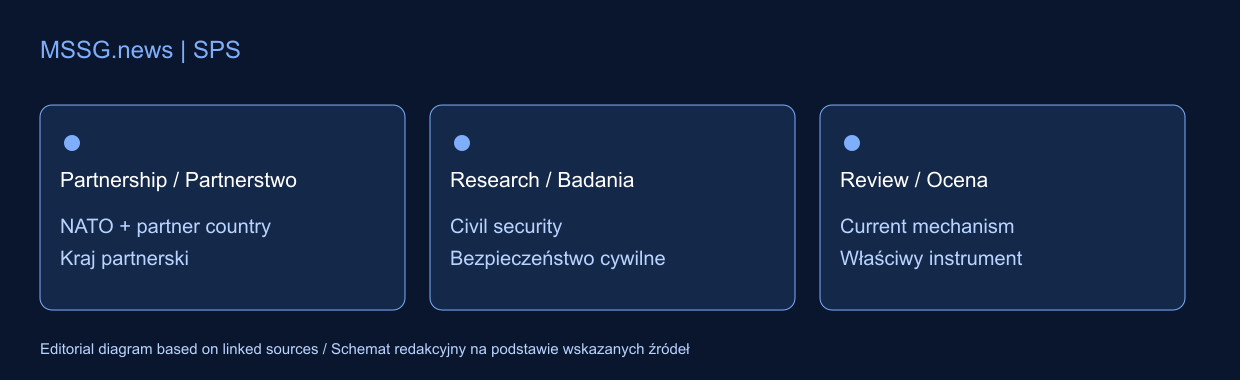
NATO’s Science for Peace and Security programme supports security-related cooperation between experts in NATO and partner countries. Its mechanisms include multi-year research projects and shorter scientific events or training activities.
The programme’s public description covers civilian security challenges and emerging technologies. Proposals are reviewed; an interesting technology or an institutional introduction does not guarantee an award. The current mechanism and call documents determine eligibility.
Our assessment is that a credible proposal begins with a problem that needs joint investigation and a partnership capable of doing the work. This is different from presenting an existing catalogue product and asking the programme to become a buyer. The planned result, method and contribution of each partner need to fit the selected mechanism.
Start with a research question
A cross-border consortium should explain why cooperation changes the research. Complementary facilities, expertise or access to a relevant civilian test environment may be meaningful. A partner added only to meet a formal condition is less persuasive than a clear division of work.
Choose the right form of activity
A multi-year project and a workshop have different outputs and resource needs. The team should choose the format that matches the work rather than assuming that the longest project is the best option. The published conditions should guide the timetable and budget.
Check current eligibility before drafting
Partner-country status, institutional conditions and the role of project leaders must be checked against the current documents. This article does not announce a new deadline or certify a particular company’s eligibility. Public programme information is a starting point for a focused application, not a substitute for the conditions governing it.
Sources & context
Published by Mitchell Strategic Solutions Group. See our editorial standards and corrections policy. Read more →