ESA BIC: the local application behind a European incubation network
The space connection can be a satellite service, a transferred technology or a product for the space sector. The application goes to a specific centre.

- funding
- Europe
ESA’s Business Incubation Centres support businesses using space systems, transferring space technology to other markets or developing products for the space sector. The network describes up to two years of incubation and €50,000 in equity-free support for product and intellectual-property development.
That headline is only the starting point. Each centre publishes its own documents, cut-off dates and local requirements. ESA recommends contacting the intended centre before preparing an application.
A dual-use company should explain the actual space connection in its product, rather than relying on a broad claim that its market is technologically advanced.
The customer problem still comes first
Consider a monitoring service using Earth-observation data. Its space connection may be clear, but the commercial question remains who needs the output, how frequently and in what format. A potential customer may buy a usable decision-support service rather than imagery itself. That distinction belongs in the business plan.
A company transferring a component into a terrestrial application faces a different task: showing that the component solves a customer problem outside its original environment. Heritage is useful evidence, but it does not automatically establish production economics or a route to market.
Prepare for a local decision
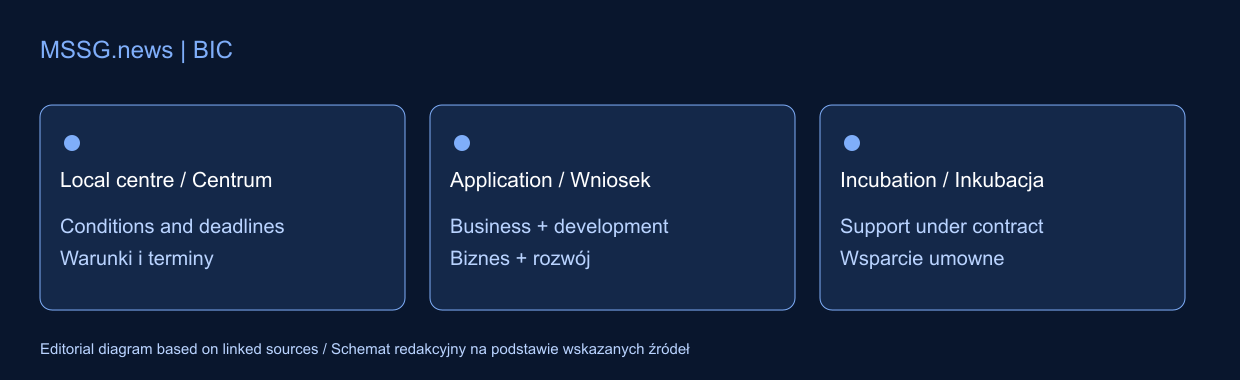
The published application process moves from eligibility review to a presentation and, for a successful applicant, an incubation contract. A complete proposal therefore needs both a credible business case and a practical development plan. The company should identify what it expects technical advice, funding and introductions to change during incubation.
No universal deadline
This article does not announce a single Europe-wide open call or promise eligibility for every company. Check the selected centre’s current requirements, location conditions and contractual terms. Budget assumptions should follow those documents, including any costs not covered by the support.
Sources & context
Published by Mitchell Strategic Solutions Group. See our editorial standards and corrections policy. Read more →