
Working with Ukraine: openness and the urgency of decisions
At MSPO, OMAG and Octava Defence discussed cooperation and pace. Ekolot added a perspective from outside the Ukrainian market.
- MSPO interviews
- OMAG · Octava Defence · Ekolot
Watch the video
Martin Mycielski asked exhibitors at MSPO what had surprised them about working with Ukraine. MSSG first published the interviews on 10 September 2026.
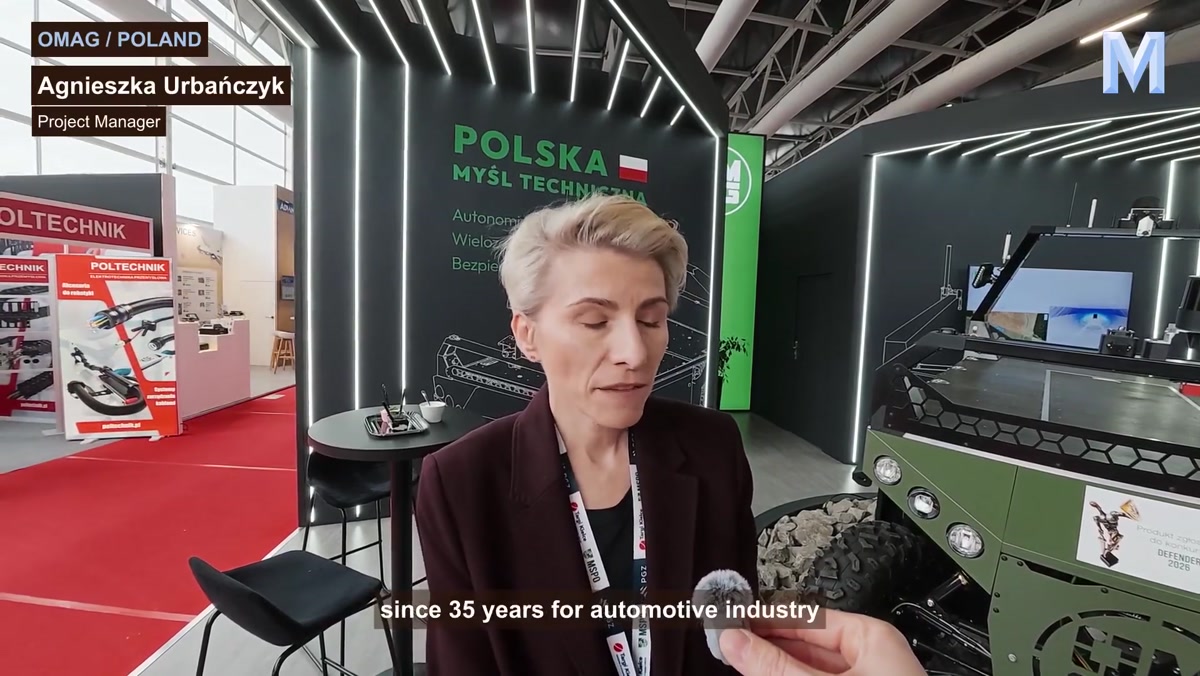
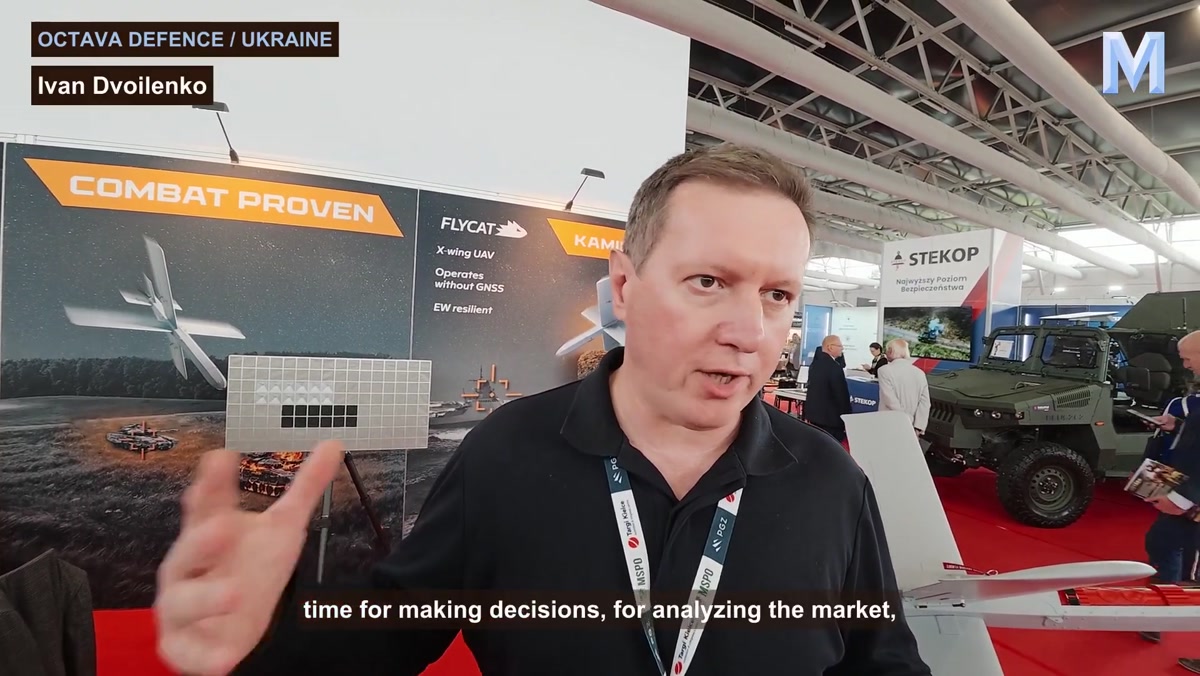
Agnieszka Urbańczyk from OMAG spoke about openness to cooperation. Ivan Dvoilenko from Octava Defence focused on the urgency of decisions when a country is at war. These were the interviewees’ accounts of their experience, rather than a survey of the market.
Luis Edgardo Zapata Lopez from Ekolot Aerospace & Defense discussed dual-use technology in wartime. Ekolot was not working with Ukraine at the time of the conversation, so his comments should be understood as an outside perspective.
For a firm preparing a partnership, MSSG’s practical conclusion is to discuss decision times and expectations explicitly. A technically suitable offer still needs agreement on who can decide, what evidence is needed and when the next step can happen.
OMAG: test the assumption about openness
Agnieszka Urbańczyk challenged the idea that Ukrainian counterparts are reluctant to cooperate, describing positive relationships. That is a useful starting point but remains an individual account. It cannot promise equally straightforward access to every Ukrainian institution or business.
A market entrant should assess a particular partner rather than assign it the characteristics of an entire country. Willingness to talk, ability to deliver and authority to decide are separate questions. Good relationships do not remove the need to establish them.
Octava Defence: time carries different weight
Ivan Dvoilenko emphasised the pressure to develop and update products quickly. In his account, changing threats demand shorter decision cycles than some partners outside Ukraine expect. We do not present that statement as a statistic about all European businesses.
Technology cooperation therefore needs agreement on when a result will remain useful, not only on the task. A lengthy assessment may lose relevance if it misses the user’s need. Urgency, however, is neither evidence of product effectiveness nor a reason to ignore safety requirements.
Ekolot: an explicitly external perspective
Luis Edgardo Zapata Lopez discussed dual-use technology in wartime, but Ekolot was not working with Ukraine at the time of the interview. We retain that fact because it changes how the comments should be read. This is a view of the market, not an account of a contract there.
The distinction is useful when comparing interviews: it shows what comes from cooperation experience and what remains an outside assessment. Omitting it could attribute activity the company did not claim.
Turning pace into an agreed process
In MSSG’s assessment, a joint plan should identify the decision-maker, evidence required and realistic response date. Dependencies on other partners should be explicit. That helps establish whether both sides are discussing the same stage: an initial conversation, a trial or a delivery.
Technical and financial decisions also need to be separated. An interested user may not hold the budget, while a team able to assess results may not be the purchaser. This is a practical observation about cross-market work, not a description of a particular Ukrainian unit’s procedures.
The limits of three conversations
Three interviews cannot support a comparison of entire business cultures. They can prompt better questions about expectations, responsibility and timing. We do not extend the interviewees’ remarks to companies they did not discuss or turn them into a universal formula.
MSSG first published the original material on 10 September. This expanded article combines that reporting with editorial analysis. We keep the source publication date distinct from the date of the portal’s treatment.
Sources & context
Published by Mitchell Strategic Solutions Group. See our editorial standards and corrections policy. Read more →