Knowing where you are and staying connected are different satellite jobs
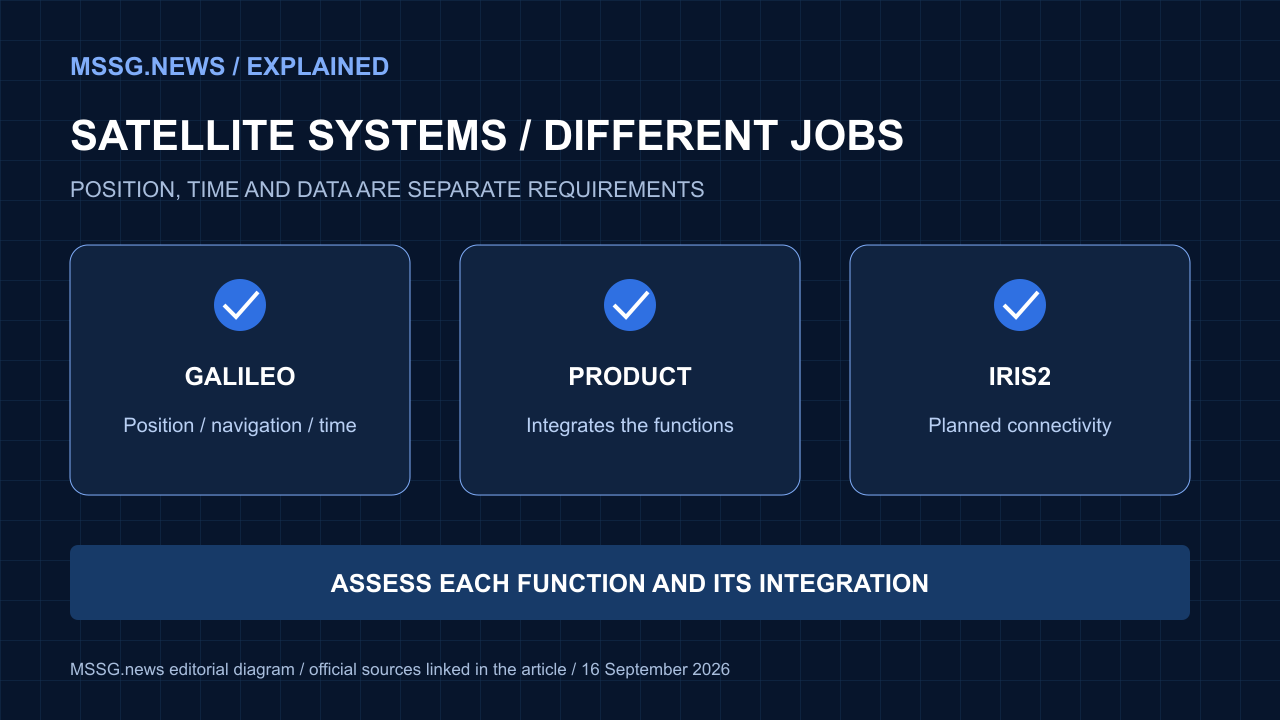
Galileo provides positioning and timing. IRIS² is designed for communications. A dual-use product may need both, but one requirement should not stand in for the other.
- Satellite systems
- Explainer
EUSPA describes Galileo as the European Union’s global navigation satellite system, delivering positioning, navigation and timing information. Its architecture includes space, ground and user segments.
The Commission describes IRIS² as a future secure-connectivity network. Its intended applications include communications for governments and emergency services as well as commercial users. That is a different function from calculating a position or obtaining a time reference.
For a product team or investor, the distinction is a useful starting point for reading claims about satellite-enabled systems. The word satellite identifies part of the infrastructure; it does not tell you which user requirement the product actually satisfies.
Ask what information must move
Consider a hypothetical field sensor. It may need a position and timestamp to make its measurements useful. Separately, it may need a communications path to send those measurements to a customer. Receiving a navigation signal does not, by itself, describe that outbound path.
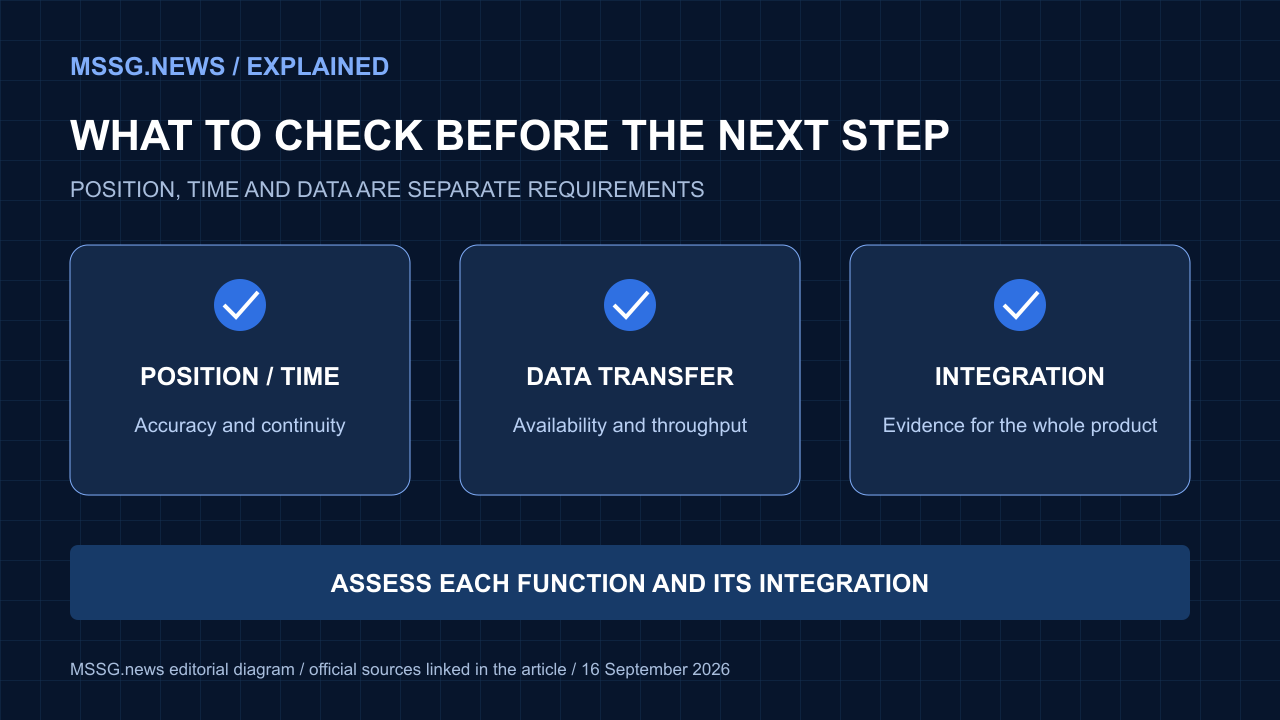
Conversely, a working communications connection does not establish the accuracy or continuity of the position attached to a measurement. Our assessment is that product specifications should state these requirements separately so buyers can see which evidence supports each claim.
Define the failure case before the demonstration
An introductory demonstration often shows the system under favourable conditions. A more useful discussion asks which function is being demonstrated and what happens if an input or service becomes unavailable. Does the product stop, report reduced confidence or continue with a documented fallback?
These are high-level evaluation questions, not instructions for defeating a system. The supplier should identify the tested configuration and permitted disclosure of results. A claim about the resilience of an entire platform should not rest solely on a successful test of one communications or navigation component.
Separate service access from product integration
A programme description does not establish that a particular device supports every service, that an organisation has permission to use it, or that the equipment is ready for the intended environment. Those points require the relevant service documentation and product evidence.
For procurement teams, a comparison table with separate rows for positioning, timing, data transfer and support makes competing proposals easier to assess. For investors, the same distinction helps identify whether the company’s work is in a receiver, a terminal, integration software or an end-user service.
The commercial implication is straightforward: assess the product against the job the customer needs done. Combining complementary satellite functions can be valuable, but their individual capabilities and limitations should remain visible.
Sources & context
Published by Mitchell Strategic Solutions Group. See our editorial standards and corrections policy. Read more →
Related reporting
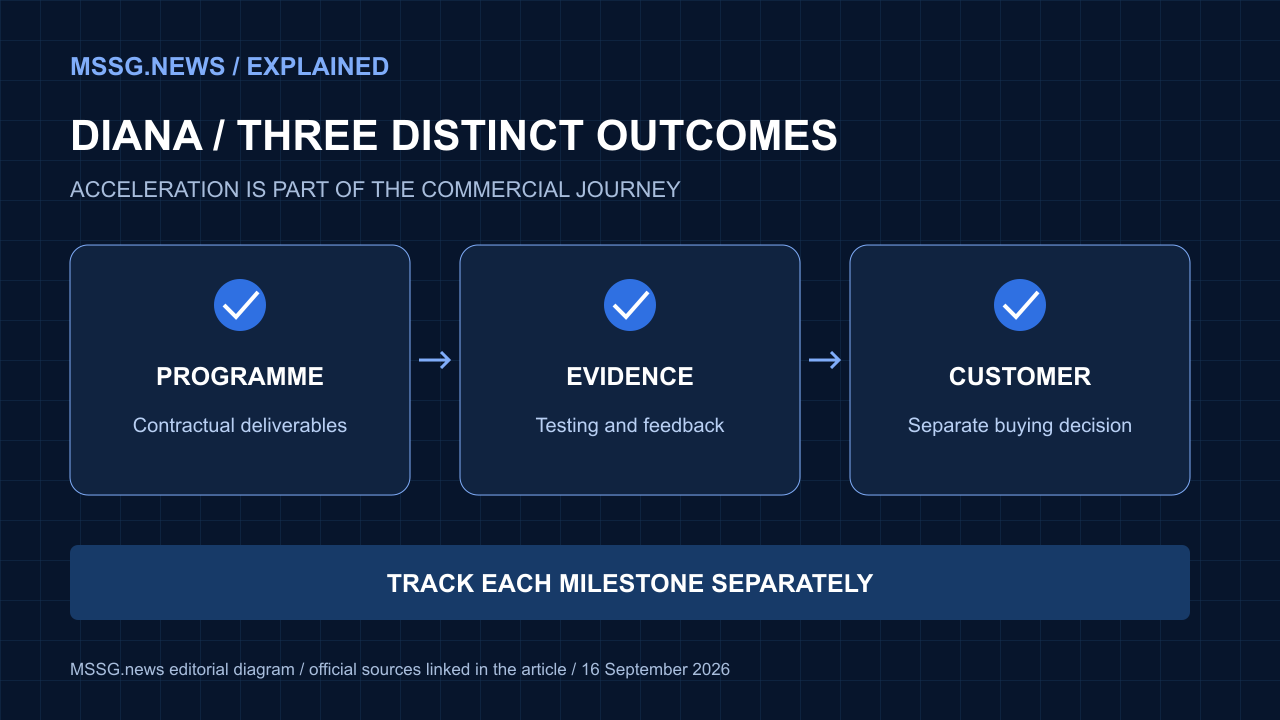
DIANA: how to separate accelerator funding, testing and a future order
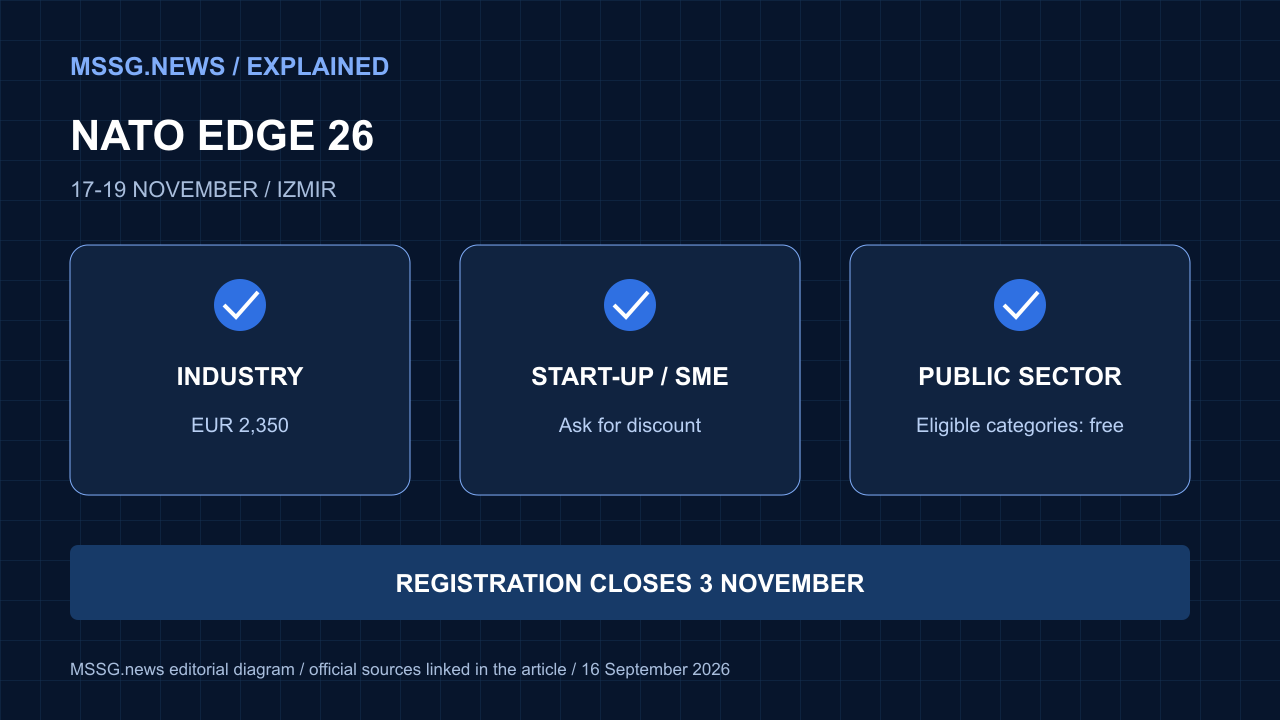
NATO Edge 26: smaller suppliers should check the discounted route before booking
2026-11-17 · Izmir