DIANA: how to separate accelerator funding, testing and a future order
Joining an accelerator can advance a defence business, but its funding, technical evidence and customer pipeline belong in different parts of the plan.
- DIANA
- Explainer
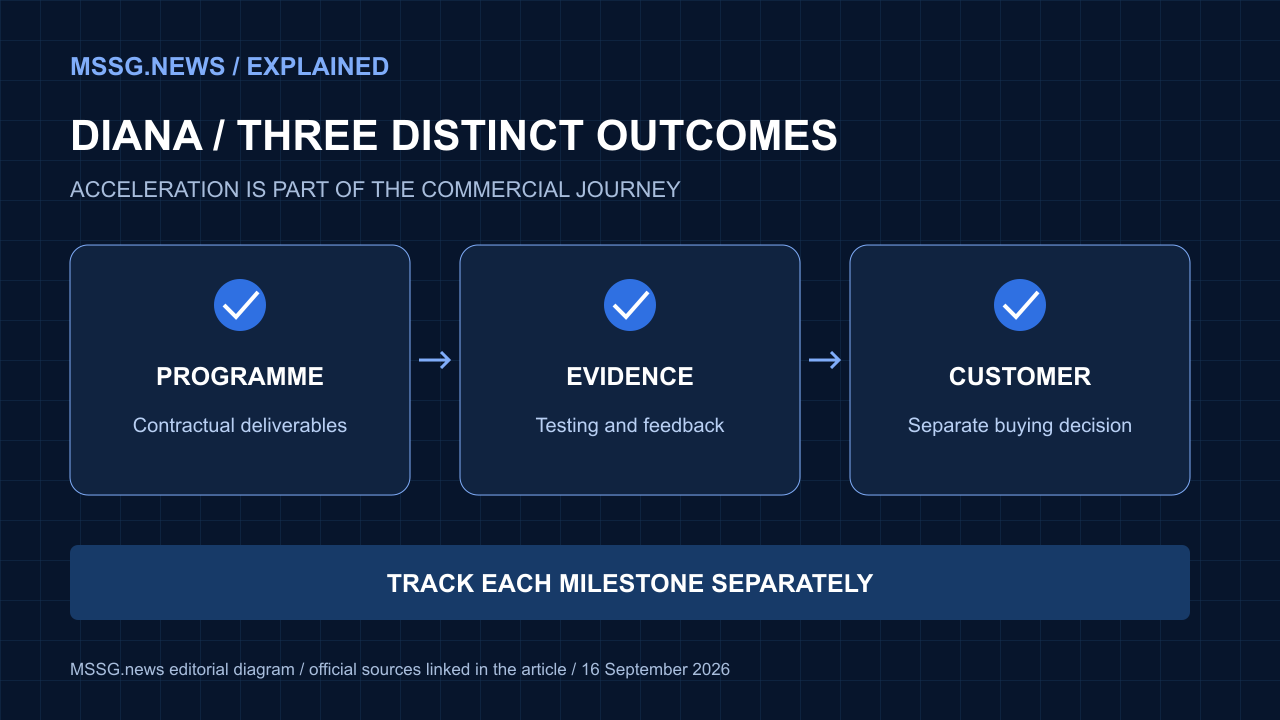
DIANA’s June 2026 challenge Q&A describes its €100,000 award as contractual funding with programme deliverables. Innovators must report progress and how they used the money. The same document says DIANA takes neither equity nor ownership of their intellectual property.
Its support FAQ describes access to testing, mentoring and feedback from end users. The initial funding also covers mandatory travel. These are useful forms of support, but a company still needs to plan the people and expenditure required to use them.
This explainer concerns the programme’s structure. It is not an announcement that a challenge is currently open, and applicants should check the current call and their contract before making commitments.
Build a programme budget and a sales forecast separately
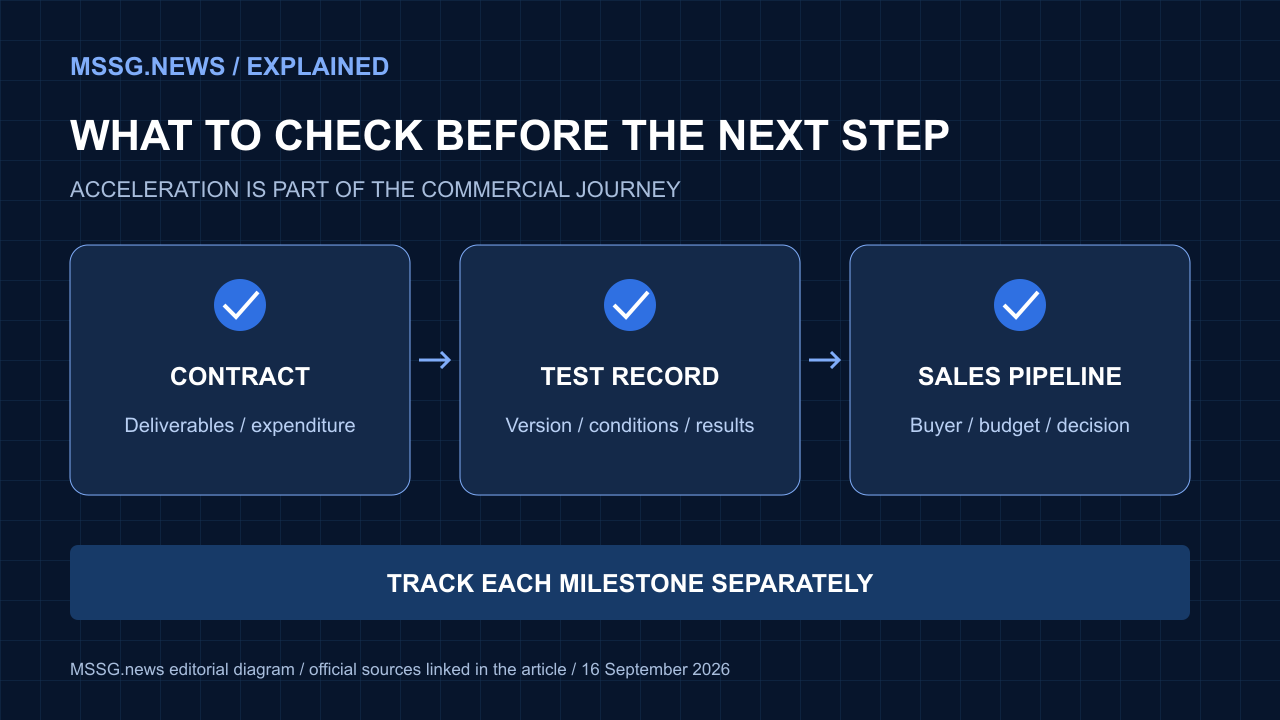
Our assessment is that founders should maintain two distinct plans. The programme budget records the work and resources needed to fulfil the accelerator contract. The sales forecast records prospective customers, their decision processes and the evidence needed before an order can be considered likely.
A payment supporting development is not interchangeable with revenue from selling the finished product to an operational customer. The distinction matters when explaining runway, margins and progress to investors. It also prevents the team from counting the same commercial milestone twice.
Turn testing into a decision someone can use
A useful internal test plan starts with the claim being examined and the decision the result should support. Specify the product version, conditions, measurements and remaining limitations. Agree what can be disclosed before using results in a pitch. These are our suggested preparation steps, not additional eligibility rules imposed by DIANA.
End-user feedback is most valuable when it changes a requirement or a design decision. Keep a record of what the user actually observed and requested. An encouraging conversation does not establish acceptance of a deliverable, authority to purchase or a budget allocation.
Keep the next agreement visible
DIANA’s Q&A distinguishes programme IP ownership from any licensing or access rights that could be negotiated in a later procurement or partnership agreement. Founders should review that later agreement on its own terms rather than assume the accelerator arrangement answers every commercial question.
For an investor, the practical follow-up is to ask what remains between today’s evidence and a repeatable sale. For the founder, it is to allocate responsibility for each remaining step: technical validation, partner discussions and the customer’s purchasing process. Programme participation can support that work without replacing it.
Sources & context
Published by Mitchell Strategic Solutions Group. See our editorial standards and corrections policy. Read more →
Related reporting
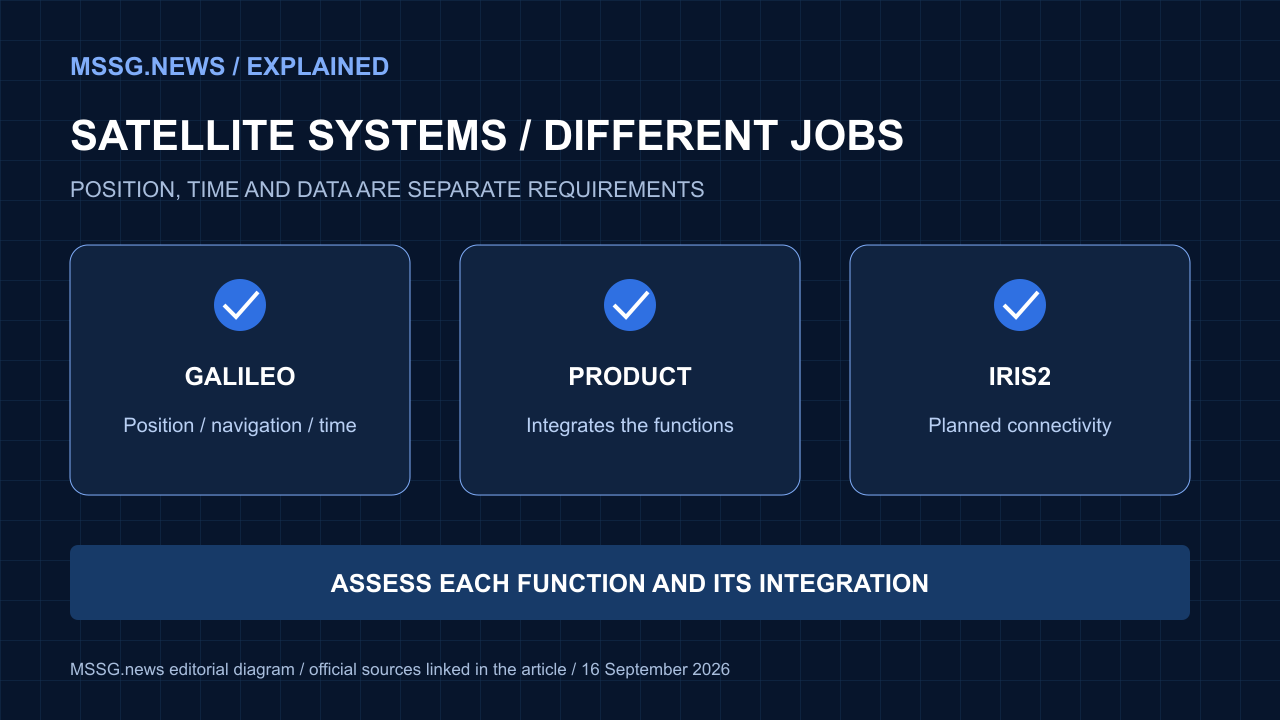
Knowing where you are and staying connected are different satellite jobs
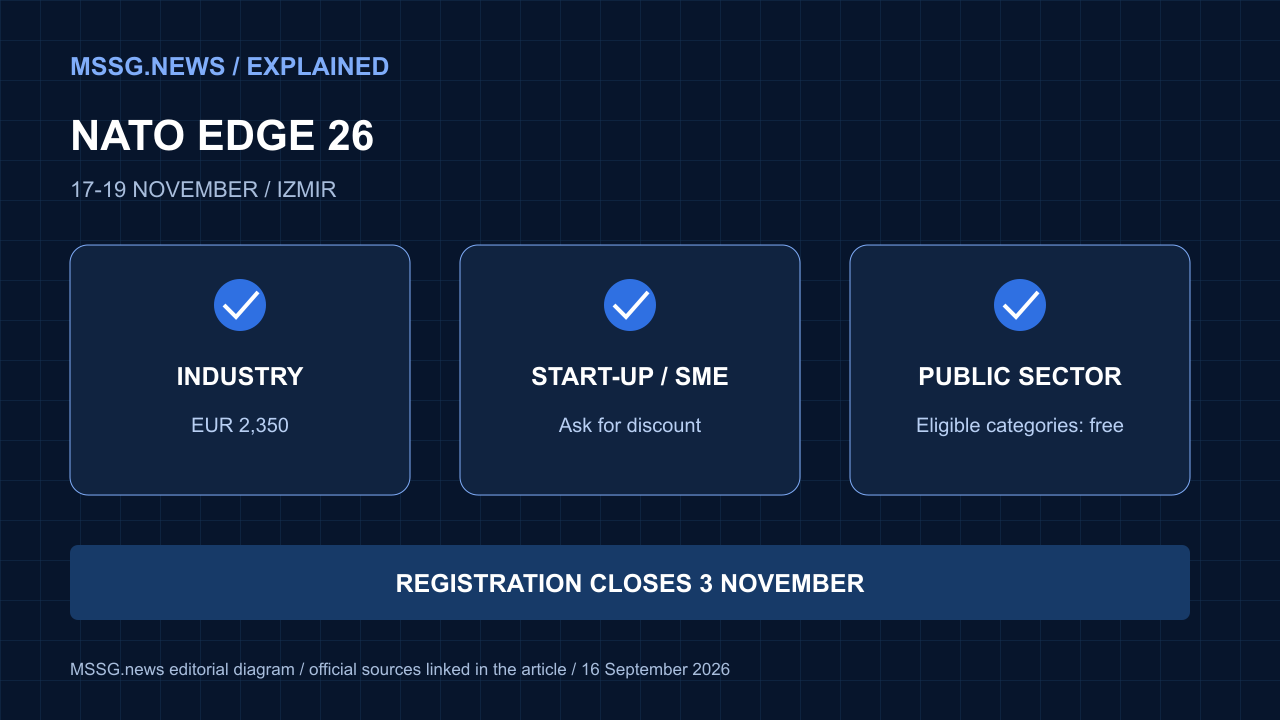
NATO Edge 26: smaller suppliers should check the discounted route before booking
2026-11-17 · Izmir