EU and Singapore examine undersea infrastructure security. Cooperation is still being defined
A two-day seminar brought defence and civilian officials together around risks to cables, pipelines and related maritime infrastructure. The meeting widened a cross-regional conversation but did not announce a new patrol, contract or binding pact.
- undersea infrastructure
- EU
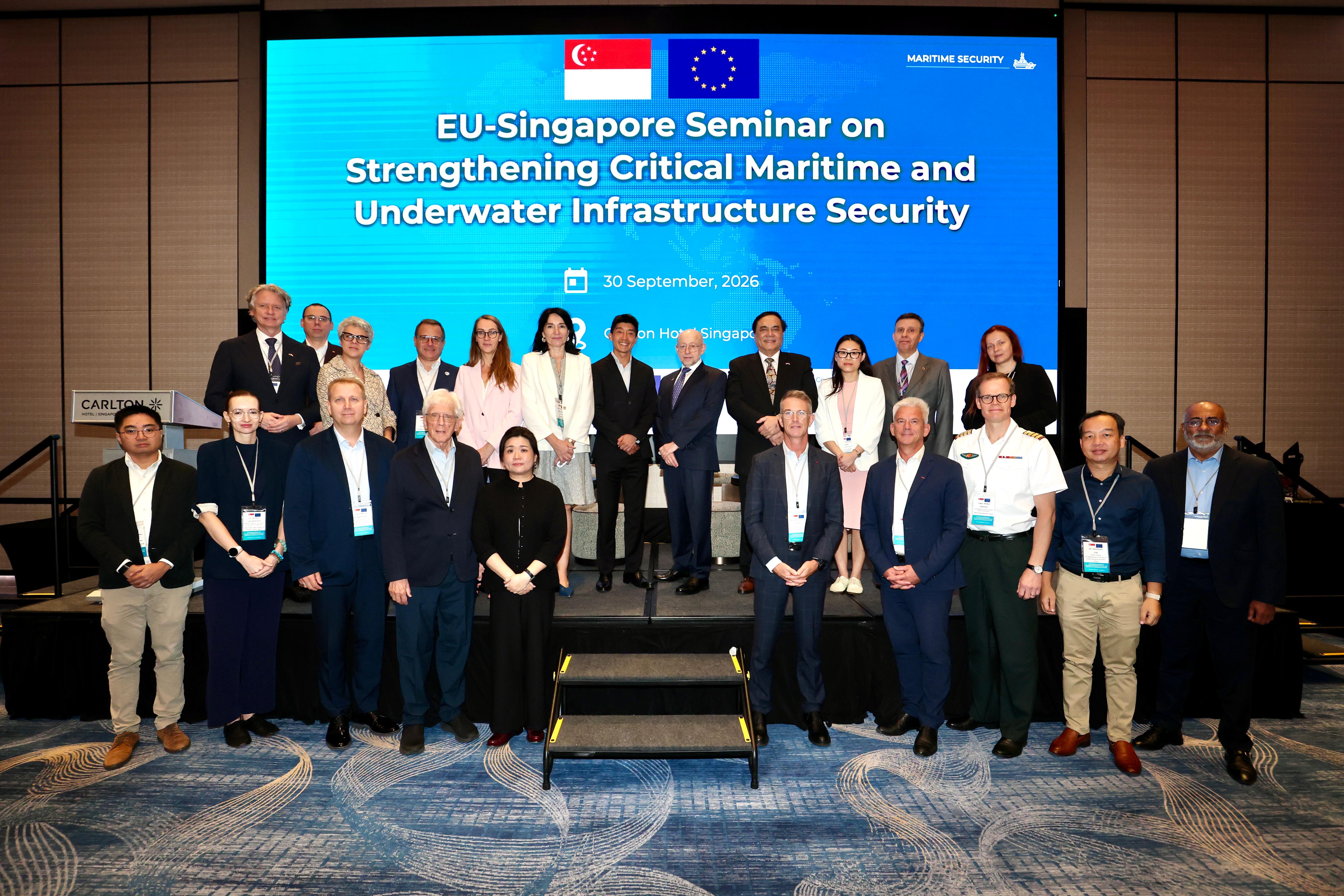
The European Union and Singapore concluded a two-day seminar on 1 October about threats to critical maritime and underwater infrastructure. Singapore's Ministry of Defence and the EU Delegation organised it with support from the EU's ESIWA+ security-cooperation project. Officials and military personnel from the EU, Singapore and several Indo-Pacific partners discussed how to protect assets that carry communications and energy. The public release describes an exchange of experience. It does not announce a joint patrol, procurement programme or new legal agreement.
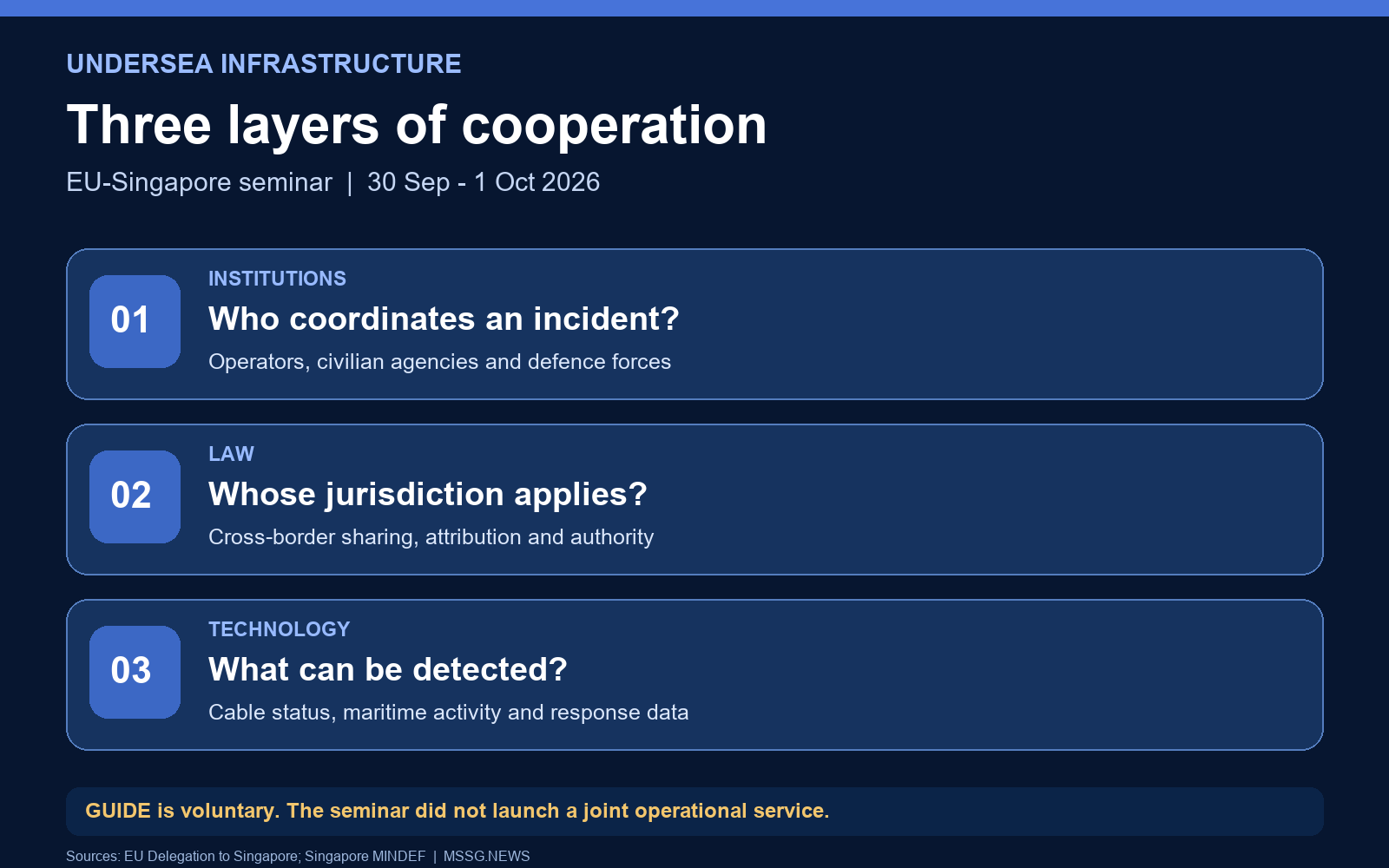
The assets in question include submarine telecommunications cables, power links and pipelines. They cross national jurisdictions, while ownership and day-to-day operation often sit with private or civilian entities. Damage can be accidental or deliberate; an incident alone does not establish who caused it. That creates a practical need to separate detection and repair from attribution, law enforcement and any military response.
The EU delegation says the participants considered institutional, legal and technological responses. The group included Australia, Indonesia, Malaysia, Thailand and Vietnam alongside Singapore and European representatives. That breadth is useful for sharing incident experience, but the release does not identify a common sensor network, real-time data-sharing rules, funding envelope or timetable for fielding a capability.
Where defence support fits
Singapore's earlier Guiding Principles for Underwater Infrastructure Defence Exchanges, known as GUIDE, offer a reference point. Issued in May by a group of countries, they recognise that militaries can support civilian agencies and infrastructure operators with surveillance assets and cross-border exchanges. Singapore explicitly calls GUIDE voluntary, non-legally binding and non-financially binding. It creates no new legal obligations or dedicated funding.
That distinction matters when discussing cables. A navy might help build maritime awareness or support an incident response, but repairs, operational decisions and jurisdictional powers remain governed by existing arrangements. A regional seminar can align expectations without turning the participating governments into one command structure. The October statement does not say that an EU-Singapore operational protocol has been adopted.
The next useful test
The public value of cooperation will become clearer if partners publish concrete procedures: whom an operator alerts, how authorities verify an incident, which information can cross borders, and when defence assets assist civilian responders. Technology can help find damage and monitor nearby activity, but legal authority, commercial access to infrastructure data and response times determine whether a shared picture can be acted on.
For suppliers, this is a signal of a recognised problem, not an invitation to bid. Any future contract would need its own buyer, scope, eligibility and award process. Readers should watch for those documents and for evidence of exercises or operational agreements. Until then, the accurate description is a cross-regional policy and technical discussion about a real vulnerability.
Sources & context
- EU Delegation to Singapore, 1 October 2026 ↗
- Singapore MINDEF: GUIDE principles, 30 May 2026 ↗
- EEAS copyright and reuse notice ↗
Published by Mitchell Strategic Solutions Group. See our editorial standards and corrections policy. Read more →