ESA technology brokers: a route between space and terrestrial markets
The network helps identify transferable technology and potential partners. A space heritage claim still needs a business case in the receiving market.

- technology
- Europe
ESA’s technology-broker network supports transfers between the space sector and other industries. Its published examples include taking space-derived technologies into terrestrial applications and bringing technologies such as robotics and AI into space.
The service can help with technology scouting, feasibility and introductions. Specific funding routes and local offers vary. A company should check the broker serving its country rather than assume that every programme advertised across the network is locally available.
A component developed for one demanding environment may be valuable elsewhere, but the new application creates its own requirements. A sensor used in a terrestrial product can face different costs, servicing expectations and certification needs. Heritage is evidence of prior work, not proof that the new product is ready.
Start with the receiving environment
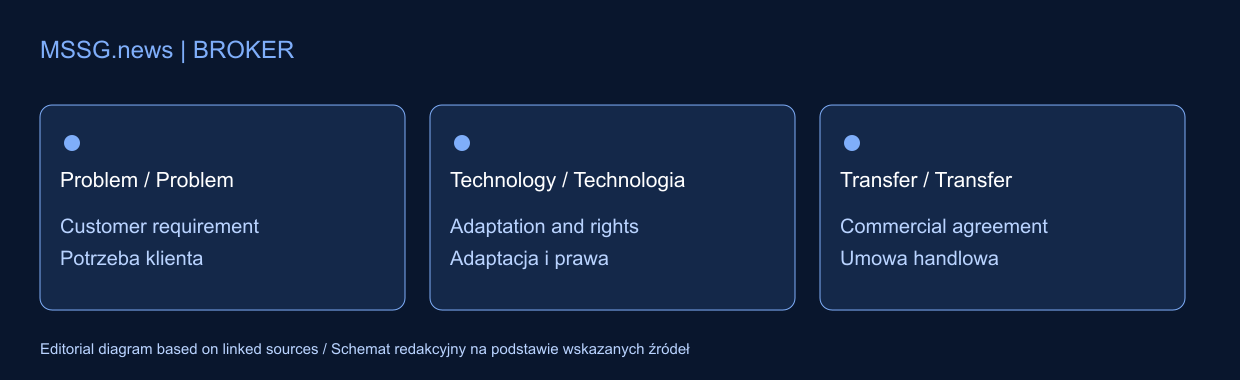
Our assessment is that the strongest transfer proposal identifies a concrete bottleneck for a customer and explains why the technology addresses it. “Space-grade” is not enough if the customer cannot maintain the product or justify its price.
Who owns what after the transfer?
Before development accelerates, partners need to understand access to background intellectual property, the planned adaptation and the ownership of new results. Public descriptions of a technology do not settle those questions. The relevant agreements should make the intended commercial route possible.
Use introductions to test a hypothesis
A broker introduction is most useful when both sides know what they are testing: technical suitability, a customer need or a licensing proposition. A short, non-confidential account of the problem and the evidence available can help establish whether a detailed discussion is worthwhile. Avoid sending sensitive designs as an unsolicited sales attachment.
Sources & context
Published by Mitchell Strategic Solutions Group. See our editorial standards and corrections policy. Read more →