EDA's first readiness report: four tests behind the spending headline
EU defence ministers received the first Annual Defence Readiness Report. The public account covers spending, capabilities, industry and partnerships, but the report itself is for governments.
- EDA
- Defence Readiness 2030
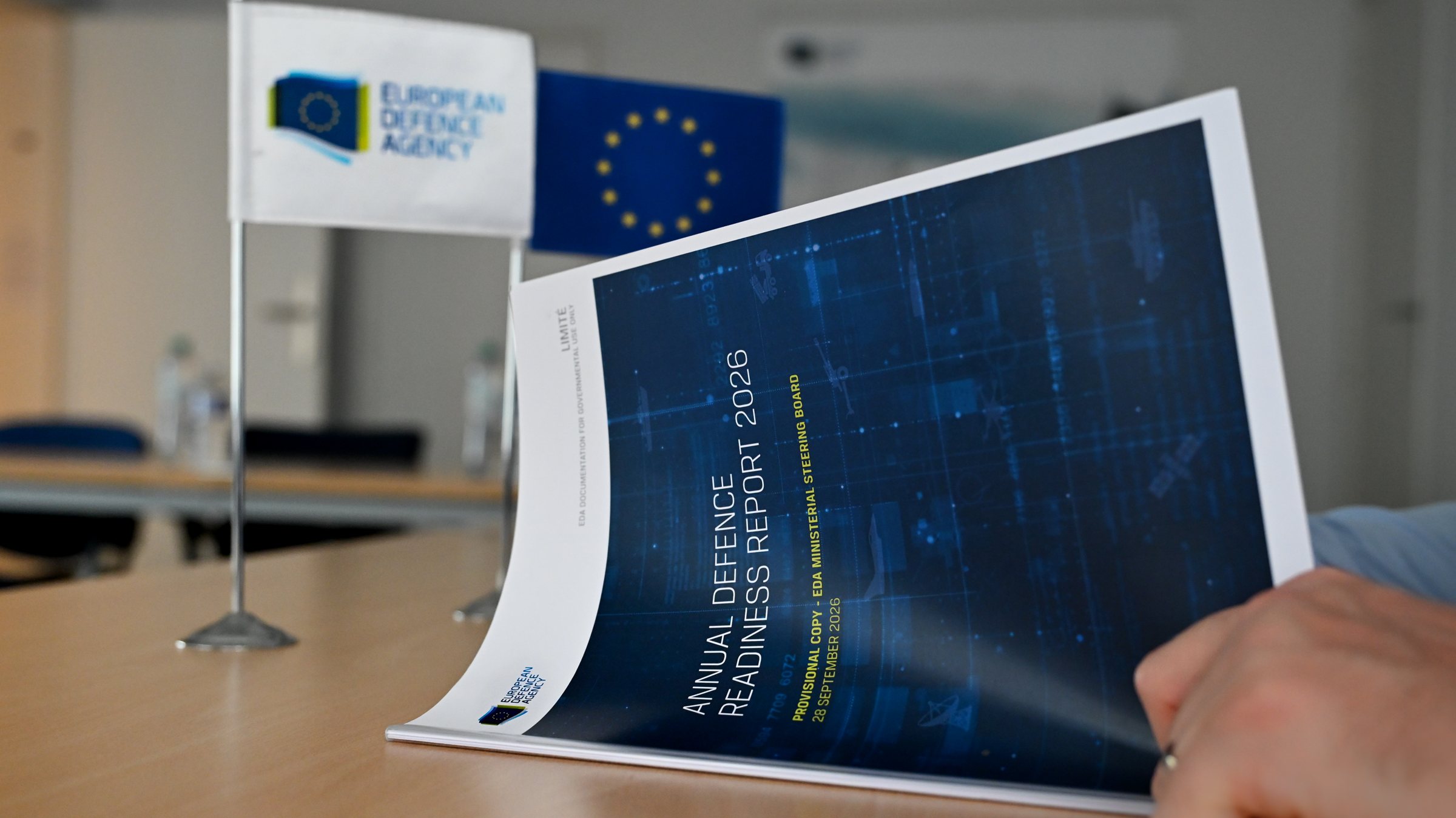
EU defence ministers welcomed the European Defence Agency's first Annual Defence Readiness Report on 30 September. EDA presents it as a tool for tracking how Member States advance the Defence Readiness 2030 agenda. The full document is intended for governments and is not publicly available. That limits what outsiders can conclude: the agency's announcement gives themes and selected figures, not the country-by-country assessment or underlying recommendations.
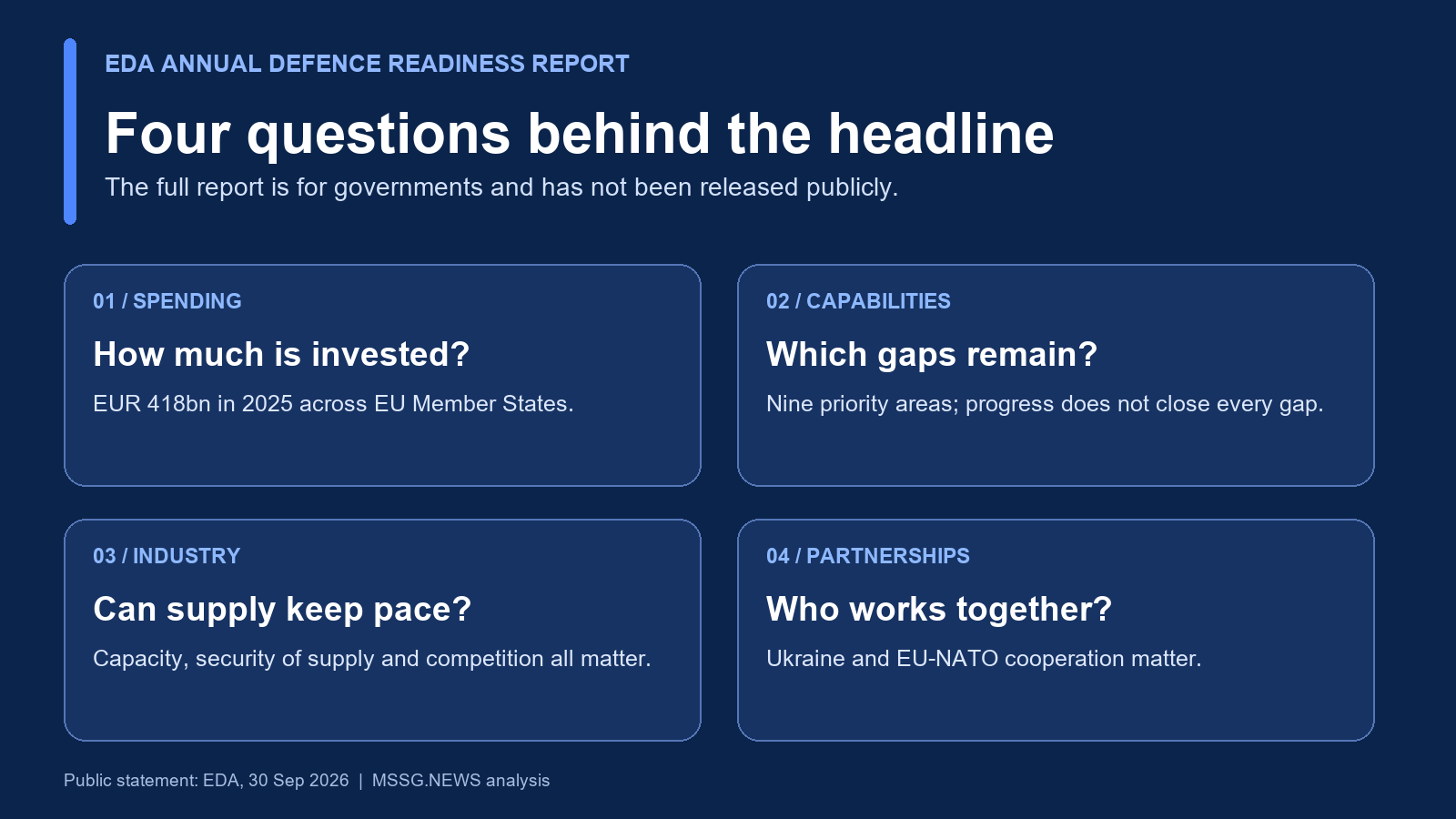
The public summary groups readiness into four areas: defence spending, military capabilities, the industrial base and partnerships. Together they form a more useful test than expenditure alone. Money can rise while a force still lacks a usable capability, a supplier cannot deliver at scale, or partners cannot sustain equipment in service. Conversely, a shared requirement or stronger production line can matter before it appears as a new contract.
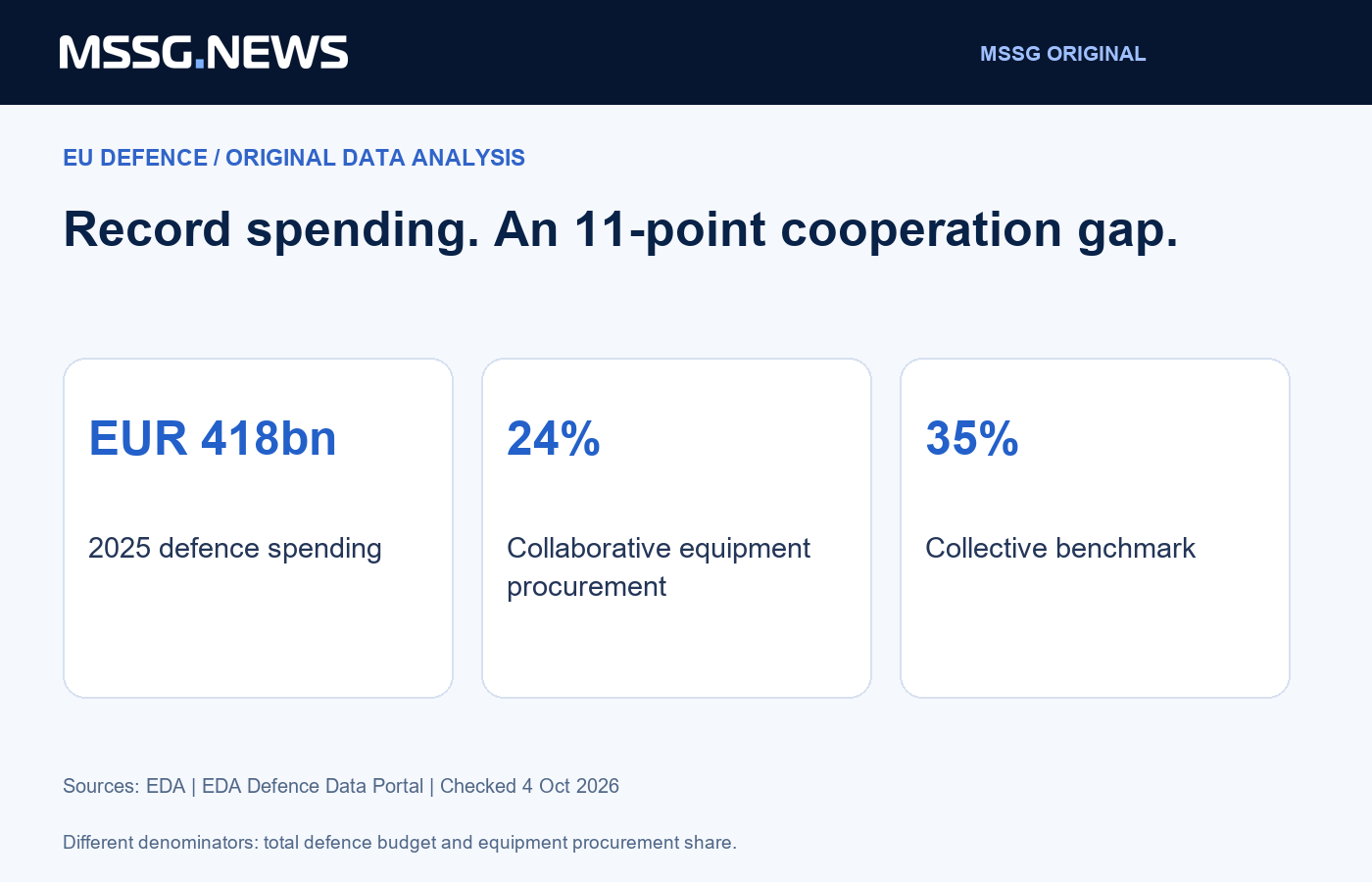
EDA estimates that EU Member States spent EUR 418 billion on defence in 2025, or 2.2% of their combined GDP. Its July data release projected EUR 454 billion for 2026. The September account also sketches a possible EUR 547 billion by 2029. These are estimates and projections for different years, not successive appropriations to one EU fund. They should not be added together or presented as open opportunities for suppliers.
Where the capability test is harder
EDA points to progress in areas including drones, counter-drone systems and maritime capabilities, while saying significant gaps remain across nine priority capability areas. The public statement does not give a complete scorecard for each area. A company should therefore avoid inferring that a named technology has been adopted simply because it appears in the readiness discussion.
The operational question is whether Member States agree on requirements, test systems against them, and create a route for procurement and sustainment. A successful demonstration can inform that process, but it is not the same as an order. The report's value for the public will grow if subsequent decisions connect these stages more visibly.
Industry and partnerships are part of readiness
EDA also treats industrial capacity and security of supply as readiness questions. A larger defence budget requires materials, skills, production capacity and predictable demand if it is to become deliverable equipment. Competition and cross-border cooperation shape that response. The agency's account does not identify a new tender, eligible suppliers or a financing rate.
Ukraine features in the partnership discussion, alongside EU-NATO cooperation. That signals that battlefield learning, interoperability and shared industrial work are relevant to Europe's plans, but the public summary does not settle the terms of any particular joint project. EU leaders are expected to discuss readiness at their 15-16 October meeting. Until then, the report is best read as a government assessment framework and a list of questions for follow-up, not a catalogue of contracts.
Sources & context
- EDA: defence ministers welcome first annual report, 30 September 2026 ↗
- EDA: 2025 spending data and 2026 projection, 16 July 2026 ↗
Published by Mitchell Strategic Solutions Group. See our editorial standards and corrections policy. Read more →