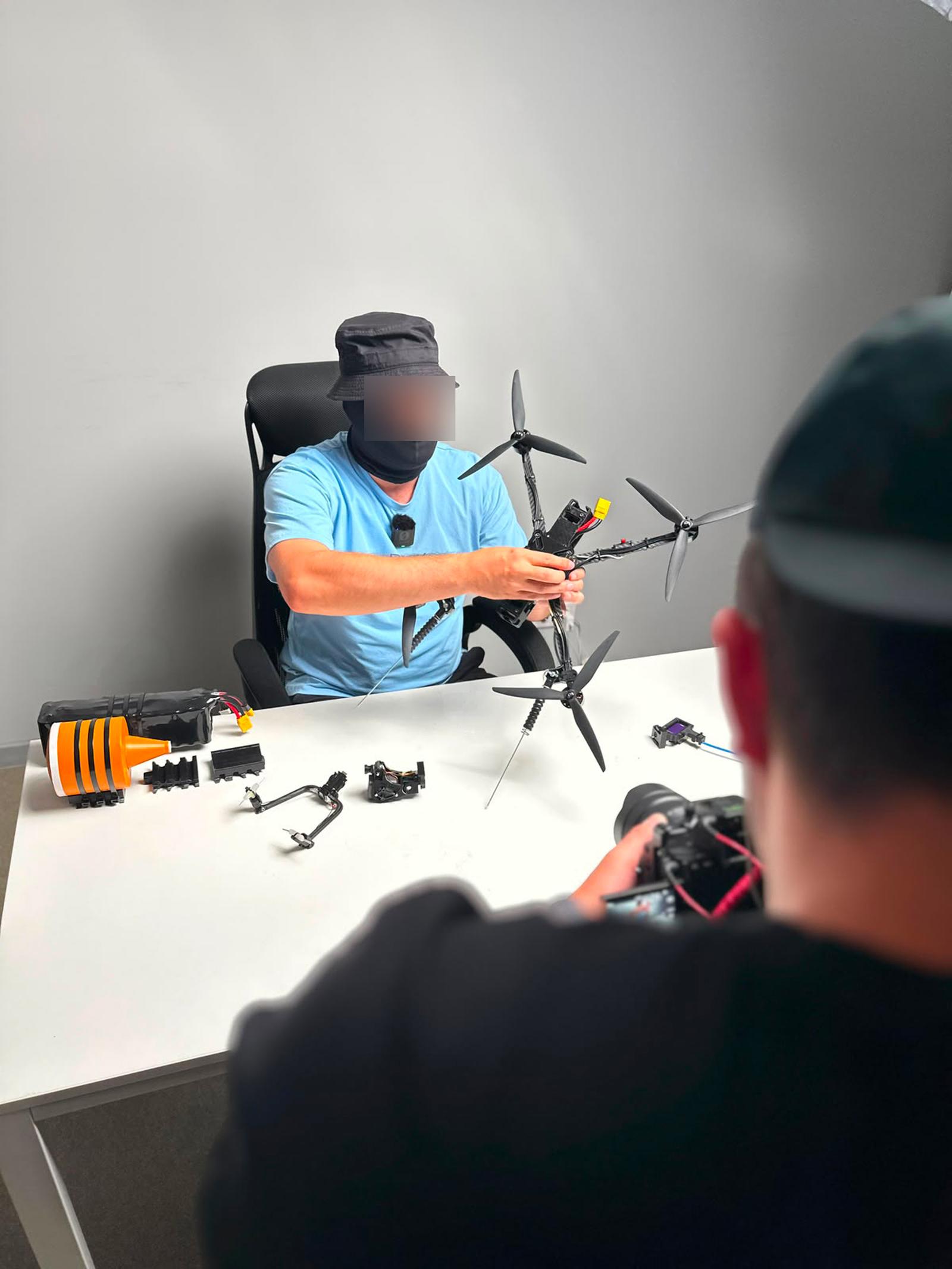

One in five DOT drones now goes through a marketplace. Stock is the speed advantage.
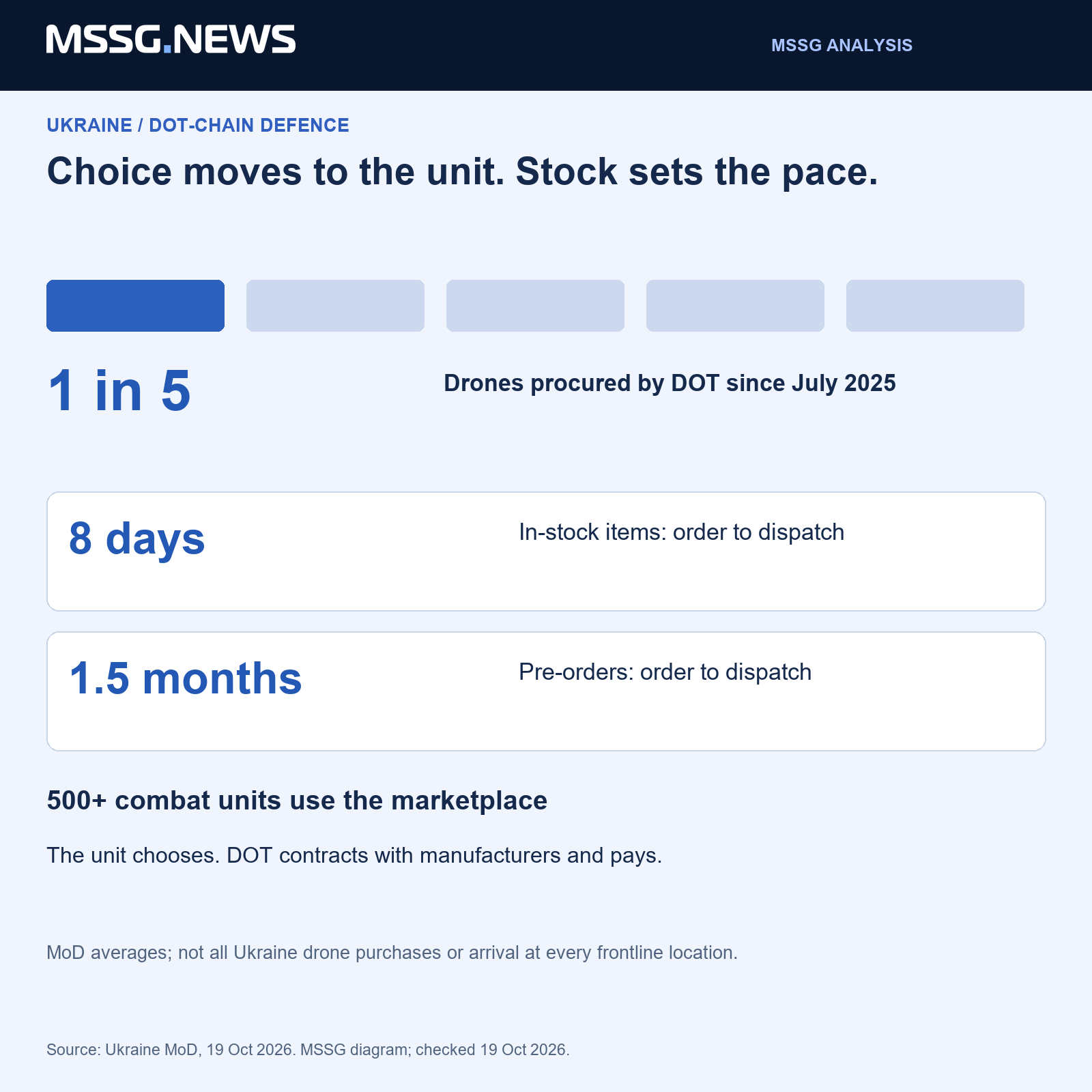
Ukraine reports eight days from order to dispatch for stocked items, versus a month and a half for pre-orders. Unit choice and central contracting work together.

- Ukraine
- DOT-Chain Defence
Ukraine's drone marketplace has become a material procurement channel: one in five drones bought by the Defence Procurement Agency DOT has reached the military through DOT-Chain Defence, the Ministry of Defence reported on 19 October. More than 500 combat units use it. The change is who selects the equipment, while the agency retains the contract and payment.
The ministry puts average order-to-shipment time at eight days for items in stock and a month and a half for pre-orders. That difference makes availability part of the product offer. A catalogue entry and a finished batch ready to ship are commercially different promises.
Our reading is that the marketplace shifts some demand decisions towards the user without asking each unit to build its own purchasing department. It separates choosing equipment from the administrative work required to buy it with state money.
The unit chooses; DOT contracts and pays
Units place their own orders using state funds. DOT supports the purchase by concluding contracts with manufacturers and making payments. The ministry contrasts this model with competitive procurement against tactical and technical specifications and direct purchases against defined lists.
That distinction matters for manufacturers. Winning attention at a central buyer and being chosen by a unit are different commercial tasks. A supplier needs an intelligible offer for the user and the ability to fulfil the agency's contract. Neither a convincing demonstration nor a cheap listing can substitute for actual availability.
The catalogue covers UAVs and ammunition for them, ground robotic systems and electronic warfare equipment. These are the ministry's stated categories, not evidence that every model or foreign supplier can join without qualification. The announcement is an account of procurement activity, not a new open invitation to sell.
Two waiting times, two bottlenecks
The eight-day figure starts when an order is placed and ends at shipment to the military. It is not a promise of arrival at every frontline destination within eight days. The separate pre-order figure includes a different availability condition, so combining both into a single headline delivery time would erase the most useful distinction.
For a manufacturer, our analytical implication is straightforward: financing components and maintaining finished stock may be as commercially important as adding another feature. The state can shorten ordering administration, but it cannot dispatch an unfinished product. The two times point to different bottlenecks rather than proving that a website alone accelerated every stage.
Keep the denominator attached to the claim
One in five refers to drones procured by DOT since the marketplace launched in July 2025. It does not describe all Ukrainian drone purchases, the agency's entire spending or a share by contract value.
The ministry also recalls more than one million UAVs and other equipment received through the marketplace since the start of 2026. That is a mixed equipment total, not one million drones alone. Keeping these denominators visible gives the story its force: a user-selected channel is already substantial, and its next constraint is the link between catalogue choice, production and stock.
Sources & context
Published by Mitchell Strategic Solutions Group. See our editorial standards and corrections policy. Read more →