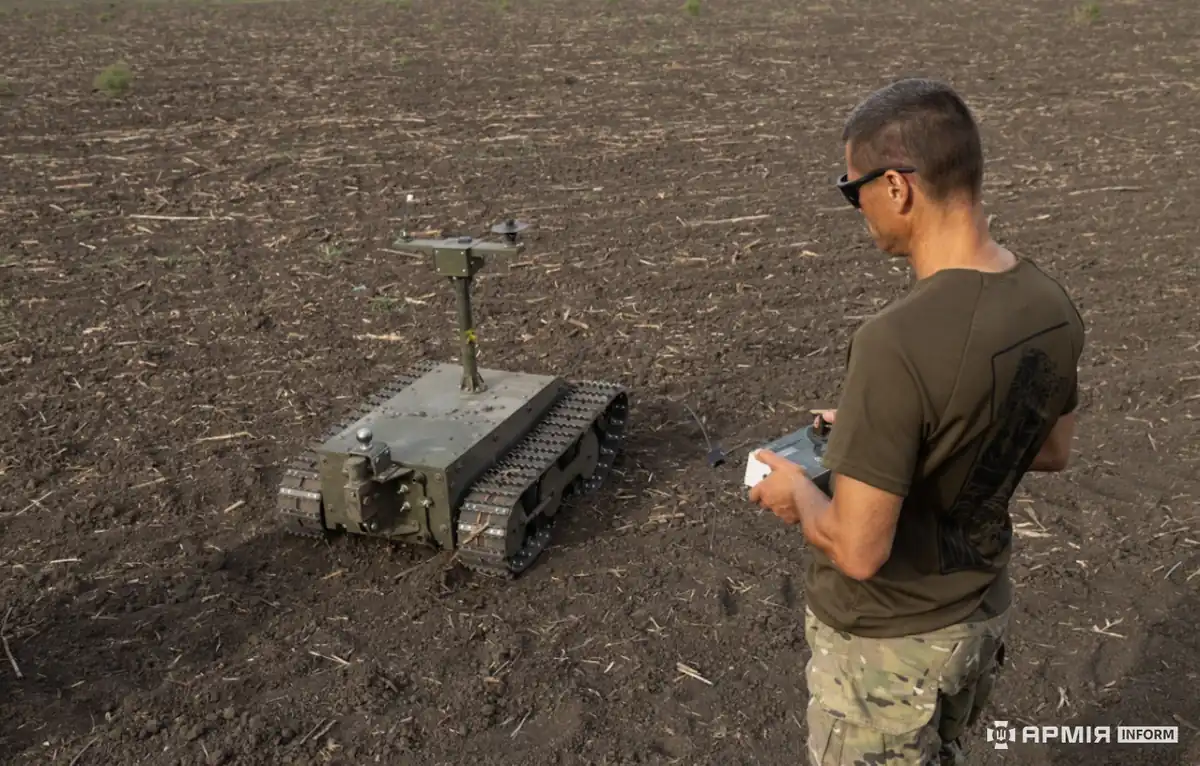

Ukraine reports over 774,000 items delivered through Brave1 Market
Ukraine’s defence ministry reports more than 774,000 items delivered by November. The marketplace now brings ePoints and units’ own budgets together, making the payment route as important as the catalogue entry.

- Ukraine
- Brave1
Ukraine’s defence ministry reported on 6 November that units had ordered more than 903,000 items through Brave1 Market and had received more than 774,000 drones and other pieces of equipment. The figures put the scale of the marketplace in view. For manufacturers, the more useful question is which listings generate funded orders and how those orders move into delivery.
The ministry puts the value of orders at $1.39 billion and the value of deliveries at $1.15 billion. These are conversions from hryvnias using the National Bank’s 28 October rate.
The same report counts 486 purchasing units and 7,087 catalogue solutions from 955 companies. A unit, a listed solution and a delivered item are three different units of measurement.
How a listing becomes an order
Brave1 and the Ministry of Digital Transformation launched the marketplace in April 2025. The integrated ePoints programme began in August. Units can spend points earned through verified missions or use their own funds through the Buyer’s Account. Product specifications require Diia authorisation, and certain categories are restricted to service members verified in DELTA.
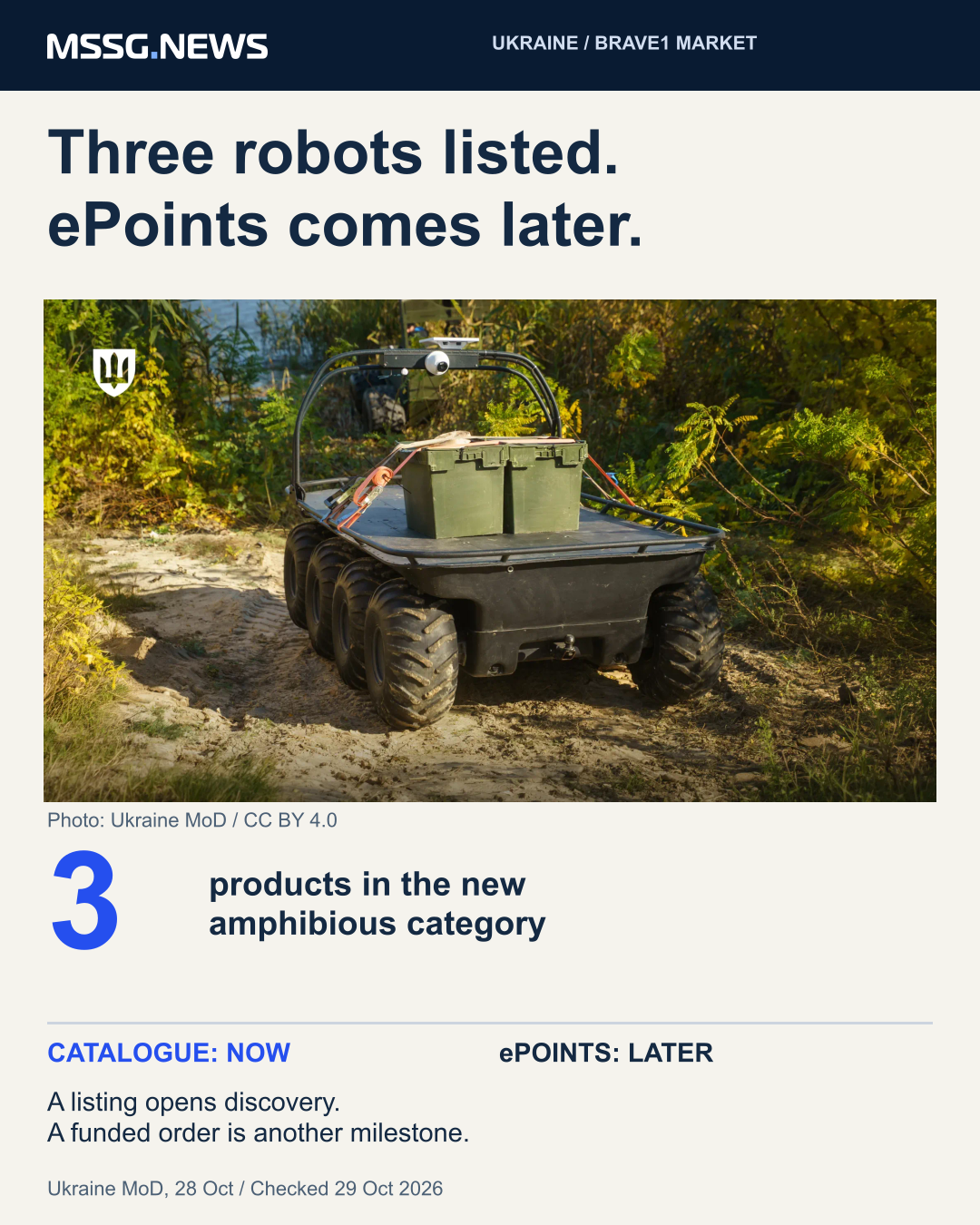
The amphibious ground-robot category shows why the payment distinction matters. When the defence ministry announced the category on 28 October, it named three listed products and said ordering with ePoints would follow. For a manufacturer, a catalogue entry opens a route to customers. Eligibility under a particular payment route determines how they can order.
The order and delivery totals cover different stages
The August first-year report counted $1 billion in orders financed with ePoints. The November overview covers the marketplace and discusses two payment routes. The ministry does not break November’s totals down by route. Subtracting one report’s dollar figure from the other would therefore give a misleading measure of growth in ePoints spending.
The same issue arises when comparing the 903,000 and 774,000 headline figures. The overview does not match deliveries to a cohort of orders or separate cancellations and orders in progress. It gives evidence of throughput at scale. A buyer estimating lead time still needs stock data and confirmation for a specific item.
What suppliers can compare
The August report gave an average of seven days for delivery of items already in stock. Availability changes the usefulness of that benchmark. A supplier comparing its own performance should keep stocked orders separate from production orders and record when the buyer received the equipment.
For Polish and other European companies, the ministry describes Test in Ukraine and joint programmes as ways to work with Brave1. Those routes can generate feedback or support development. If the objective is a purchase, the practical checks are the product category, who can fund the order and what the supplier can deliver on the agreed schedule.
Sources & context
- Ukraine Ministry of Defence: Brave1 and its marketplace, 6 November 2026 ↗
- Ukraine Ministry of Defence: first year of the ePoints programme, 5 August 2026 ↗
- Ukraine Ministry of Defence: stock and Buyer’s Account, 28 July 2026 ↗
- Ukraine Ministry of Defence: amphibious category launch, 28 October 2026 ↗
Published by Mitchell Strategic Solutions Group. See our editorial standards and corrections policy. Read more →