BAE pairs a cannon with microwaves. Drone defence gets a second supply problem.
BAE has presented MDACS and HPM as complementary counter-drone demonstrators. Our analysis: energy weapons shift part of the endurance challenge from ammunition stocks to power, cooling and system availability.
- Counter-UAS
- BAE Systems
BAE Systems is offering two different answers to the same problem: an air-defence system can run out of ready ammunition before a mass drone attack runs out of targets.
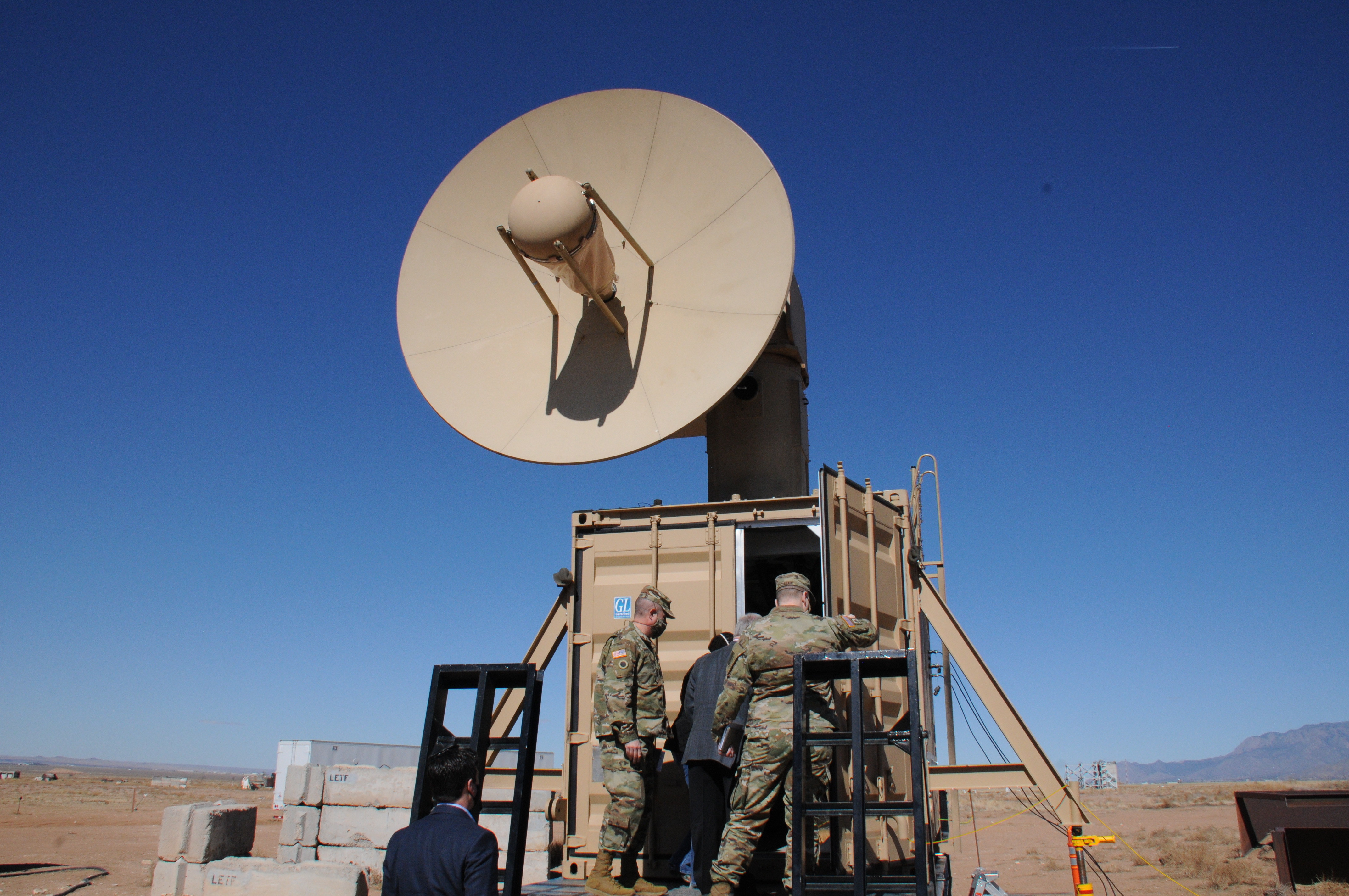
At AUSA, in an announcement dated 12 October, the company paired its Multi-Domain Artillery Cannon System, or MDACS, with a High Power Microwave system, HPM.
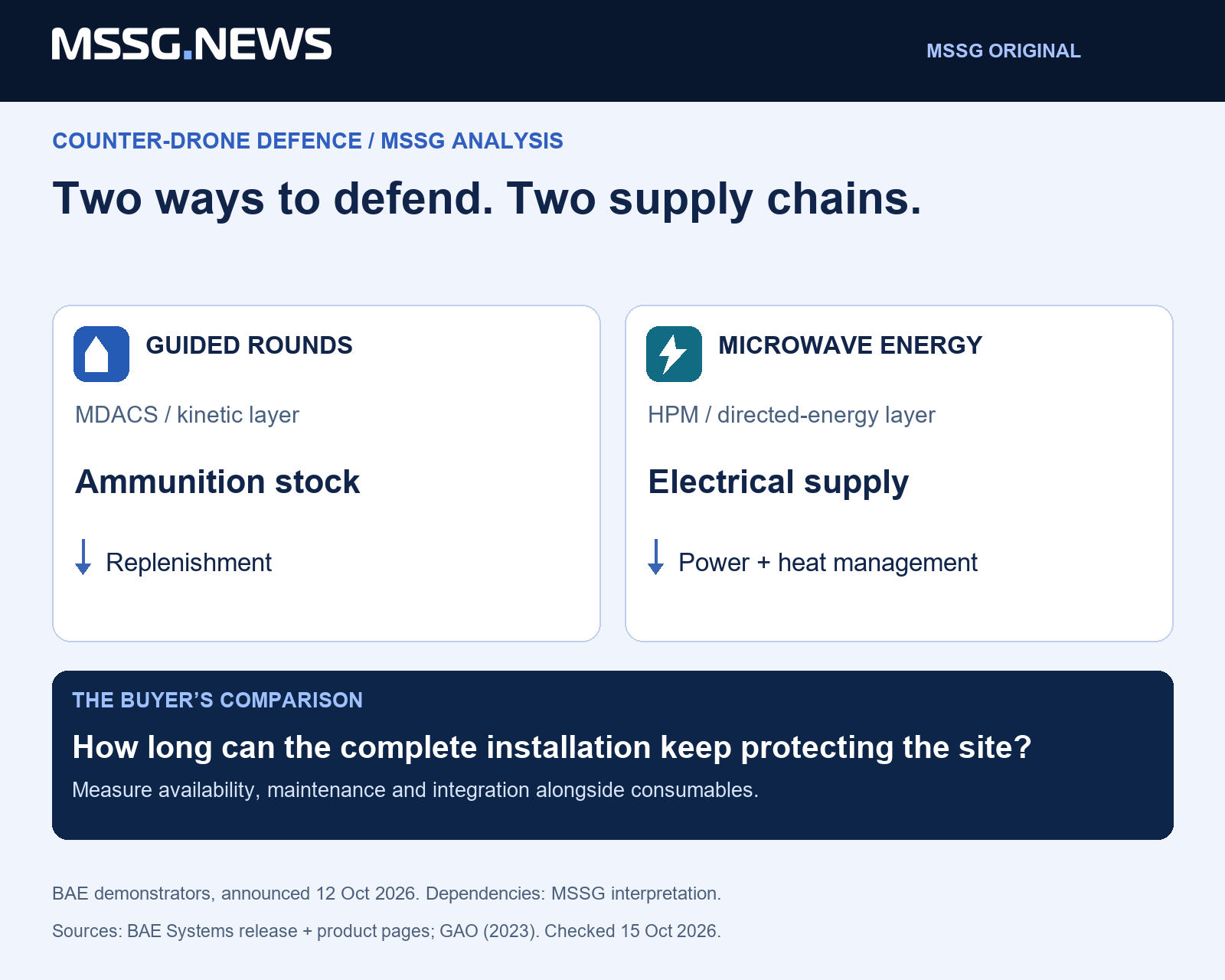
The important industrial shift is a second supply chain inside the defensive layer. Guided rounds need replenishment; a microwave system needs sustained electrical and thermal support. Buying either effector alone misses the endurance question.
Two mechanisms, two dependencies
BAE describes MDACS as a combination of a gun, guided projectile, sensors and fire-direction software. Its air-defence ammunition is the Hypervelocity Projectile. HPM instead uses electromagnetic pulses against electronics. The company describes the two systems as demonstrators that can complement existing defences.
Their operating logic gives buyers a useful comparison. A cannon consumes physical rounds. A microwave effector shifts a share of that burden to the equipment that generates, distributes and manages energy. That is our analytical distinction, rather than a published comparison of their effectiveness or operating cost.
The HPM product page reports Technology Readiness Level 6 and a heavily commercial component base. These are manufacturer statements about maturity and architecture. They do not establish a delivered European capability, a European procurement award or independently measured performance.
Count protected hours, not only shots
A procurement comparison should start with the service the customer needs to keep running. For an installation, that means asking how much of a required protection period the combined system can actually support. The acquisition file should connect the effector to its power supply, maintenance arrangements and the people responsible for restoring service.
Cost per engagement can illuminate one part of the decision, but a useful comparison must also state what it includes. A lower consumable cost does not by itself price the complete installation. Conversely, the need for electrical support does not erase the value of reducing ammunition consumption. Buyers need both sides of that ledger.
GAO’s 2023 technical explainer identifies cooling and operating conditions among directed-energy constraints. It also notes that broad-beam systems can affect friendly assets. That makes coexistence with the customer’s own electronics part of the integration evidence.
The European opportunity sits around the effector
For European industry, our reading is that supporting equipment deserves as much attention as the headline weapon. Power electronics, thermal management, monitoring and maintainable integration can become valuable work when they are tied to an actual customer requirement. A generic claim that a component is dual-use is less persuasive than a defined responsibility within the complete installation.
The next question for a supplier is therefore commercial and organisational: who owns the interface, who accepts the delivered subsystem and who supports it after the demonstration? Those answers tell a smaller company whether it has a route into a programme, rather than merely an interesting technology.
GAO’s separate transition audit explains why that handover matters. It found obstacles between prototype development and acquisition and called for clearer transition arrangements. We use that institutional lesson, rather than an old test result, to assess the new announcement. BAE has put two complementary mechanisms on the table. The stronger buying decision will compare the support needed to keep each useful over time.
Sources & context
- BAE Systems announcement, 12 October 2026 ↗
- BAE Systems MDACS product description ↗
- BAE Systems HPM product description ↗
- GAO technical explainer, 25 May 2023 ↗
- GAO technology-transition audit, 17 April 2023, with recommendation updates ↗
Published by Mitchell Strategic Solutions Group. See our editorial standards and corrections policy. Read more →