Zero Debris: a voluntary charter is not a product certificate
The community commitment and ESA’s own requirements serve different purposes. Suppliers should identify which instrument actually applies to their work.
- policy
- Europe
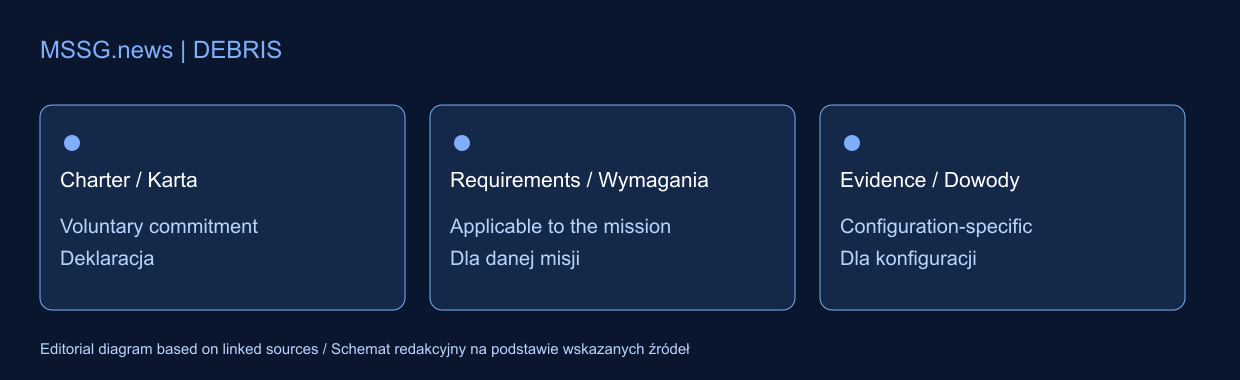
The Zero Debris Charter sets out a community ambition for responsible space activity towards 2030. ESA describes the charter separately from its own internal debris-mitigation requirements. The charter itself is not legally binding.
That distinction matters when a company presents its environmental credentials. Signing a shared commitment is not the same as demonstrating that a particular spacecraft satisfies a customer’s technical requirements.
Our assessment is that the commercial value comes from translating the commitment into decisions that can be assessed. A customer needs evidence about the relevant mission and configuration, rather than a general statement that the company supports cleaner space. The applicable contract and technical documents determine what must be demonstrated.
From commitment to design evidence
This can affect responsibilities across a supply chain. A component supplier, spacecraft integrator and operator do not control the same decisions. A credible proposal identifies the part of the outcome for which each can provide evidence.
Avoid turning a label into a guarantee
A charter signature should not be described as universal certification or compliance with every jurisdiction’s rules. Nor does it establish that all future missions of a signatory have already been assessed. Those broader claims require separate evidence.
Ask the customer which standard governs
Before pricing development work, establish the actual requirements, assessment method and responsibility for mission-level decisions. Where a requirement changes, the impact on design and verification should be made explicit. Public commitments can help align direction, but the delivery obligation still needs precise documentation.
Sources & context
Published by Mitchell Strategic Solutions Group. See our editorial standards and corrections policy. Read more →