
Poland’s EdgeX Robotics among six BraveTech EU teams
The next stage centres on experiments with military users, including work alongside EU OPEX in Portugal.
- 6 teams in the first group
- Unmanned vehicles · operational testing
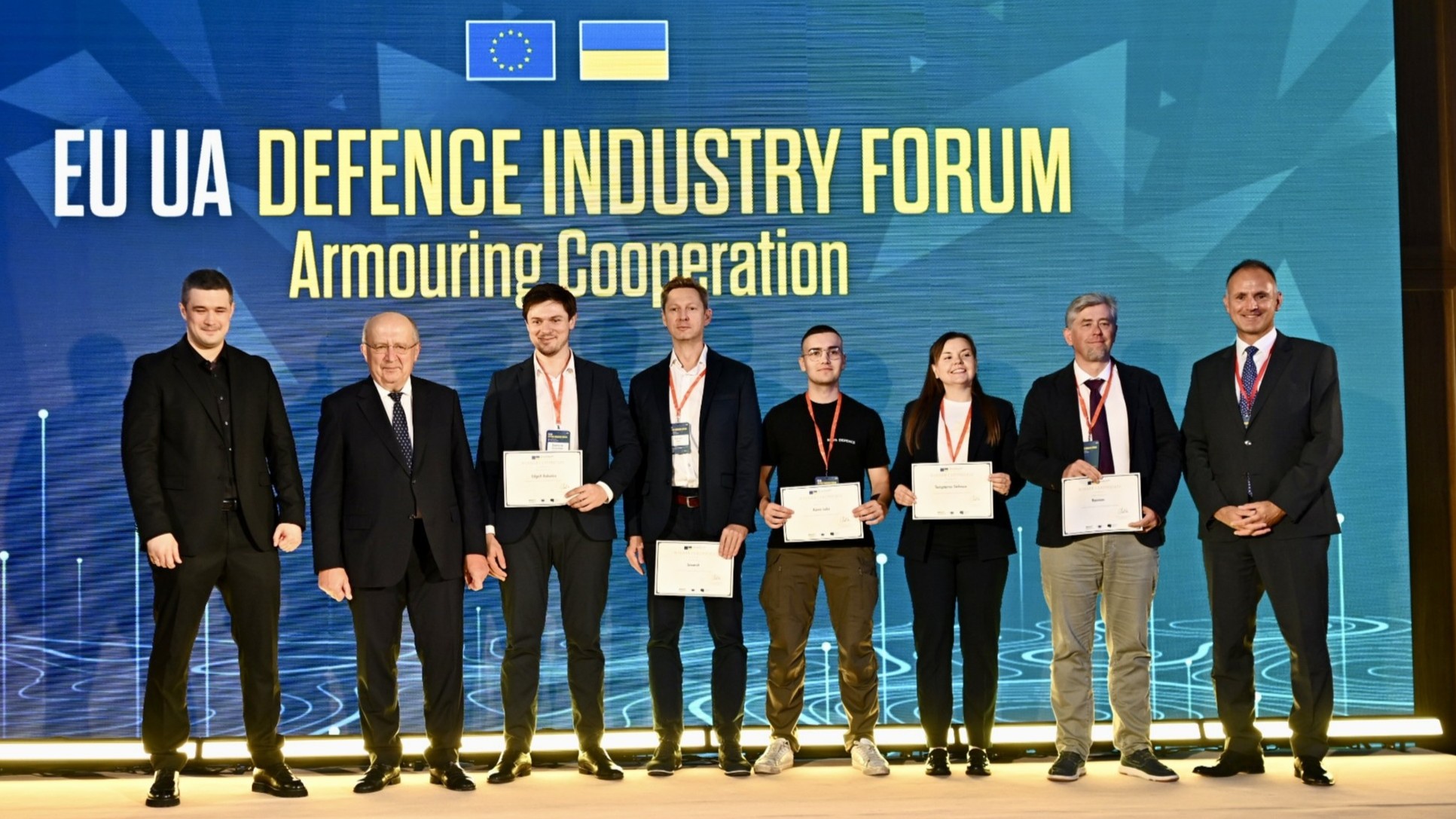
On 14 July, the European Defence Agency announced the first BraveTech EU Phase II group. Poland’s EdgeX Robotics is among the six selected companies.
Moving into structured work with users is a significant stage for a robotics startup. It allows assessment of the platform alongside the customer’s requirements for a complete solution.
We compare the selection announcement with Portugal’s planned OPEX campaign and the wider BraveTechEU programme. The distinction shows which stages still lie ahead.
The Polish participant’s contribution
EdgeX joined the first group of BraveTech EU Phase II innovators announced by the European Defence Agency. EDA describes its product as a modular 4×4 unmanned ground vehicle. Selection provides a route towards further assessment, not a procurement order from European armed forces.
Modularity means equipment or functions can change without redesigning an entire platform. It does not imply compatibility with every payload. Mechanical interfaces, electrical supply and software impose separate constraints. We do not assign unpublished specifications to EdgeX.
From selection to experimentation
EDA connects work with selected innovators to operational experimentation. Its published schedule envisages four solutions advancing to a further stage in 2027. That is a future selection: appearing in the first group does not establish which participants will progress.

Why OPEX matters
Portugal’s OPEX campaign is planned for October alongside ARTEX 26. EDA describes a controlled experimentation setting for autonomous air and ground systems, including logistics, reconnaissance and casualty evacuation. This is a trial announcement, not a report from a completed campaign.
For product development, such a setting provides structured engagement with an intended user. An exhibition typically demonstrates a selected function. An experiment can expose dependencies between platform, communications and task organisation. A result for one configuration should not be transferred automatically to every variant. Recording exactly what was tested is part of making a result commercially useful.
How to interpret the funding context
BraveTechEU is a wider EU-Ukraine initiative. The Commission describes an approach connecting innovation with user experience and supporting progression through development stages. The initiative’s overall budget is not an award to EdgeX. Selection also does not establish a future procurement value.
For a startup, access to trials, development funding and a paid order are three different outcomes. Each requires its own evidence. User interest can help refine requirements, but cannot replace a purchasing decision and a customer budget. An investor assessing the milestone needs to understand which of these outcomes has actually occurred.
What to look for after the campaign
The next useful information will concern completed work, progression decisions and which assumptions were supported by testing. This does not require sensitive operational details. A documented stage, named responsibilities and a credible next step can be sufficient to improve the market’s understanding of product maturity.
Sources & context
- EDA: first BraveTech EU Phase II group, 14 July 2026 ↗
- EDA: Portugal hosts OPEX 2026 ↗
- European Commission: BraveTechEU programme ↗
Published by Mitchell Strategic Solutions Group. See our editorial standards and corrections policy. Read more →