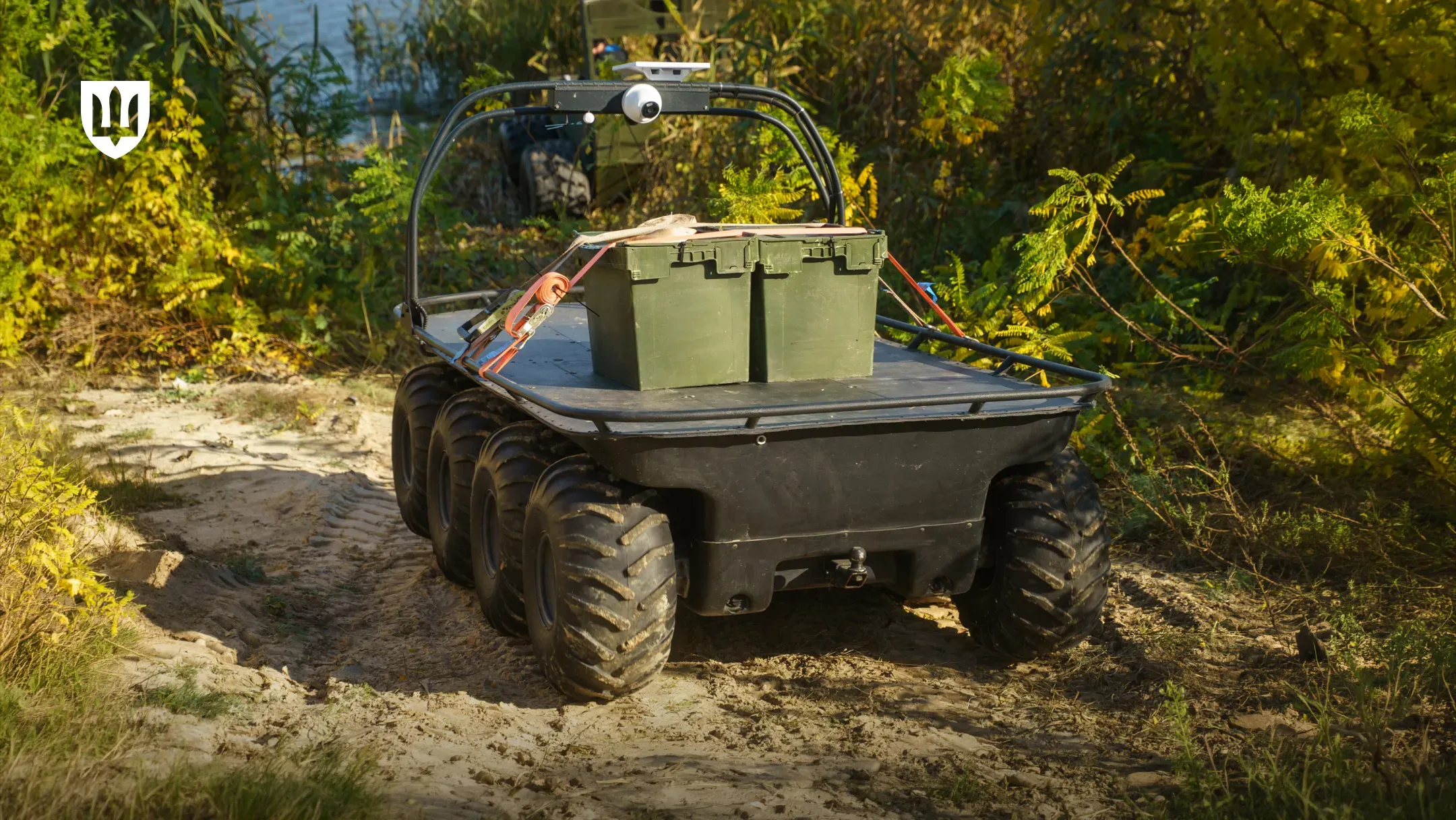

Tryzub trains surgeons and anaesthesiologists together. Scaling the team model is the next test.
Ukraine reports a 16-physician pilot combining three courses. The useful distinction is between people completing training and evidence of a repeatable training system.
- Ukraine
- Medical training
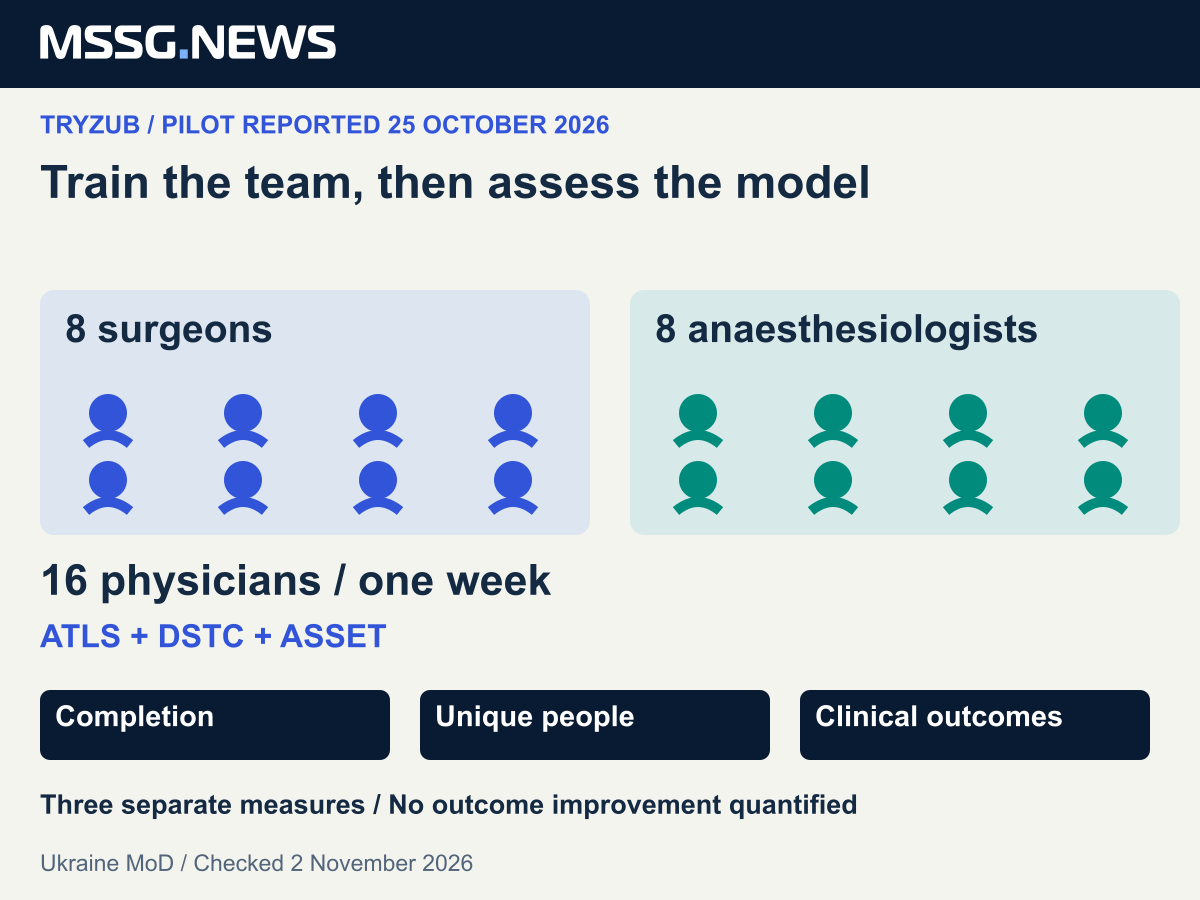
Eight surgeons and eight anaesthesiologists completed Ukraine’s first international Tryzub military surgery and resuscitation course, the defence ministry reported on 25 October. The participants trained together during a week-long programme.
Our assessment is that the team format deserves attention alongside the participant count.
Developing individual skills and rehearsing how different specialists work together are distinct training tasks. The pilot brings them into one programme, while the ministry’s proposed wider rollout remains a plan.
One pilot, three named modules
The programme combined ATLS, DSTC and ASSET. The ministry names instructors from the American College of Surgeons and the International Association for Trauma Surgery and Intensive Care, with support from Razom4Ukraine and Expertise France. The participants work at stabilisation points and in forward surgical teams.
The announcement reports completion by 16 physicians. It does not publish a comparison of clinical outcomes before and after training. Completion is evidence of participation in this pilot; it cannot by itself establish how much a patient outcome changed. This is an account of a training initiative, not clinical guidance.
Do not add unlike participant counts
Ukraine already had a separate ASSET training history. In its 13 January report on 2025, the ministry counted 80 surgeons and 50 operating-room nurses trained in Warsaw across ten cohorts. It also reported 220 professionals across 17 cohorts since December 2023, comprising 135 surgeons and 85 nurses.
Those figures concern a different period and participant mix from the Tryzub pilot. We do not add them to the 16 physicians or describe the sum as unique people. The sources do not establish whether anyone participated in both. Keeping the cohorts separate makes the reported scale meaningful without manufacturing growth.
Expansion requires more than another course date
The ministry intends to extend the model across the Defence Forces. For institutions considering cooperation, the practical questions are how instructor capacity, access to training facilities and time away from clinical duties would support repeated cohorts. A one-week pilot describes one delivery format; it does not reveal annual capacity.
Our proposed way to assess the next stage is to distinguish participation, assessed learning and subsequent team performance. Each needs its own evidence and observation period. A training provider can explain what was taught and assessed without claiming an unmeasured clinical benefit. The next public update would be stronger if it identified repeat cohorts, the assessment approach and the resources committed to expansion.
Sources & context
- Ukrainian defence ministry announcement, 2026-10-25 ↗
- Ukrainian defence ministry: separate 2025 ASSET cohorts, 13 January 2026 ↗
Published by Mitchell Strategic Solutions Group. See our editorial standards and corrections policy. Read more →
Related reporting

Twelve Ukrainian drone manufacturers meet UK industry. The next test is industrial follow-through.
Ukraine reports aerial drone rescues. Payload capacity is only one part of the evidence.