 DEFENCE · TECHNOLOGY · EUROPEAN SECURITY | ||||||||
MSSG NEWS / 06 / 2 NOVEMBER 2026 Galileo orders four more satellites. Delivery: 2031.Europe’s satellite orders, Ukraine’s amphibious robots, Baltic inspection evidence, two November events and four current jobs. | ||||||||
Europe has extended its navigation production pipeline: four additional Galileo G2 orders take the total to sixteen. The new four are due for delivery in 2031. That gives manufacturers a longer commitment before it changes the service available to a receiver on the ground. This edition follows what happens between an announcement and a working service: a purchasing route for Ukrainian robots, connectivity on moving platforms, and inspection evidence that an infrastructure operator can use. Each story identifies a different job for suppliers and integrators. Our selection from 26-29 October, prepared on 30 October. The calendar below covers 2-8 November; the four vacancies were checked against employers on 30 October. | ||||||||
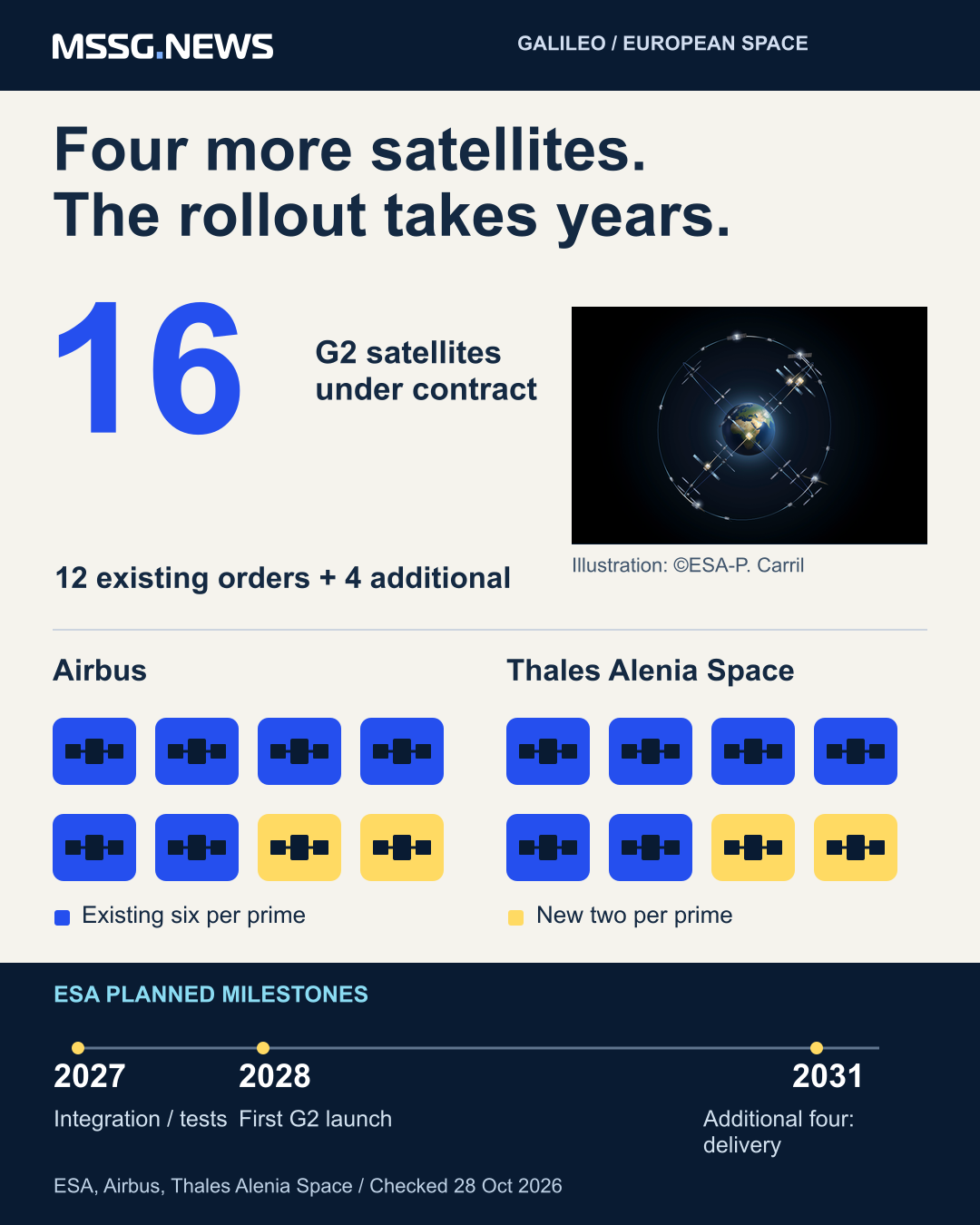 Sixteen G2 satellites under contract: eight per manufacturer. First G2 launch planned for 2028; delivery of the additional four planned for 2031. MSSG.news, source checked 28 October 2026. | ||||||||
THIS WEEK
| ||||||||
PLAN THE WEEK Explore covered events in our monthly calendar, filter by country or continent, and click through to the reporting. Confirm current access with the organiser. Open the events calendar → | ||||||||
| ||||||||
| ||||||||
| ||||||||
| ||||||||
Four current rolesSelected employer vacancies (open as of October 30th). Original employer titles are retained. These are live roles, not talent-pool invitations or a claim that all were posted this week.
| ||||||||
Slava Ukraini! ✌️ | ||||||||
Read the newsletter archive |